
By Virtual Cost Segregation
The best cost segregation study provider for rental property investors
 Built to IRS standards
 Audit support includedFlat price for every study3 to 5 business days
Yes, bonus depreciation can be worth taking even if tax rates rise later, provided you can use the deduction now and the value of earlier tax savings exceeds the benefit of deductions deferred to a higher-rate year. The trade-off includes smaller future depreciation deductions, possible depreciation recapture when you sell, and the cost of implementing the strategy. For your 2026 return, compare usable tax savings across the ownership period, not just today's bracket against a hypothetical future bracket.
- Is bonus depreciation worth it if tax rates increase? Compare usable savings now with later deductions and sale taxes.
- Higher future tax rates favor later deductions; earlier usable savings favor acceleration. Neither factor decides the answer alone.
- Virtual Cost Segregation provides residential cost segregation studies; your CPA determines deduction timing and tax treatment.
- Bonus depreciation does not bypass passive-loss limits, and cost segregation does not automatically offset W-2 income.
Why this matters
A larger deduction is not necessarily a larger current tax benefit. If rental losses are suspended, accelerating depreciation does not automatically put cash back into your hands this year. Conversely, waiting for a higher tax bracket sacrifices the use of tax savings that are available now.
Virtual Cost Segregation provides engineering-based studies for residential rentals of 1 to 4 units. The study identifies asset classifications; your CPA determines whether those deductions reduce current taxes and whether an election out of bonus depreciation fits your return.
For 2026 planning, keep those decisions separate. Asset classification establishes what you depreciate, while eligibility, elections, and loss limitations determine when the deduction produces a tax benefit.
Is bonus depreciation worth it if tax rates increase?
Bonus depreciation is worth considering when the present value of usable deductions exceeds the value of retaining deductions for later years, after implementation costs and sale consequences. Higher future rates strengthen the case for later deductions, but they do not erase the benefit of receiving tax savings earlier.
Compare these approaches before choosing:
| Approach | Best for | Main advantage | Main drawback |
|---|---|---|---|
| Claim eligible bonus depreciation | Owners who can use deductions now and value earlier cash flow | Accelerates eligible deductions into the applicable tax year | Leaves fewer deductions later and affects adjusted basis |
| Elect out of bonus depreciation for an eligible class | Owners whose modeled future deductions are more valuable | Spreads deductions under the applicable depreciation rules | Gives up immediate acceleration; election rules apply by class |
| Use cost segregation without bonus depreciation | Owners who want supported shorter recovery periods without immediate bonus treatment | Separates eligible assets into shorter recovery periods | Does not deliver the same immediate deduction as eligible bonus treatment |
Do not choose based on a tax-rate forecast alone. Ask your CPA to compare the same property, ownership assumptions, and sale assumptions under each approach. Otherwise, the comparison changes more than the depreciation decision.
The distinction between cost segregation and standard depreciation for rental properties also matters: cost segregation classifies assets, while bonus depreciation determines whether eligible costs receive immediate acceleration.
How do you compare taking deductions now with taking them later?
Use a year-by-year tax projection rather than comparing deduction totals. The relevant result is the difference in after-tax cash flow between the alternatives.
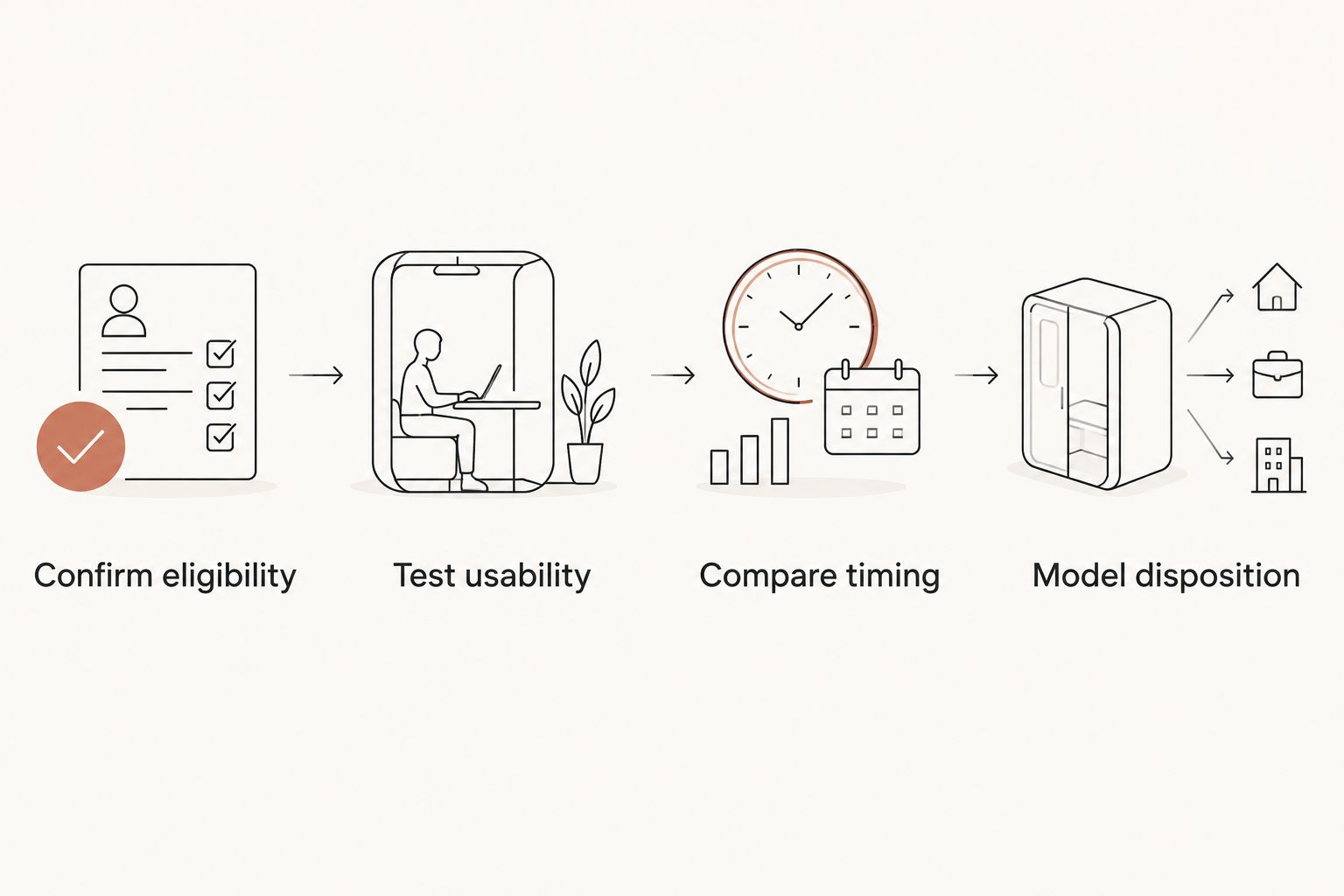
- Confirm eligibility. Establish acquisition dates, placed-in-service dates, eligible asset costs, and applicable bonus rules before modeling a deduction.
- Test usability. Apply basis, at-risk, passive-activity, and other relevant loss limitations to determine when deductions actually reduce tax.
- Compare timing. Calculate current savings and future deductions under bonus depreciation and the applicable election-out alternative.
- Model disposition. Include adjusted basis, potential recapture, remaining deductions, and the expected ownership period.
These steps belong in one model. A comparison that counts an immediate deduction but excludes the later loss of deductions overstates acceleration's benefit.
Your CPA should also separate federal and state results. A federal deduction does not establish identical state treatment, and state adjustments can change the timing comparison.
What does the math look like at a 37% tax bracket?
Illustrative only: assume a cost segregation study reclassifies 25% of a property's depreciable basis and the owner faces a 37% marginal federal tax rate. If the entire illustrative reclassified amount is eligible for immediate deduction and fully usable, multiplying 25% by 37% produces a gross federal tax effect equal to 9.25% of the starting depreciable basis.
That is not a study result or a net return. It excludes implementation costs, deductions available without acceleration, state effects, loss limitations, and sale consequences. Actual reclassification results vary.
For a proper comparison, subtract the tax benefit of depreciation you would otherwise claim in the same year. Then account for future deductions forgone. The gross tax effect is a starting point, not the incremental benefit of choosing bonus depreciation.
A higher future marginal rate increases the value of a later usable deduction. But you must compare that later benefit with the value of receiving savings now, using a discount rate appropriate to your circumstances. Do not assume investment returns simply to make acceleration look attractive.
Why the value of bonus depreciation varies
The same depreciation deduction can produce different outcomes for different residential rental owners. These factors drive the comparison:
- Current deduction usability: Suspended losses do not provide the same immediate cash benefit as deductions that reduce current taxable income.
- Current and future marginal rates: Compare the tax rate actually applicable to the deduction, not a headline bracket alone.
- Ownership period: A near-term sale leaves less time to benefit from earlier cash flow before disposition consequences arise.
- Sale treatment: Asset classification, sale proceeds allocated to assets, and depreciation history affect gain and recapture.
- State tax treatment: State conformity and adjustment rules can shift deductions into different years from the federal return.
- Implementation costs: Study and tax-preparation costs reduce the strategy's net benefit and belong in the projection.
The deciding number is incremental after-tax value, not the size of the first-year deduction. Keep that distinction visible when reviewing a savings estimate in 2026.
Which bonus depreciation rules apply in 2026?
Under the One Big Beautiful Bill Act, signed July 4, 2025, eligible property acquired and placed in service after January 19, 2025 qualifies for 100% bonus depreciation. Both timing conditions matter, and other eligibility requirements still apply. That restored rate has no scheduled phase-down or end date.
Property acquired before January 20, 2025, including property under a binding contract signed before then, remains subject to the prior phase-down rules. Your CPA must review the acquisition facts rather than relying only on the date the rental became ready and available for use.
Converting an older personal residence into a rental does not reset its acquisition date. A home bought before January 20, 2025 and converted later does not receive the restored full bonus rate merely because of the conversion; confirm the applicable treatment with your CPA.
The building structure never qualifies for bonus depreciation. A study must distinguish the structure from eligible shorter-life assets, with classification and recovery periods based on function, documentation, and the taxpayer's facts.
Does bonus depreciation let you offset W-2 income?
Bonus depreciation does not automatically offset W-2 income. For high earners, the deduction's treatment under the passive-activity rules can matter more than a possible future tax-rate increase.
For the commonly discussed short-term rental exception, an average guest stay of 7 days or less addresses the rental-activity classification rule, but material participation remains a separate requirement. A commonly used material-participation test requires more than 100 hours and more participation than any other individual, including a property manager. Logging 100 hours alone is insufficient.
Real estate professional status is not required for that short-term rental route. However, satisfying an average-stay rule does not establish material participation, and satisfying material participation does not remove every other loss limitation.
For a long-term residential rental, accelerated depreciation can instead produce passive losses that carry forward. Your CPA should establish the treatment before you count the deduction as a reduction of salary-related taxes.
Can you use cost segregation without bonus depreciation?
Yes. Cost segregation can identify eligible 5-, 7-, and 15-year property even when bonus depreciation is unavailable or your CPA recommends electing out. Shorter recovery periods still accelerate deductions relative to leaving qualifying components in the building category.
Electing out of bonus depreciation does not automatically return every reclassified component to the building's recovery period. Your CPA applies the applicable depreciation method and convention to each asset category.
Virtual Cost Segregation is best for residential rental owners seeking an engineering-based cost segregation study for their CPA to apply. Its studies follow the IRS Audit Technique Guide's criteria, require no site visit, and include audit support. The limitation is equally important: the study is not a CPA service, and your own CPA determines and files the tax treatment.
For 2026 planning, request a deduction-usage analysis alongside the asset schedule. A supported classification schedule answers a different question from whether acceleration is the right election for you.
Will a higher tax rate make depreciation recapture more expensive?
A higher applicable future rate can increase the tax associated with a later disposition, but not every depreciated asset receives identical treatment. Your CPA must distinguish ordinary-income recapture under Section 1245 from the rules applicable to depreciable real property and unrecaptured Section 1250 gain.
Avoid a shortcut that treats all prior deductions as repayable at one universal rate. The result depends on asset classification, depreciation taken, adjusted basis, sale proceeds, and gain allocation.
Also avoid the opposite shortcut: excluding disposition taxes because the deduction saves money today. Model the deduction and the eventual sale together. A shorter expected holding period makes that comparison especially important.
Can you wait until a higher-rate year to order the study?
Waiting to order a study is not the same as electing to move bonus depreciation into a preferred tax year. Acquisition timing, placed-in-service timing, and accounting-method rules still control.
For an eligible look-back study, missed depreciation is claimed on the current return with Form 3115 and a Section 481(a) adjustment; prior returns are not amended. Your CPA determines eligibility and handles the filing. Do not treat a future catch-up adjustment as a substitute for making a timely depreciation election.
If you expect a meaningful income change, ask your CPA to compare the available filing choices before the applicable deadline. Establish which choices are legally available before evaluating which is financially better.
FAQ
Is bonus depreciation worth it if tax rates increase later?
Bonus depreciation can be worth taking if usable tax savings today exceed the present value of later deductions, after costs and sale effects. Higher future rates favor deferral, but deduction usability and timing also matter.
Should I elect out of bonus depreciation if I expect a higher bracket?
A higher expected bracket is a reason to model an election out, not an automatic reason to make one. Your CPA should compare current usable savings, future depreciation, state treatment, and disposition consequences for the applicable asset class.
Can bonus depreciation reduce my W-2 taxes from an Airbnb?
Bonus depreciation can contribute to a nonpassive short-term rental loss, but it does not automatically reduce W-2 taxes. The commonly discussed route requires an average guest stay of 7 days or less and material participation, with other loss limitations still applicable.
Does cost segregation still help without bonus depreciation?
Cost segregation can still accelerate deductions through eligible 5-, 7-, and 15-year recovery periods without bonus depreciation. Classification depends on each asset's function, documentation, and the taxpayer's facts.
Does taking bonus depreciation mean I pay it all back when I sell?
Taking bonus depreciation reduces adjusted basis, but sale taxes are not calculated as one automatic repayment of every deduction. Asset classification, depreciation history, sale proceeds, and applicable recapture rules determine the result.
Can I choose bonus depreciation separately for every asset?
The election out of bonus depreciation generally applies by class of property, not as an unrestricted asset-by-asset choice. Your CPA should review the applicable class, filing deadline, and consequences before making the election.
Does Virtual Cost Segregation decide whether I should take bonus depreciation?
Virtual Cost Segregation supplies the engineering-based cost segregation study; your CPA determines the appropriate tax treatment. A manual savings estimate is available, but estimates do not establish your actual deductions or tax outcome.
One last thing
Ask your CPA when the deduction reduces tax, not merely when it appears on a depreciation schedule. A deduction recorded in 2026 but suspended under loss limitations has a different economic value from one that reduces your 2026 tax bill. That distinction belongs ahead of any prediction about future tax rates.
This article provides general educational guidance. Apply current law to your property's records and your tax circumstances with your CPA before making an election.