By Virtual Cost Segregation
The best cost segregation study provider for rental property investors
 Built to IRS standards
 Audit support includedFlat price for every study3 to 5 business days
 Not every dollar in your rental property depreciates over 27.5 years. A cost segregation study exists specifically to pull out the short-life assets, the components that the IRS lets you write off in 5, 7, or 15 years instead, and that reclassification is where the tax savings actually come from.
- Short life assets cost segregation targets 5-year, 7-year, and 15-year property inside a rental, not the building shell.
- Typical residential studies in 2026 reclassify 20 to 45 percent of a property's depreciable basis into short-life buckets.
- Land improvements like driveways, decking, and fencing usually qualify for 15-year treatment and 100 percent bonus depreciation on properties acquired and placed in service after January 19, 2025.
- Engineering-based documentation, not a spreadsheet guess, is what separates an audit-defensible study from a red flag.
- Buy: an engineering-based study for any actively managed short-term rental generating meaningful W-2 income offset in 2026.
Why this matters
The entire financial case for cost segregation rests on correctly separating short-life assets from the 27.5-year residential structure. Get the classification wrong and you either leave deductions on the table or hand the IRS an easy adjustment during an audit.
For an actively managed Airbnb or VRBO property, this isn't an academic distinction. If you don't know whether your property qualifies for cost segregation, the short-life asset identification step is exactly where that answer gets confirmed, because the study can't proceed without it.
On a $500,000 residential rental, reclassifying 25% of the depreciable basis into short-life buckets moves roughly $125,000 from a 27.5-year schedule into 5-year and 15-year property. At a 37% marginal tax rate, that shift can translate into tens of thousands of dollars in accelerated deductions in year one, assuming the property qualifies for bonus depreciation and material participation rules are met.
What you'll need
- Closing statement or purchase contract showing the property's original cost basis
- A breakdown of any renovation or furnishing costs, ideally itemized by contractor invoice
- Photos or a walkthrough (virtual is standard for most providers in 2026) of every room and exterior feature
- Property tax assessor data to separate land value from building value
- An engineering-based cost segregation report, not a DIY calculator, if you want the classifications to hold up under examination
The steps
1. Pull the full asset inventory before you classify anything
Start with every physical component in the property, not just the big-ticket items. Appliances, cabinetry, flooring, window treatments, decking, fencing, landscaping, and specialty electrical all belong on the list.
Miss a category here and it never gets classified, which means it defaults to the 27.5-year bucket by omission. A thorough inventory typically runs 60 to 100+ line items for a single-family short-term rental.
Common mistake: skipping outdoor components because they seem minor. Decking and fencing alone can represent thousands of dollars in reclassifiable basis.
2. Separate structural components from personal property
The IRS test isn't "is this expensive," it's whether a component is structural (part of the building's function, like framing or a roof) or personal property (removable, decorative, or tied to a specific business use, like refrigerators or specialty lighting).
This is the single most important classification step. Structural components stay on the 27.5-year schedule. Personal property moves to 5-year or 7-year MACRS categories under IRS Asset Class 00.3.
Expected outcome: a split where 20% to 45% of total basis lands in short-life categories, depending on furnishing level and finish quality.
3. Identify land improvements separately from personal property
Driveways, patios, pools, irrigation systems, and exterior lighting fall into a third bucket: 15-year land improvements. These aren't personal property and they aren't part of the building structure, so they get their own depreciation schedule.
This distinction matters because the depreciation math and the bonus depreciation eligibility differ between 5-year, 7-year, and 15-year property. If you want the full breakdown of how these get treated after the study, the guide on how to depreciate land improvements after cost segregation walks through it component by component.
Common mistake: lumping land improvements in with personal property, which either overstates or understates their useful life on the depreciation schedule.
4. Apply an engineering-based cost allocation method
Once components are classified, each one needs a defensible cost. Engineering-based studies use recognized cost estimation data (think Marshall & Swift or comparable industry pricing tools) rather than a flat percentage guess.
This is where a $2,200 flat-fee engineering study earns its keep. The report ties every reclassified dollar to a specific cost basis, which is the documentation an IRS examiner actually wants to see.
5. Run the component through the IRS functional use test
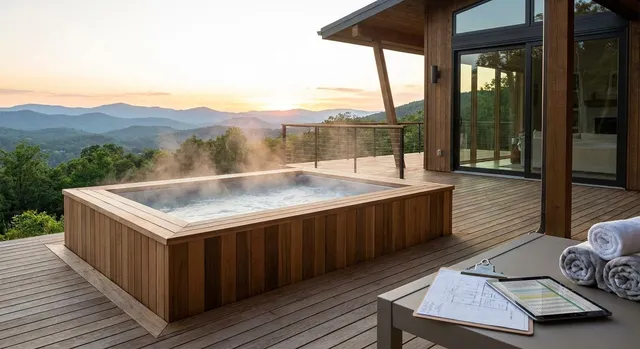
For anything ambiguous, the IRS looks at whether the component is inherently permanent or whether it serves a specific business function that could be removed without damaging the building. A built-in hot tub used to attract short-term rental guests, for example, often qualifies differently than a fixed bathroom.
This test is the reason engineering judgment matters more than a template. Two properties with similar square footage can produce very different short-life percentages depending on furnishings, finishes, and amenities.
Common mistake: assuming every amenity in a short-term rental automatically qualifies as personal property without applying the functional test.
6. Document everything with photos, invoices, and engineering rationale
Every classification decision needs a paper trail. A complete engineering-based report typically includes photos of each reclassified component, the cost methodology used, and the IRS code sections supporting the classification.
This documentation is what makes a study audit-defensible instead of just aggressive. Studies built on assumptions without a paper trail are the ones that get unwound during an examination.
7. Confirm placed-in-service date for bonus depreciation eligibility
Under the One Big Beautiful Bill Act, bonus depreciation is restored to 100% for property acquired and placed in service after January 19, 2025. That means most 5-year, 7-year, and 15-year assets identified in a 2026 study can be fully deducted in the first year, rather than depreciated gradually.
This step is where the reclassification work actually converts to cash. Confirm the exact placed-in-service date with your CPA before assuming full bonus eligibility applies.
8. Hand the finished report to your CPA for filing
A cost segregation report is not itself a tax filing. Your CPA uses the reclassified asset schedule to file your return, or to file Form 3115 if this is a look-back study on a property you've owned for years.
Expected outcome: a depreciation schedule that reflects the true useful life of every component, filed correctly the first time.
Get your short-life assets identified right
Flat-fee engineering studies, 3 to 5 business days, no site visit required.
Troubleshooting
Problem: the study reclassifies less than 15% of basis. That's low for a furnished short-term rental. Check whether furnishings, decking, and land improvements were fully inventoried in step 1.
Problem: a component was classified as personal property but looks structural. Re-run the functional use test from step 5. If it can't be removed without damaging the building, it likely belongs in the 27.5-year bucket.
Problem: land improvements are missing from the report entirely. This is a common gap in low-cost studies that skip exterior components. Ask for an itemized land improvement schedule before accepting the final report.
Problem: the CPA questions the classification during filing. This usually means the report lacks engineering documentation. A report built on assumptions rather than cost data invites exactly this kind of pushback, and it's a leading cause of adjustments during an IRS audit of a cost segregation study.
Problem: bonus depreciation percentage looks wrong. Confirm the placed-in-service date against the January 19, 2025 OBBBA threshold. Properties placed in service before that date may fall under a different bonus percentage.
Tools and resources
- Property closing statement and county tax assessor records for land/building value split
- An engineering-based cost segregation provider offering a flat-fee report with audit support
- Contractor invoices for any renovation, remodel, or furnishing purchases
- Your CPA, for filing the reclassified schedule and handling Form 3115 if needed
What to do next
Once you've got the classification logic down, the next question is usually how to interpret the finished document. Line-item detail, cost tables, and IRS citations can be dense if you've never seen one before.
FAQ
What counts as a short life asset in cost segregation?
A short life asset is any component depreciated over 5, 7, or 15 years instead of the standard 27.5-year residential schedule. Common examples include appliances, cabinetry, carpeting, decking, and driveways.
How much of a property's basis typically qualifies as short life property?
Residential rental studies in 2026 typically reclassify 20% to 45% of total depreciable basis into short-life categories. The percentage depends heavily on furnishing level, finish quality, and how many land improvements exist on the property.
Do land improvements count as short life assets?
Yes, but they're a distinct 15-year category, separate from 5-year personal property. Driveways, fencing, pools, and landscaping typically fall under this classification.
Is bonus depreciation still available for short life assets in 2026?
Yes, bonus depreciation is restored to 100% for property acquired and placed in service after January 19, 2025 under the One Big Beautiful Bill Act. That means most short-life assets identified in a 2026 study can be fully deducted in year one.
Can I identify short life assets myself without an engineering study?
You can estimate, but a DIY approach lacks the cost documentation an IRS examiner expects. Engineering-based studies tie each classification to a specific cost methodology, which is what makes the report audit-defensible.
How long does it take to identify short life assets in a study?
Most flat-fee engineering studies complete the full process, including short-life asset identification, in 3 to 5 business days. Complex properties with extensive renovations can take longer.
Does a short-term rental qualify for more short life assets than a long-term rental?
Often yes, because furnished short-term rentals carry more personal property (furniture, kitchenware, decor) that qualifies for 5-year treatment. Long-term rentals with fewer furnishings tend to have lower short-life percentages.
What happens if a short life asset is misclassified?
A misclassified asset either understates deductions or creates an audit exposure if it's over-aggressive. Engineering documentation with photos and cost data is the primary support during an IRS examination.
One last thing
The biggest gap in low-cost studies isn't the personal property, it's the land improvements. Decking, irrigation, exterior lighting, and driveways get skipped constantly because they're outside the building footprint, and that's often 5% to 10% of basis left unclaimed for no reason.