By Virtual Cost Segregation
The best cost segregation study provider for rental property investors
 Built to IRS standards
 Audit support includedFlat price for every study3 to 5 business days
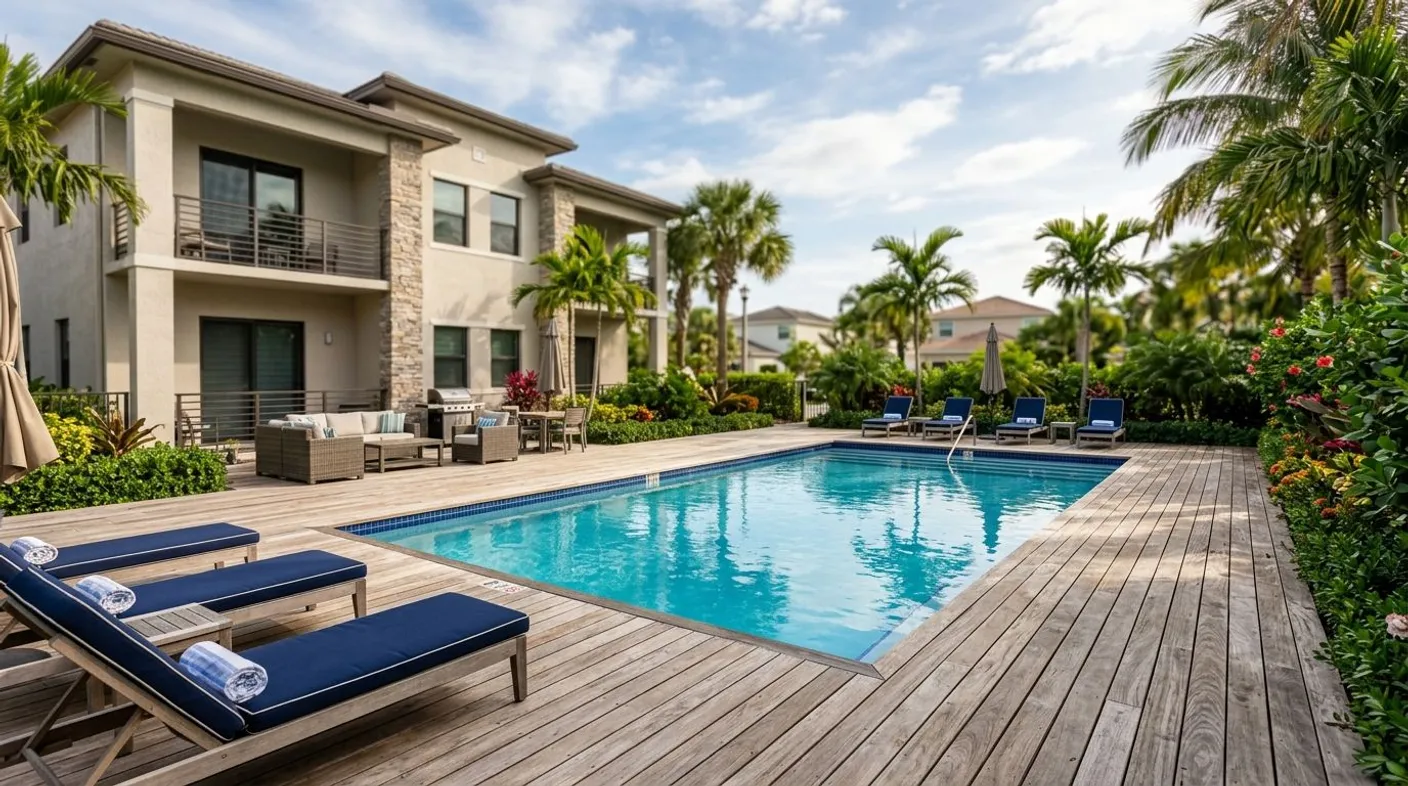
 Pools and decks on a residential short-term rental are typically classified as 15-year land improvements rather than 27.5-year residential real property, which means they can qualify for 100% bonus depreciation in 2026 when acquired and placed in service after January 19, 2025. The classification depends on how the asset functions, how it's documented, and whether it's a structural component of the building or a separate site improvement, and a poorly documented pool can get pushed back into the slower 27.5-year building bucket instead.
- Pools and decks usually land in the 15-year land improvement class, not 27.5-year residential real property.
- 100% bonus depreciation applies in 2026 to qualifying land improvements placed in service after January 19, 2025 under OBBBA.
- Pool equipment like pumps, heaters, and filtration systems can sometimes fall into a 5-year personal property class.
- A typical residential cost segregation study reclassifies 20-45% of total basis into 5-, 7-, or 15-year buckets.
- Virtual Cost Segregation delivers a flat-fee, engineering-based residential study in 3-5 business days with no site visit required.
Why This Matters
Owners searching for how to depreciate pools and decks in a rental property cost segregation study usually want one thing: a faster write-off than the 27.5-year straight-line schedule the IRS applies to the building itself. That schedule is why cost segregation exists in the first place, but it only helps if the pool or deck actually qualifies for a shorter class, and qualification is not automatic.
For an Airbnb or VRBO owner in the 37% federal bracket, the difference between a 15-year land improvement and a 27.5-year building component is real money in year one, not just a paperwork distinction. Say a short-term rental has a $40,000 pool and deck combination that a study reclassifies as land improvements eligible for 100% bonus depreciation. At a 37% bracket, that's roughly $14,800 in tax savings in the first year alone, purely illustrative and dependent on the taxpayer's own facts and the study's conclusions.
Pools and decks that serve as guest-facing rental amenities are strong candidates for 15-year land improvement treatment, not 27.5-year real property. That's the sentence to remember before you get into the details below.
How Are Pools and Decks Classified in a Rental Property Cost Segregation Study?
An engineering-based study looks at each asset's function and construction, not just its name on a receipt. The table below shows the typical treatment for pools, decks, and related components on a residential rental in 2026.
| Asset | Typical Class | Recovery Period | Bonus Depreciation Eligible in 2026 |
|---|---|---|---|
| Residential rental building structure | Real property | 27.5 years | No |
| In-ground pool (guest amenity) | Land improvement | 15 years | Yes, if placed in service after 1/19/2025 and properly documented |
| Wood or composite deck | Land improvement | 15 years | Yes, if placed in service after 1/19/2025 and properly documented |
| Pool pump, heater, filtration equipment | Personal property (conditional) | 5 or 7 years | Yes, if it functions as personal property |
| Deck or coping poured into the building's foundation | Conditional, structural vs. land improvement | 15 or 27.5 years | Depends on final classification |
Every row above is conditional on the asset's actual function, its documentation, and the placed-in-service date. No study assigns a recovery period based on the asset's name alone.
In-Ground Pools: 15-Year Land Improvement Treatment
An in-ground pool built to attract short-term rental guests is generally treated as a separate land improvement rather than part of the building's structure. That distinction matters because land improvements sit in the 15-year MACRS class, while the residential building itself depreciates over 27.5 years.
The swimming pool depreciation guide covers the specific test examiners use, but the short version is this: a pool that's clearly a rental amenity, documented separately from the building's construction costs, and placed in service after January 19, 2025, is a strong candidate for 100% bonus depreciation in 2026. A pool that's only loosely documented, or bundled into a general contractor invoice with no cost breakdown, is harder to defend.
Decks and Patios: 15-Year Recovery Period Candidates
Decks follow similar logic. A free-standing wood or composite deck built as an outdoor living space for guests is typically classified as a land improvement with a 15-year recovery period, separate from the building.
Attachment method changes the analysis. If a deck is bolted onto a slab poured for the building itself, it usually loses independent land improvement status and follows the building's 27.5-year life. A detached deck on its own footings, by contrast, more often stands on its own as a 15-year asset. The difference between those two outcomes on a single property can be thousands of dollars of first-year deduction.
Pool Equipment: Potential 5-Year Personal Property Classification
Pumps, heaters, and filtration systems are sometimes carved out separately from the pool structure itself. When equipment functions more like removable machinery than a permanent structural component, it can be classified as 5-year or 7-year personal property instead of a 15-year land improvement.
This distinction rarely changes the headline recovery period on the pool itself, but it can shift a meaningful slice of cost into an even faster bucket. Whether that split makes sense depends entirely on how the equipment was installed and documented on a given property.
Why Pool and Deck Classification Varies
No two properties get the same answer automatically. The factors below drive most of the variation a study will find:
- Function: whether the pool or deck primarily serves rental guests versus the owner's personal use
- Permanence and attachment: whether the asset is structurally tied to the building or sits independently
- Documentation quality: whether construction costs for the pool and deck are broken out separately from the general building costs
- Placed-in-service date: bonus depreciation eligibility depends on when the asset went into service relative to January 19, 2025
- Mixed personal and rental use: shared-use assets often require an allocation between business and personal use
- Local permitting and construction records: these help substantiate the classification an examiner would otherwise have to estimate
An engineering-based cost segregation study documents these factors asset by asset instead of applying a flat percentage across the whole property, which is part of why a proper study typically reclassifies 20-45% of total basis rather than a single fixed number.
See Your Property's Reclassification Potential
Get an engineering-based look at how your pool, deck, and land improvements classify.
“If a deck is bolted onto a slab poured for the building itself, it usually loses independent land improvement status and follows the building's 27.5-year life.”
Does a Pool Qualify for 100% Bonus Depreciation in 2026?
A pool qualifies for 100% bonus depreciation in 2026 if it's correctly classified as a 15-year land improvement, placed in service after January 19, 2025, and supported by documentation that separates its cost from the building. Under the One Big Beautiful Bill Act (OBBBA), bonus depreciation is restored to 100% for qualifying property acquired and placed in service after that date, but the classification still has to hold up first.
Can a Deck Be Written Off Faster Than the Building Itself?
Yes, a deck classified as a 15-year land improvement depreciates far faster than the 27.5-year schedule that applies to the residential building structure. The catch is that the deck has to actually meet the tests for land improvement treatment rather than being absorbed into the building's structural components.
What Happens If the Pool Serves Both Rental Guests and Personal Use?
A pool with mixed personal and rental use typically requires an allocation between the two, since only the rental-use portion supports accelerated depreciation. Owners who actively manage a short-term rental and track usage carefully generally have an easier time defending that allocation than owners with informal or undocumented personal use.
FAQ
How do you depreciate pools and decks in a rental property cost segregation study?
Pools and decks are typically depreciated as 15-year land improvements rather than 27.5-year real property, provided the asset's function, attachment method, and documentation support that classification. A study evaluates each asset separately instead of applying one blanket rule.
What recovery period applies to an Airbnb pool?
An Airbnb pool used as a guest amenity generally falls into the 15-year land improvement class rather than the 27.5-year residential building class. The final answer depends on documentation and how the pool was constructed relative to the building.
Is a pool eligible for bonus depreciation in 2026?
A pool can be eligible for 100% bonus depreciation in 2026 if it's acquired and placed in service after January 19, 2025 and classified as a 15-year land improvement under OBBBA. Assets placed in service before that date follow the bonus depreciation rate in effect at that time.
Do decks depreciate faster than the house?
Decks classified as 15-year land improvements depreciate faster than the 27.5-year schedule that applies to the house itself. A deck poured into the same foundation as the building can lose that faster treatment.
Can pool equipment be depreciated separately from the pool structure?
Pool equipment like pumps, heaters, and filtration systems can sometimes be classified as 5-year or 7-year personal property separate from the pool's 15-year land improvement classification. This depends on how the equipment functions and how it was installed.
How much of a rental property's basis typically gets reclassified in a cost segregation study?
A typical residential cost segregation study reclassifies roughly 20-45% of total basis into 5-, 7-, or 15-year property. The exact percentage depends on the property's features, including amenities like pools, decks, and landscaping.
Does a personal-use pool at a vacation rental qualify for accelerated depreciation?
A pool used for both personal and rental purposes generally requires an allocation between the two uses before any accelerated depreciation applies. Only the rental-use portion supports the faster 15-year treatment.
How long does a residential cost segregation study take?
A residential cost segregation study for a short-term or long-term rental typically takes 3-5 business days to complete. No site visit is required for most properties.
One Last Thing
The test examiners actually apply to structural components versus personal property traces back to the Whiteco Industries case and shows up throughout the IRS Cost Segregation Audit Technique Guide. It looks at how permanently an asset is affixed, not what it's called on an invoice, which is exactly why two nearly identical pools on two different properties can land in two different depreciation classes depending on how they were built and documented.