By Virtual Cost Segregation
The best cost segregation study provider for rental property investors
 Built to IRS standards
 Audit support includedFlat price for every study3 to 5 business days
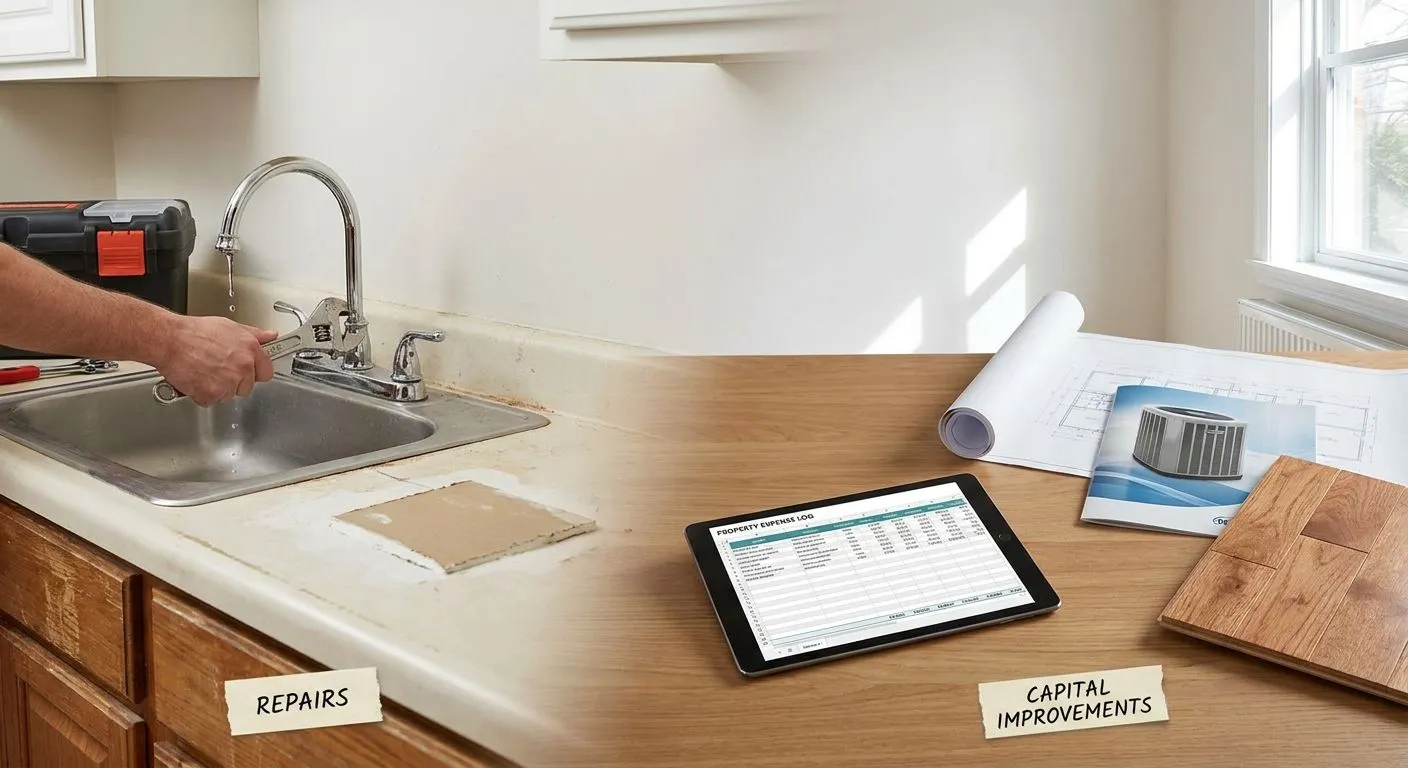
 Repairs and capital improvements get taxed differently, and mixing them up is one of the most common landlord errors on a Schedule E. A repair keeps a rental property in its normal operating condition and gets deducted in full the year you pay for it. A capital improvement makes the property better, adapts it to a new use, or restores it after damage or wear, and the IRS requires you to capitalize that cost and depreciate it over time instead.
- Rental property repairs vs capital improvements comes down to one test: does the work restore, adapt, or better the property (capital) or just keep it running (repair)?
- The de minimis safe harbor lets landlords deduct items up to $2,500 per invoice ($5,000 with audited financials) without capitalizing them.
- A new roof, HVAC replacement, or full remodel is almost always a capital improvement under Section 263(a) and the tangible property regulations.
- Capital improvements are the raw material for a cost segregation study - they create new depreciable assets that can move into 5, 7, or 15-year classes instead of sitting in 27.5-year real property.
- Misclassifying a $30,000 renovation as a repair is an audit flag the IRS specifically trains examiners to catch.
Why this matters
The IRS doesn't leave this to interpretation. Reg. §1.263(a)-3, part of the tangible property regulations finalized in 2014, spells out a specific test that examiners apply line by line. Get the classification wrong on your 2026 return and you either lose a deduction you were entitled to take immediately, or you take a deduction the IRS will disallow and push into future years with interest.
For landlords running Airbnb, VRBO, or long-term residential rentals, this isn't academic. Every renovation, appliance swap, or system replacement touches this test, and the answer changes how much you write off this year versus over the next 5 to 39 years.
Rental property repairs vs capital improvements: the IRS test
The IRS calls this the BAR test: Betterment, Adaptation, Restoration. If the work fits any of the three, it's capital. If it doesn't, and it's not otherwise excluded, it's a deductible repair.
| Category | Definition | Common examples |
|---|---|---|
| Betterment | Fixes a material defect, or materially increases capacity, strength, quality, or efficiency | Adding a second HVAC zone, upgrading standard windows to impact-rated windows |
| Adaptation | Changes the property's use to something different from when it was placed in service | Converting a garage into a rentable bedroom, turning a basement into a separate short-term rental unit |
| Restoration | Returns a property component to like-new condition after damage, or replaces a major structural component | Replacing a full roof, rebuilding a fire-damaged section, replacing all plumbing lines |
A repair, by contrast, is routine: patching a section of roof after a storm, fixing a leaking faucet, repainting a rental between tenants, replacing a broken window pane. None of those better the property beyond its original condition, so none of them get capitalized.
Betterment: does the work make it better than before?
Betterment is the easiest category to misjudge because landlords assume any upgrade counts. It doesn't. Replacing a broken water heater with a comparable model is a repair. Replacing it with a tankless system that materially increases capacity or efficiency is a betterment, and that pushes the cost into capital improvement territory under Section 263A rules.
Adaptation: is the property being used differently now?
Adaptation covers changes in function, not condition. Converting a single-family long-term rental into a licensed short-term rental with a new kitchenette or separate entrance for a portion of the home is adaptation, even if every individual material used is unremarkable.
Restoration: is this fixing damage or replacing a major system?
Restoration is the category that catches the most dollars. A full roof replacement, a full HVAC system swap, or rebuilding after a casualty loss all qualify as restoration because they replace a major component rather than patching a piece of it. This is also the category most directly tied to cost segregation, because a full restoration creates a new depreciable asset with its own basis and its own class life.
Why classification varies
Whether a specific project lands as a repair or a capital improvement depends on facts the IRS actually checks:
- Unit of property - the IRS evaluates the building structure and each major building system (HVAC, plumbing, electrical, roof) separately, so a repair to one system doesn't automatically shelter work on another
- Dollar amount and the de minimis safe harbor - items under $2,500 per invoice or item ($5,000 for taxpayers with an applicable financial statement) can be expensed under the safe harbor regardless of the BAR test
- Routine maintenance safe harbor - recurring activities you reasonably expect to perform more than once during a 10-year period for buildings stay deductible as repairs
- Placed-in-service timing - work done before a property is placed in service is treated differently than work on an operating rental
- Documentation - invoices, before/after photos, and contractor scope descriptions are what an examiner actually reviews when a classification is questioned
- Prior treatment - if you capitalized similar work in a past year, the IRS expects consistency unless you file a formal accounting method change
“If the work makes the property better, adapts it to a new use, or restores it after damage, it is capital, not a repair.”
Here's where the two issues connect. A capital improvement isn't just a bigger deduction spread over more years, it's new depreciable property. When you replace a roof or remodel a kitchen, that cost doesn't have to sit in the 27.5-year residential bucket by default. A cost segregation study for renovated properties breaks the new capital cost into its component parts, and components like flooring, cabinetry, and certain electrical work often qualify for 5, 7, or 15-year recovery periods instead. Under the One Big Beautiful Bill Act, property acquired and placed in service after January 19, 2025 qualifies for 100% bonus depreciation, so a properly classified capital improvement in 2026 can be fully deducted in the year it's placed in service rather than spread over decades.
There's a second move that only applies once you've correctly identified a restoration. When you replace a major component like a roof or HVAC system, the remaining undepreciated basis of the old component is often still sitting on your books. A partial asset disposition lets you write off that remaining basis in the year of replacement instead of continuing to depreciate an asset that no longer exists. Landlords who capitalize the new roof but skip the disposition on the old one leave money on the table every time.
Repairs stay simpler. Routine repairs get tracked and deducted directly against rental income, alongside other operating costs covered in a broader look at rental property tax deductions. No capitalization, no depreciation schedule, no cost segregation involvement. The deduction lands the same year you pay the invoice.
Is replacing a rental property's roof a repair or a capital improvement?
A full roof replacement is a capital improvement under the restoration category of the BAR test, because it replaces a major building component rather than patching a section. Repairing a section of an existing roof after storm damage, without replacing the whole thing, stays a deductible repair. The dollar amount alone doesn't decide this; the scope of what's replaced does.
Do minor repairs still get deducted after a cost segregation study?
Minor repairs still get deducted in full the year they're incurred, even after a cost segregation study reclassifies other parts of the property. A cost segregation study only affects capitalized costs, the building's original purchase price and any capital improvements, not routine repairs you pay for afterward.
What happens if the IRS disagrees with your classification?
The IRS can reclassify a deducted repair as a capital improvement during an audit, disallow the current-year deduction, and require you to depreciate it going forward, sometimes with penalties and interest on the underpayment. Clear documentation, invoices with detailed scope descriptions, and consistent treatment year to year are what typically hold up under review.
Get a savings estimate before you file
See how a capital improvement could reclassify into faster depreciation.
FAQ
What's the difference between a repair and a capital improvement on a rental property?
A repair keeps a rental property in its normal operating condition and is deducted the year you pay for it. A capital improvement betters, adapts, or restores the property and must be capitalized and depreciated over time.
Is painting a rental property a repair or a capital improvement?
Painting a rental property between tenants is a repair, because it maintains the property's condition without bettering, adapting, or restoring a major component. Painting done as part of a larger renovation, like a full remodel, gets absorbed into that capital project.
How much can a landlord deduct under the de minimis safe harbor?
Landlords can deduct up to $2,500 per invoice or item under the de minimis safe harbor, or $5,000 if they have an applicable financial statement. Items above those thresholds go through the standard repair versus capital improvement test.
Does replacing an HVAC system count as a repair or a capital improvement?
Replacing a full HVAC system is a capital improvement under the restoration category, because it replaces a major building system rather than fixing a part of it. Repairing a single component, like a compressor or thermostat, within an existing system stays a deductible repair.
Can a cost segregation study include capital improvements made after purchase?
Yes, a cost segregation study can include capital improvements made after the original purchase, reclassifying the new cost into shorter recovery periods where it qualifies. This applies whether the improvement happens in the first year of ownership or years later.
What is the routine maintenance safe harbor for rental property?
The routine maintenance safe harbor covers recurring activities a landlord reasonably expects to perform more than once during a 10-year period for building components, keeping those costs deductible as repairs. It applies regardless of the BAR test if the activity meets the recurring standard.
Do I need a cost segregation study for a small repair?
No, a cost segregation study only applies to capitalized costs like a building's purchase price or a major capital improvement, not routine repairs. A repair gets deducted directly against rental income without any depreciation schedule.
What documentation should landlords keep for repairs vs capital improvements?
Landlords should keep invoices with detailed scope descriptions, before-and-after photos, and contractor statements distinguishing what was replaced versus repaired. This documentation is what an IRS examiner reviews first if a classification is questioned.
One last thing
The classification decision you make in the year you pay for the work is the one that sticks unless you formally change your accounting method. Landlords who guess wrong and deduct a capital improvement as a repair don't just risk an audit adjustment, they lose the chance to run that cost through a cost segregation study while the improvement is fresh and the documentation is easy to gather. Get the BAR test right first, then figure out how fast you can depreciate what's left.