By Virtual Cost Segregation
The best cost segregation study provider for rental property investors
 Built to IRS standards
 Audit support includedFlat price for every study3 to 5 business days
 A hot tub in a short-term rental is generally reclassified from 27.5-year residential property into 5-year personal property or 15-year land improvement property in a cost segregation study, depending on whether it's portable or permanently installed. The catch: a hot tub built into a deck or wired directly into the home's electrical panel can lose that faster treatment and get pulled back into the 27.5-year bucket if an engineer determines it functions as part of the structure.
- Portable hot tubs typically depreciate as 5-year property in a short-term rental cost segregation study, not 27.5-year.
- In-ground, plumbed hot tubs usually fall into the 15-year land improvement class instead.
- A hot tub wired into the home's structure can lose accelerated status and revert to 27.5 years.
- 100% bonus depreciation applies to qualifying property acquired and placed in service after January 19, 2025 under OBBBA.
- Virtual Cost Segregation classifies each amenity, including hot tubs, in engineering-based reports for STR owners.
Why This Matters
Short-term rental owners running Airbnb or VRBO listings often add a hot tub specifically to boost bookings, and the tax code doesn't have a line item labeled "hot tub." It falls into whatever asset class matches how it's built and used. Get the classification right and the hot tub generates depreciation deductions in year one instead of trickling out over the next 27.5 years.
Get it wrong (say, treating a structurally wired hot tub as a fast-depreciating land improvement) and an IRS examiner can push that deduction back onto the slower schedule during an audit. This is exactly the kind of asset-by-asset judgment call an Airbnb and short-term rental cost segregation study is built to handle in 2026.
How Is a Hot Tub Classified in a Short-Term Rental Cost Segregation Study?
Classification comes down to three questions: is it freestanding or built-in, is it plumbed into a dedicated system, and does it read as equipment or as part of the building's structure. Here's how those answers typically map to recovery periods.
| Installation Type | Typical Asset Class | Recovery Period | Bonus Depreciation Eligible in 2026* |
|---|---|---|---|
| Portable/above-ground, plugs into a standard outlet | Personal property | 5 years | Yes, if placed in service after 1/19/2025 |
| In-ground, plumbed into a dedicated drainage or filtration line | Land improvement | 15 years | Yes, if placed in service after 1/19/2025 |
| Built into a deck or wired as fixed equipment on the home's electrical panel | Residential real property | 27.5 years | No, ineligible at real property class |
*Classification, recovery period, and bonus eligibility depend on the asset's function, documentation, and placed-in-service date. A CPA applies current law to the specific facts of each property.
Portable Hot Tubs: 5-Year Property
A freestanding hot tub that plugs into a standard 110V or 220V outlet and sits on a patio slab without permanent plumbing is typically treated as personal property, similar to furniture or a major appliance. That's the same logic used when furnished rental appliances get pulled out of the 27.5-year bucket during a study. Verdict: portable hot tubs are the cleanest case for 5-year treatment and the easiest to document with a receipt and a photo.
In-Ground Hot Tubs: 15-Year Property
Once a hot tub is plumbed into its own drainage or filtration system, or poured as part of a concrete pad tied to the yard, it usually shifts from personal property into land improvement, the same class used for pools, patios, and outdoor hardscaping. A study built for a short-term rental owner will often review the hot tub alongside how a swimming pool gets depreciated, since the plumbing and site-work logic overlaps. Verdict: in-ground hot tubs still beat the 27.5-year default, but they land at 15 years instead of 5.
Hot Tubs Built Into the Structure: Potentially 27.5-Year Property
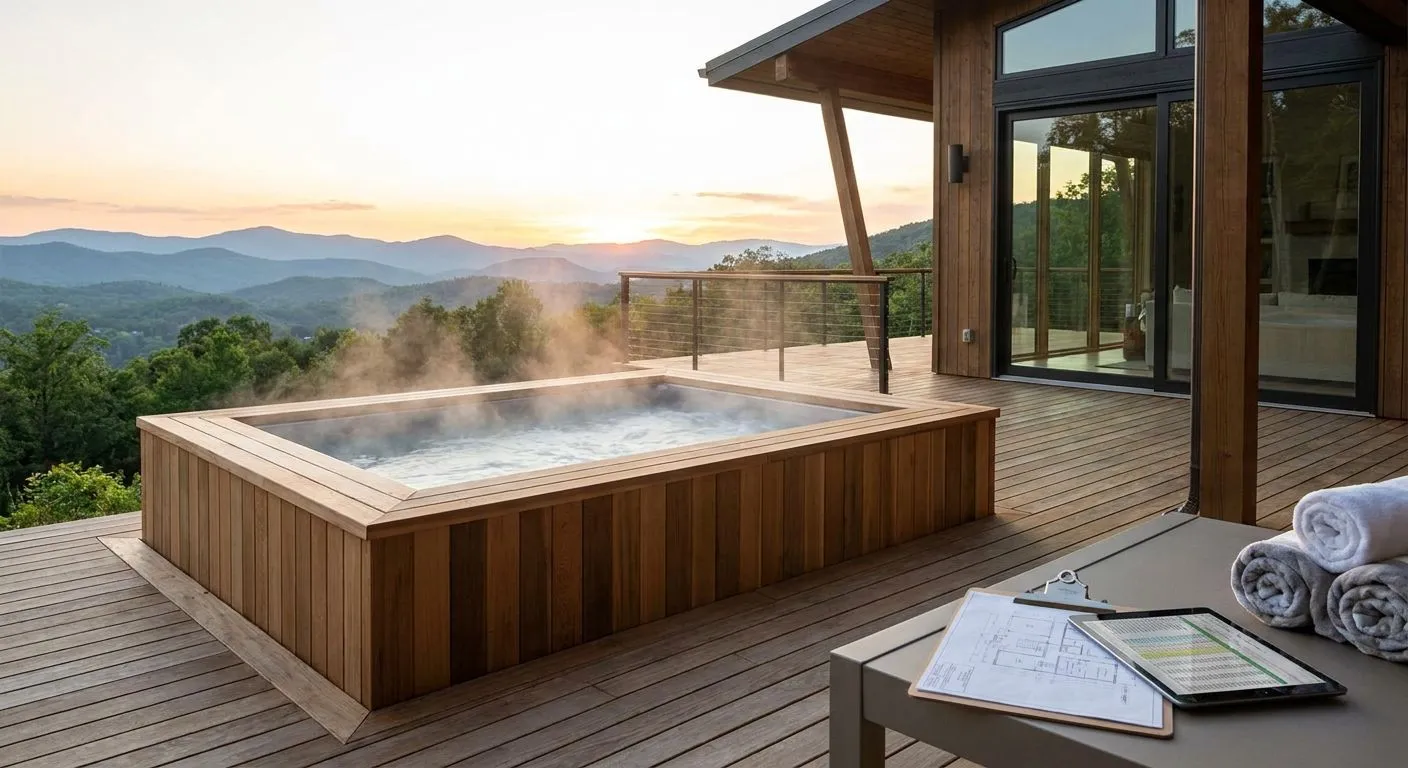
A hot tub wired directly into the home's electrical panel as permanent equipment, or framed into a deck so it can't be removed without demolition, starts to look like part of the building rather than a separate asset. An engineer reviewing the study has to weigh function against installation. Virtual Cost Segregation flags this category specifically because it's the one owners most often assume qualifies for accelerated treatment when the documentation doesn't support it.
“A hot tub bolted into a rental property's deck can end up depreciated over 27.5 years anyway if it reads as part of the structure, not as separate equipment.”
Why a Hot Tub's Classification Varies
- Attachment method - freestanding units score differently than ones bolted or framed into decking
- Electrical integration - a dedicated hard-wired circuit reads differently than a standard plug-in outlet
- Plumbing and drainage tie-in - a dedicated water line pushes toward land improvement, not personal property
- Permitting records - building permits filed for the installation can indicate how local code treats the structure
- Documentation on hand - invoices, contractor specs, and photos at time of installation support whichever class applies
- Placed-in-service date - this affects bonus depreciation eligibility under OBBBA, not the underlying asset class itself
Get your STR amenities classified correctly
An engineering-based study documents each amenity, including hot tubs, for your 2026 tax return.
Does a Hot Tub Qualify for Bonus Depreciation in 2026?
Yes, a hot tub classified as 5-year or 15-year property qualifies for 100% bonus depreciation in 2026 if it was acquired and placed in service after January 19, 2025 under the One Big Beautiful Bill Act. Property classified as 27.5-year residential real property does not qualify for bonus depreciation regardless of when it was placed in service. Details on how the math changed under 100% bonus depreciation in 2026 apply the same way to a hot tub as to any other reclassified asset.
Is a Hot Tub a Repair or a Capital Improvement?
A newly installed hot tub is a capital improvement, not a repair, because it adds a new asset to the property rather than restoring an existing one to its prior condition. Repairs get expensed in the year incurred; capital improvements get depreciated over their assigned recovery period, whether that's 5, 15, or 27.5 years depending on how the hot tub is installed.
Can You Depreciate a Hot Tub Added After You Bought the Rental?
Yes, a hot tub added after you acquired the rental is capitalized and depreciated starting on the date it's placed in service, independent of the property's original purchase date. This is common for short-term rental owners who add a hot tub mid-ownership specifically to raise nightly rates and booking volume, and it can be picked up in a later cost segregation study or a partial asset disposition review.
FAQ
Does a hot tub qualify as 5-year property in a cost segregation study?
A portable, plug-in hot tub typically qualifies as 5-year personal property. An in-ground, plumbed hot tub usually falls into the 15-year land improvement class instead.
Is a hot tub a land improvement or personal property?
It depends on installation. Freestanding units are personal property; units plumbed into dedicated drainage or filtration systems are usually land improvements.
Can I depreciate a hot tub added after I bought the rental?
Yes, a hot tub added after acquisition is capitalized and depreciated starting on its placed-in-service date, separate from the original purchase date.
Does bonus depreciation apply to hot tubs in 2026?
Yes, hot tubs classified as 5-year or 15-year property qualify for 100% bonus depreciation in 2026 if acquired and placed in service after January 19, 2025 under OBBBA.
Is a hot tub a repair or a capital improvement for tax purposes?
A new hot tub installation is a capital improvement because it adds a new asset rather than restoring an existing one, so it's depreciated rather than expensed.
How much of a hot tub's cost can be reclassified in a cost segregation study?
The reclassified amount depends on the hot tub's installed cost as documented in the study; classification, not a fixed percentage, determines the recovery period it lands in.
Do I need a site visit for a hot tub to be classified accurately?
No, engineering-based studies can classify a hot tub from photos, contractor invoices, and permit records without a site visit, though documentation quality matters.
Does a built-in hot tub always get a 27.5-year recovery period?
Not always. It depends on whether the hot tub functions as part of the structure or as separable equipment, which requires case-by-case engineering review.
One Last Thing
Most owners assume a hot tub is automatically a fast-depreciating asset because it's an amenity, not a structural feature. The installation details (a dedicated electrical circuit, a plumbed drainage line, or framing into a deck) can override that assumption and push the asset into a slower recovery period. Before adding a hot tub to a 2026 renovation budget, check the installation method against the classification table above, not just the sticker price.