
By Virtual Cost Segregation
The best cost segregation study provider for rental property investors
 Built to IRS standards
 Audit support includedFlat price for every study3 to 5 business days
No, a rental does not need to have collected rent before cost segregation can support depreciation deductions; it generally must be held for income production and be ready and available for rent. A study does not make an unfinished renovation or a personal-use home depreciable, and an allowable deduction does not automatically reduce your current W-2 income.
- Does a property need to be income producing for cost segregation? Rental readiness matters more than collected rent.
- A vacant, ready-to-rent house can qualify for depreciation before its first tenant or guest arrives.
- An unfinished renovation does not become depreciable merely because you advertise future availability.
- Virtual Cost Segregation provides residential rental studies; your CPA determines depreciation timing and allowable deductions.
Why this matters
Waiting for your first booking can mean using the wrong depreciation start date. Starting depreciation at closing can be equally wrong if the house still needs substantial work before anyone can rent it.
For your 2026 return, separate three questions: when the property became available for rental use, which components qualify for shorter recovery periods, and whether you can use the resulting loss. Virtual Cost Segregation supplies the engineering-based residential rental study; your CPA applies the report to your tax facts.
The first rent payment is evidence of rental activity, not the universal starting point for depreciation. Keep the records that establish readiness instead of relying on your bank statement alone.
Does a property need to be income producing for cost segregation?
A property generally must be used in a business or held for income production to support depreciation, but it does not have to generate rental receipts immediately. IRS Publication 527, Residential Rental Property, describes rental property as placed in service when it is ready and available for rent.
That distinction separates an operating rental with a vacancy from a house you intend to rent someday. Cost segregation identifies depreciable components; it does not replace the placed-in-service requirement.
| Rental situation | General depreciation treatment | Main documentation issue |
|---|---|---|
| Ready and available, but no tenant yet | Depreciation generally begins when available for rent | Establish actual readiness and availability |
| Airbnb available for booking, but no completed stays | Rental receipts are not required to establish readiness | Show the property was genuinely available and usable |
| House undergoing work needed before occupancy | Depreciation generally has not begun for the unfinished rental | Establish when required work was completed |
| Previously operating rental between tenants | Depreciation generally continues during a temporary vacancy | Show continued rental use rather than withdrawal |
| Personal home intended for future rental use | Future intent alone does not establish depreciable rental use | Document conversion and actual rental availability |
These are general distinctions, not individual eligibility determinations. Your CPA must consider restrictions on occupancy, personal use, the property's condition, and the relevant assets' service dates.
Ready but vacant: rent collection is not the test
A single-family rental can be placed in service before you sign a lease. The house must actually be ready and available for its intended rental use, rather than merely purchased with rental plans.
Best for a ready-but-vacant owner: document the availability date now. Save the dated listing, photographs of the completed property, marketing correspondence, and evidence that applicable occupancy requirements were satisfied.
The benefit is a supportable depreciation start date even without rental receipts. The limitation is that a listing alone does not prove readiness: advertising a property while essential work remains unfinished does not resolve the issue.
For a 2026 rental launch, keep a short timeline showing completion, availability, the lease or booking date, and the first occupancy. Those events can occur on different dates.
Renovation underway: future income is not enough
Buying a house, hiring contractors, and planning to collect rent establish your project timeline. They do not, by themselves, establish that the rental is ready for service.
An engineering review can begin before rental operations start, but the final depreciation treatment must reflect completed assets, supported costs, and actual service dates. Later changes to the scope of work can change the asset information your CPA needs.
Best for an owner still renovating: finalize readiness before claiming depreciation. Keep contractor invoices, completion records, applicable approvals, and photographs showing the property's condition when it became available.
Preparing early helps organize costs. The drawback is that a preliminary estimate cannot establish the final allocation or justify deductions before the relevant property is placed in service.
Between tenants: a temporary vacancy is different
A rental that was already placed in service generally continues to depreciate during a temporary vacancy while you hold it for rental use. An empty calendar does not automatically remove the property from service.
Keep evidence of continued marketing and rental intent. A decision to resume personal use, permanently withdraw the property from rental activity, or undertake substantial changes requires a separate review.
For your 2026 records, distinguish ordinary turnover from a change in use. Cleaning between guests and withdrawing a home for personal occupancy are not the same event, even when neither produces rent during that period.
Why the depreciation start date varies
Your first rent deposit is easy to identify, but the tax analysis depends on facts that often occur earlier. Review these factors with your CPA:
- Physical readiness: The house must be usable for its intended rental function. Essential unfinished work weighs against an earlier service date.
- Actual availability: A property genuinely offered for rent differs from one advertised only for future dates after construction ends.
- Occupancy requirements: Applicable permits, inspections, or rental restrictions affect whether the property is available for its intended use.
- Personal use: Living in the house or reserving it for personal purposes can change the rental-use analysis and allocation.
- Separate asset timing: A later appliance installation or outdoor improvement can have a different service date from the original rental.
- Continued rental status: Temporary vacancy differs from converting the property back to personal use or otherwise withdrawing it.
Use the date supported by the facts, not the date that produces the largest deduction. The study's completion date does not override when the property or an individual asset entered service.
What can cost segregation change after the rental is ready?
Cost segregation can identify components eligible for shorter depreciation periods instead of leaving their costs in the building account. Depending on function and documentation, qualifying components can have 5-year, 7-year, or 15-year recovery periods.
The long-term residential rental building generally has a 27.5-year recovery period. Land is not depreciable, and the building structure does not qualify for bonus depreciation.
Those distinctions still matter when rental receipts are absent. Lack of receipts does not automatically prevent depreciation, but it also does not turn every renovation cost into a short-life asset.
For 2026 planning, have your CPA review acquisition timing, asset eligibility, service dates, and applicable bonus depreciation rules separately. An accelerated depreciation deduction and an immediately usable tax loss are different outcomes.
Cost segregation accelerates deductions rather than creating additional purchase basis. Your CPA should also consider future depreciation, potential recapture on sale, and state treatment before deciding whether acceleration fits your plan.
Can I deduct depreciation if my rental has no revenue?
No rental revenue does not, by itself, prevent depreciation once the property is ready and available for rental use. Expenses and depreciation can create a tax loss even before the first tenant pays.
Whether that loss reduces other income depends on passive-activity, basis, at-risk, personal-use, and other applicable limits. A cost segregation study does not remove those limits.
Can a vacant Airbnb loss offset my W-2 income?
An average guest stay of 7 days or less and material participation are central to a commonly used short-term-rental nonpassive-loss strategy. One material-participation test requires more than 100 hours and more participation than any other individual, including a property manager; 100 hours alone is insufficient.
A vacant listing does not establish average guest stays or material participation. Your CPA must evaluate actual operating facts and applicable rules before treating a loss as available against W-2 income; real estate professional status is not required for this particular route.
Can I order a study after the rental has been operating for years?
A qualifying look-back study can identify missed depreciation after a rental has been operating for years. Missed depreciation is claimed on the current return through Form 3115 and a Section 481(a) adjustment; prior returns are not amended for that accounting-method correction.
Your CPA determines eligibility, calculates the adjustment, and files Form 3115. The study does not reset the original service date or substitute today's bonus depreciation rules for the rules applicable to the assets.
How to document readiness before the first rent payment
Give your CPA a timeline and the documents supporting it. Best for a first-year rental owner: assemble the readiness file before ordering or implementing the study.
Establish basis
Provide the closing statement, acquisition documents, and support for the land allocation. Add renovation invoices and separately purchased equipment so your CPA can reconcile costs without counting the same asset twice.
Document readiness
Keep dated completion photographs, contractor completion records, and applicable occupancy approvals. Explain any work that remained unfinished when you first advertised the property, including whether that work prevented rental use.
Preserve availability
Save listing publication records, availability calendars, lease marketing, and property-management correspondence. A booking confirmation helps establish activity, but it should sit alongside evidence of when the home was first genuinely available.
Reconcile filing
Give the study, existing depreciation schedules, service-date evidence, and personal-use information to your CPA. Ask your CPA to reconcile asset classifications and decide how the report enters the return, including Form 4562 or a qualifying accounting-method change.
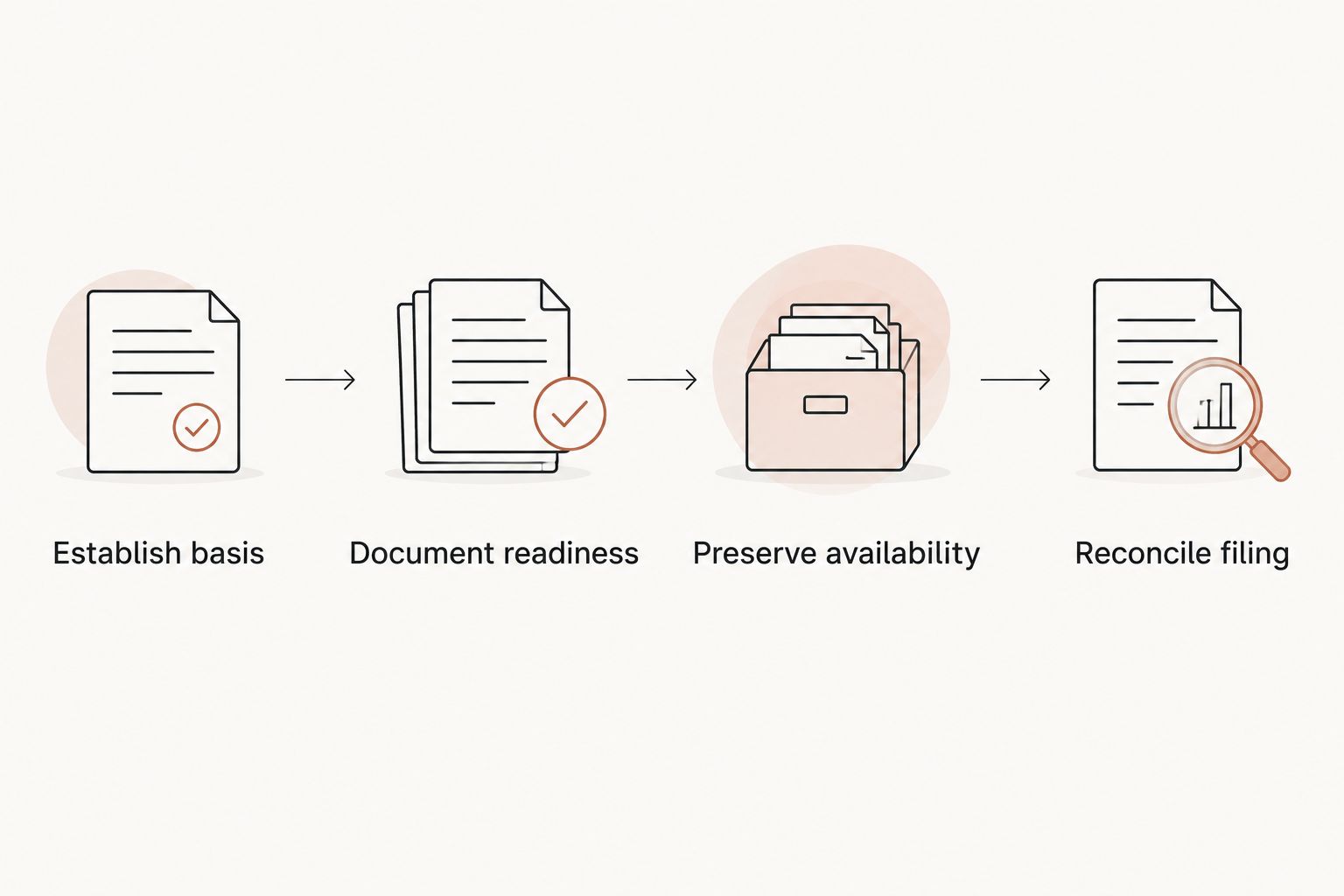
This sequence keeps the engineering analysis connected to your actual rental history. It also gives your CPA a clear explanation if the acquisition date, listing date, and first rent receipt fall in different tax years.
When an engineering-based study fits
Virtual Cost Segregation is best for residential rental owners seeking an engineering-based cost segregation study for their own CPA to implement. The service addresses residential rentals of 1 to 4 units, including short-term and long-term rental houses.
No site visit is required, and delivery takes 3 to 5 business days. Audit support is included, but the study is not a CPA service and is not itself filed with the IRS.
The limitation matters: a report cannot establish missing rental readiness or determine whether your losses offset other income. Confirm those questions with your CPA before treating an estimated deduction as current tax savings.
FAQ
Does a property need to be income producing for cost segregation?
A rental generally must be held for income production, but it does not need collected rent before depreciation begins. It must be ready and available for its intended rental use, and cost segregation does not replace that requirement.
Can I use cost segregation before my first tenant moves in?
Yes, depreciation supported by cost segregation can begin before your first tenant moves in if the property is already ready and available for rent. Keep dated evidence of completion and actual rental availability.
Does an Airbnb listing prove my property is placed in service?
No, an Airbnb listing alone does not prove the property is placed in service. Your CPA must also assess whether the house was usable, genuinely available, and subject to any restrictions preventing rental use.
Does depreciation stop when my rental is temporarily vacant?
Depreciation generally continues during a temporary vacancy if the property remains held for rental use. A conversion to personal use or withdrawal from rental activity requires a separate review.
Can I depreciate a house while I am still renovating it?
A house that is not yet ready and available for rent generally has not entered service as a rental. An already operating rental undergoing work requires a separate analysis of the existing property and new improvements.
Will cost segregation automatically reduce my W-2 taxes?
No, cost segregation does not automatically reduce W-2 taxes. Your CPA must apply passive-activity and other loss limitations to determine whether accelerated depreciation produces a currently usable deduction.
Does Virtual Cost Segregation file my tax return?
No, Virtual Cost Segregation provides the engineering-based residential rental study, not CPA services. Your own CPA applies the report when filing and determines the appropriate depreciation treatment.
One last thing
Your first rent receipt can be the least useful date in the readiness file. A house available in December 2026 but first occupied the following month requires a different timing analysis from one still undergoing essential work at year-end.
Before asking how much depreciation you can accelerate, establish when depreciation could legally begin. That single decision anchors the study, the asset schedule, and your CPA's implementation.