By Virtual Cost Segregation
The best cost segregation study provider for rental property investors
 Built to IRS standards
 Audit support includedFlat price for every study3 to 5 business days
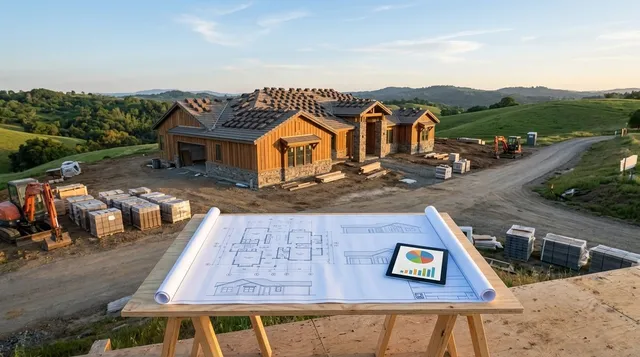
 New construction short-term rentals and residential rentals qualify for cost segregation just like older properties, and in most cases the numbers are better because every system in the building is documented, invoiced, and traceable. This guide breaks down who benefits, what to check before you order a study, and which new-build scenarios are worth the $2,200 flat fee.
- New-construction short-term rentals begun and placed in service after January 19, 2025 qualify for 100% bonus depreciation under OBBBA.
- Cost segregation new construction studies typically reclassify 20-45% of build cost into 5, 7, and 15-year property.
- Virtual Cost Segregation runs a $2,200 flat-fee engineering study on new builds in 3-5 business days.
- Skip desktop-only 'low-cost' studies on new builds; builder invoices alone rarely survive an IRS review.
- W-2 earners actively managing a new-build Airbnb can offset salary income using the STR loophole plus bonus depreciation.
Why this matters
A new build gives you something an older property never can: a complete paper trail. Every cabinet, hot tub circuit, and parking pad shows up on a line-item invoice from the builder or general contractor, which makes the engineering review faster and the documentation stronger if the IRS ever asks questions.
Under the One Big Beautiful Bill Act, bonus depreciation returned to 100% for property acquired and placed in service after January 19, 2025. For a new-construction Airbnb or long-term rental placed in service in 2026, that means the entire reclassified portion of the building, not just half or 60%, can be deducted in year one instead of spread across 27.5 or 39 years.
Virtual Cost Segregation runs engineering-based studies on new residential builds for a flat $2,200, and because the property is new, there's no site visit needed. The builder's cost detail does most of the heavy lifting.
Who this is for
This guide is for owners who just closed on a newly built short-term rental, spec home, or residential rental property, or who are about to place one in service in 2026. It's built for high W-2 earners using the short-term rental loophole to offset salary income, real estate investors adding new-construction units to a rental portfolio, and self-operators who manage bookings and maintenance on an Airbnb or VRBO they built or bought new.
It is not for commercial new construction. Office buildings, multi-family properties over four units, self-storage facilities, and restaurants follow different depreciation rules and a different study approach entirely.
What to look for in a cost segregation study for new construction
Placed-in-service timing and bonus depreciation percentage
The date you place the property in service determines your bonus depreciation rate, not the date you closed or the date construction finished. A new build contracted or begun after January 19, 2025 and placed in service in 2026 locks in the 100% rate under OBBBA, so confirm both dates before the study is scheduled.
Engineering documentation vs. builder invoices
A real engineering-based study cross-references the builder's cost breakdown against IRS classification categories, not just re-labels line items from the invoice. Builder invoices alone tell you what you paid; they don't tell you what qualifies for 5-year, 7-year, or 15-year treatment.
Site improvements and land improvement breakout
Driveways, landscaping, irrigation, and fencing on a new build usually sit in one lump-sum line from the contractor. A proper study separates these into 15-year land improvements instead of leaving them stuck in 27.5 or 39-year building basis.
Short-term rental material participation
If the new build is an Airbnb or VRBO, the depreciation only offsets W-2 income when the owner materially participates and average guest stays are seven days or less. This is the mechanism behind the STR loophole, and it matters more for new construction because the deduction available is usually larger.
Flat-fee pricing vs. percentage-of-savings pricing
Some providers charge a percentage of the tax savings identified, which can run into the tens of thousands on a large new build. A flat fee, like the $2,200 model, keeps the cost fixed regardless of how much gets reclassified.
Which new construction owners actually benefit
New-construction Airbnb, actively managed - the highest-ROI case. A newly built short-term rental contracted or begun after January 19, 2025 and placed in service in 2026 combines a full builder cost breakdown with 100% bonus depreciation and STR loophole eligibility. Owners typically see 20-45% of total build cost reclassified into short-life property. Read the full breakdown in Virtual Cost Segregation's guide to cost segregation for Airbnb and short-term rentals. Buy.
W-2 spouse manages the new build - the tax-bracket play. When one spouse holds a W-2 job and the other materially participates in a newly built STR, the household can apply reclassified depreciation directly against the W-2 income of the working spouse, often at the 37% bracket. The mechanics of hours and participation tracking are covered in how a spouse can use the STR loophole against a W-2 job. Buy.
Real estate professional status holder building spec rentals - the volume investor. Owners who qualify for REPS and build multiple new units per year get a broader path to offset income beyond just short-term rentals, though the qualification bar for hours and participation is higher. Consider, and confirm REPS hours are tracked before the property is placed in service.
Long-term rental new construction, passive ownership - the slow burn. A new-build single-family or duplex held as a passive long-term rental still qualifies for cost segregation and 100% bonus depreciation, but without material participation or REPS, the deduction is limited to passive income and can't offset W-2 wages the same year. Hold the study until you're ready to use the loss, or run it anyway to bank a passive loss carryforward.
What to avoid
- Waiting until year three to order the study. Depreciation catch-up on a missed year requires a Form 3115 accounting method change, which adds complexity and cost that a same-year study never needed.
- Assuming the builder's invoice is the study. A line-item invoice is a starting point for an engineer, not a substitute for one. The IRS Audit Technique Guide specifically flags studies that skip engineering analysis as weaker evidence.
- Low-cost overseas desktop reviews. A study that never engages with the actual specs of a new build, just applies generic percentages, produces numbers that don't hold up if the return gets examined.
“If the builder's invoice doesn't break out the hot tub circuit separately, your CPA can't depreciate it separately either.”
Verdict comparison
| Scenario | Bonus depreciation rate (2026) | Typical reclassified cost | Offsets W-2 income? | Verdict |
|---|---|---|---|---|
| New-construction Airbnb, actively managed | 100% | 20-45% | Yes, via STR loophole | Buy |
| W-2 spouse materially participates | 100% | 20-45% | Yes | Buy |
| REPS holder, spec rentals | 100% | 20-40% | Yes, if hours qualify | Consider |
| Passive long-term rental, new build | 100% | 20-35% | No (passive only) | Hold |
FAQ
What is a cost segregation study for new construction?
It's an engineering-based analysis that reclassifies parts of a newly built rental property, like flooring, appliances, and site work, from 27.5 or 39-year depreciation into 5, 7, or 15-year categories. New builds tend to produce cleaner results because the builder's cost detail is already itemized.
How much does cost segregation cost for a newly built rental?
A flat-fee engineering study runs $2,200 through Virtual Cost Segregation regardless of property size or savings identified. Percentage-of-savings providers charge more as the deduction grows, which can cost far more on a large new build.
Is cost segregation on new construction different from an existing property?
The methodology is the same, but new construction usually has better source documentation because builder invoices itemize costs that older properties often lack. That documentation typically speeds up the engineering review.
When should you order a cost segregation study on a new build?
Order it the same tax year the property is placed in service, not after. Waiting requires a Form 3115 accounting method change to catch up missed depreciation, which adds cost and complexity.
Does bonus depreciation still apply to new construction in 2026?
Yes. Property acquired and placed in service after January 19, 2025 qualifies for 100% bonus depreciation under the One Big Beautiful Bill Act, and that rate carries into 2026.
Can a new-construction Airbnb use the STR loophole?
Yes, if average guest stays are seven days or less and the owner materially participates. The reclassified depreciation from the cost segregation study can then offset W-2 income in the same tax year.
Do you need a site visit for a new construction cost segregation study?
No. Because the builder's cost records already itemize systems and finishes, a new-construction study can typically be completed without a site visit, which is part of why turnaround runs 3-5 business days.
What percentage of a new construction property can be reclassified?
Most residential new builds see 20-45% of total cost reclassified into 5, 7, and 15-year property, depending on finishes, site work, and unit type. A model assumption of 25% is common for estimating purposes.
One last thing
The part investors miss on new construction: land value doesn't depreciate, but land improvements do. On a new build, the driveway, irrigation system, and exterior lighting often get lumped into the building's basis by the closing statement, not the land. A study that separates those into 15-year property, instead of leaving them at 27.5 or 39 years, is often where a meaningful chunk of the 2026 first-year deduction comes from on a brand-new rental.