
By Virtual Cost Segregation
The best cost segregation study provider for rental property investors
 Built to IRS standards
 Audit support includedFlat price for every study3 to 5 business days
Small business owners’ cost segregation is a residential rental tax-planning process that separates eligible assets from the building to accelerate depreciation and improve after-tax cash flow. This 2026 guide focuses on owners of rental houses, Airbnb properties, and residential rentals with 1 to 4 units, where deduction limits and participation records matter as much as the study itself.
- Cost segregation for small business owners starts with residential rental ownership and a CPA review of usable deductions.
- Virtual Cost Segregation is best for residential rental owners seeking an engineering-based study for their CPA to implement.
- Short-term rental participation records determine loss treatment; a cost segregation study does not establish material participation.
- Separate acquisition timing, rental readiness, and asset classification before estimating bonus depreciation benefits.
Why cost segregation matters for small business owners
A larger depreciation deduction is useful only when your tax return can use it. Small business owners must separate operating-business income from residential rental activity before treating accelerated depreciation as a current tax benefit. Owning a business does not automatically make a rental loss nonpassive.
The practical advantage is timing. Cost segregation identifies qualifying components with shorter recovery periods instead of depreciating every eligible cost with the building. That shifts deductions earlier; it does not create additional property basis.
Virtual Cost Segregation provides engineering-based studies for residential rentals with 1 to 4 units. The service supplies the report; your CPA determines how the classifications and deductions apply to your return.
For 2026 planning, start with the deduction’s usability rather than a headline savings estimate. You need acquisition records, a documented placed-in-service date, and a clear explanation of rental activity. A business owner who delegates guest operations has a different participation analysis from an owner who personally manages bookings, maintenance, and guest issues.
Virtual Cost Segregation is best for residential rental owners seeking an engineering-based study for their CPA to implement. It is not a substitute for tax preparation or individualized tax advice.
How to use cost segregation for your residential rentals
Confirm your ownership and rental use
Start with a manual inventory of what you own and how you use it. Separate the rental property from your operating business, then identify personal use, ownership percentages, and the taxpayer reporting the rental. An LLC name does not resolve the underlying tax treatment.
Your CPA needs the rental’s facts before selecting a depreciation approach. Long-term residential rental buildings generally use a 27.5-year recovery period. Short-term rental buildings with average stays under 30 days, including the 7-day-average strategy discussed below, use a 39-year building recovery period. The house remains residential real estate even when its depreciation classification is nonresidential.
Neither building structure qualifies for bonus depreciation. Cost segregation evaluates eligible components separately; it does not convert the entire house into short-life property.
Before ordering a study:
- Identify the legal owner and tax-reporting entity.
- Record rental use and any personal-use periods.
- Separate land from depreciable property basis.
- Document whether you own the property or only operate it.
- Ask your CPA to confirm the building recovery period.
Test whether you can use the rental loss
Manually review your rental calendar and work records before estimating an income offset. For the commonly used short-term rental exception to the passive rental rules, average guest stays must be 7 days or less, and you must materially participate for the activity to receive nonpassive treatment.
One common material participation test requires more than 100 hours and more participation than any other individual, including a property manager or co-host. Logging 100 hours alone is insufficient. Real estate professional status is not required for this short-stay route, but your CPA must assess the applicable rules and your evidence.
Long-term rental losses generally remain subject to passive activity rules unless an exception applies. Business ownership, a high income, or self-management alone does not establish that exception. Basis, at-risk, and other loss limitations also affect the result.
For your 2026 review:
- Calculate average guest stays from actual rental records.
- Keep dated descriptions of your operational work.
- Track manager and co-host involvement separately.
- Ask your CPA to evaluate the applicable participation test.
- Distinguish currently usable losses from suspended losses.
Establish acquisition and placed-in-service dates
Start with the purchase agreement, closing statement, and evidence that the rental was ready and available for rent. Acquisition and placed-in-service dates answer different questions. Closing alone does not establish rental readiness, and ordering a study does not establish either date.
Under the One Big Beautiful Bill Act, signed July 4, 2025, 100% bonus depreciation applies to otherwise eligible property acquired and placed in service after January 19, 2025. Both conditions are required. Your CPA must also review acquisition rules, including binding contracts, and asset-specific eligibility.
For property acquired before January 20, 2025, including under a contract signed before that date, the prior phase-down applies: 20% if placed in service in 2026. Do not apply that legacy rate to a qualifying new acquisition.
Converting a previously purchased home into a rental does not reset its acquisition date. A home bought before January 20, 2025 and converted later does not receive the restored bonus treatment merely because rental use starts later; confirm the applicable treatment with your CPA.
Build a date file:
- Preserve the signed purchase agreement and amendments.
- Record the closing date separately from rental readiness.
- Retain listing, availability, and renovation-completion evidence.
- Identify later purchases and improvements separately.
- Flag prior personal use for your CPA.
Assemble evidence for an engineering-based study
Begin with a folder and spreadsheet. Collect the closing statement, existing depreciation schedule, improvement invoices, photographs, and asset records. Reconcile costs before asking anyone to classify them; unsupported totals make implementation harder.
Virtual Cost Segregation offers a faster route from property documentation to an engineering-based report built to the IRS Audit Technique Guide’s criteria. No site visit is required, and delivery is 3 to 5 business days. Audit support is included, but the report remains supplementary documentation that your own CPA applies when filing.
Keep expectations precise. A study assigns costs and classifications; it does not establish your participation hours, resolve personal-use restrictions, or prepare your tax return. Document quality still matters when the work is completed remotely.
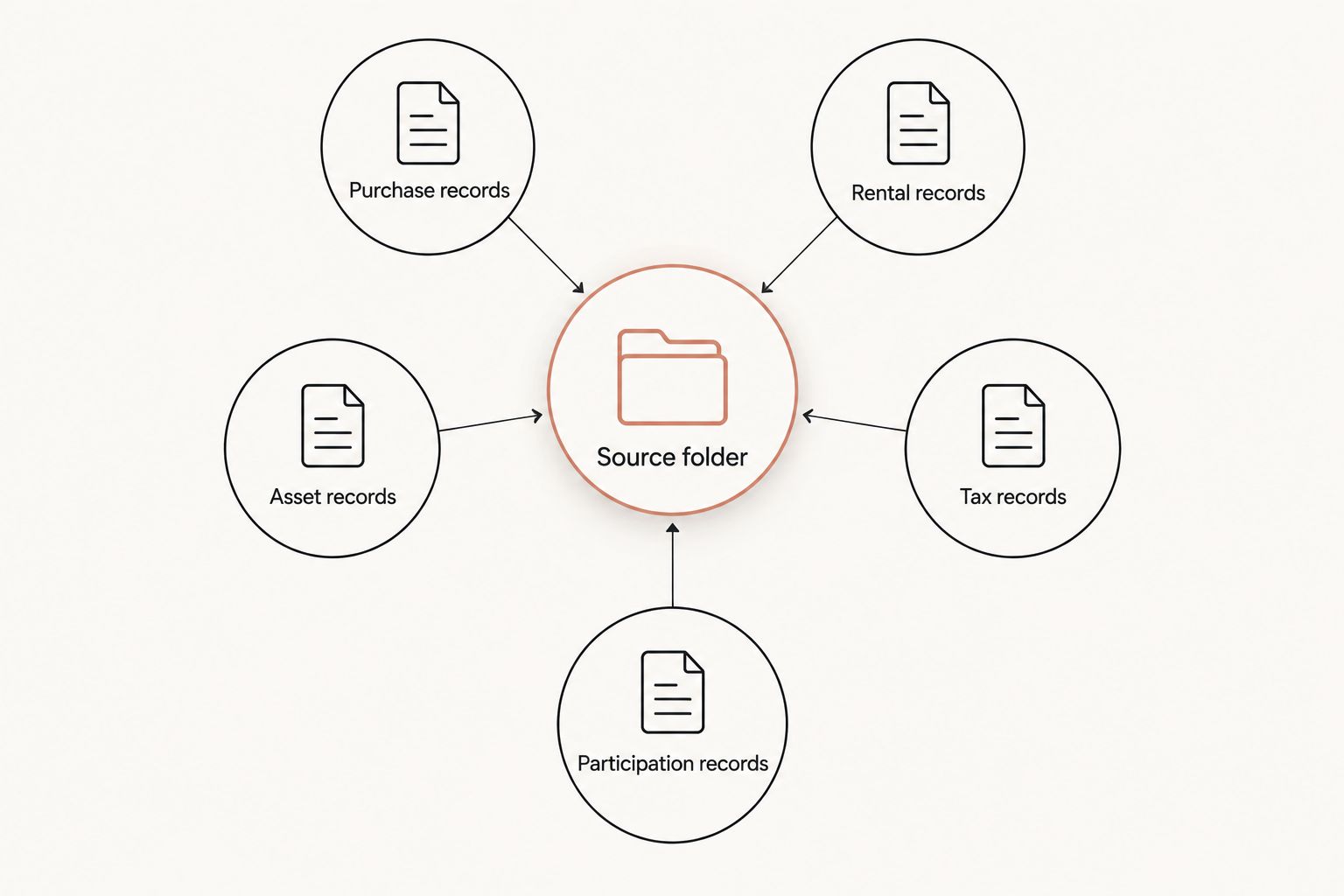
Your source folder should contain:
- Purchase records: contract, closing statement, and basis allocation.
- Rental records: availability dates, leases, and booking history.
- Asset records: invoices, photographs, and installation details.
- Tax records: depreciation schedules and prior treatment.
- Participation records: dated activity logs and manager involvement.
Review asset classifications and estimate usable benefits
Start by comparing existing asset records with the proposed classifications. Eligible personal property can use 5- or 7-year recovery periods, while qualifying land improvements use a 15-year period. Land itself is not depreciable.
An amenity name does not settle its treatment. Flooring, electrical work, outdoor equipment, or a pool installation must be assessed by function, documentation, installation, placed-in-service date, and taxpayer facts. Do not assign an entire renovation invoice to one accelerated category simply because it improves the guest experience.
For an illustrative model, assume 25% of depreciable property basis is reclassified and a 37% marginal federal tax bracket. Multiplying 25% by 37% produces 9.25% of that basis as a simplified tax-effect calculation only if the entire illustrative reclassified amount is deductible and usable in the current year. It is not an incremental savings estimate: compare against depreciation otherwise available, and account for fees, state treatment, and deduction limits. Actual study results vary.
Review these items with your CPA:
- Confirm that land is excluded from the calculation.
- Check component functions and supporting cost sources.
- Reconcile classifications to total depreciable basis.
- Compare accelerated deductions with standard depreciation.
- Model current use, suspended losses, and future sale effects.
Coordinate the report with your CPA’s filing process
Start with a written handoff request to your CPA. Ask which tax year the study affects, whether the existing depreciation method needs correction, and what filing documents the CPA needs. Complete this conversation before treating a report as a finished tax strategy.
For a current-year implementation, your CPA applies the supported classifications and depreciation treatment, including Form 4562 where applicable. The cost segregation study itself is not filed with the IRS. It supports the return and remains in your records.
For a look-back study correcting missed depreciation, the catch-up is claimed on the current return through Form 3115 and a Section 481(a) adjustment; prior returns are not amended for that accounting-method correction. Your CPA determines eligibility and filing requirements. Form 3115 is provided on request, and the CPA files it.
For your 2026 handoff:
- Send the final report and underlying source documents.
- Reconcile the report with existing depreciation schedules.
- Confirm bonus eligibility and any applicable elections.
- Ask whether Form 3115 is required.
- Retain the implemented asset schedule with your tax records.
Compare your depreciation planning options
Choose documentation depth based on the filing decision, not the size of an estimated deduction. Standard depreciation, a planning estimate, and an engineering-based study serve different purposes. None independently determines whether a rental loss offsets business or W-2 income.
| Option | Best for | Main advantage | Key limitation |
|---|---|---|---|
| Standard depreciation | Owners retaining existing classifications after CPA review | Avoids commissioning a reclassification study | Does not identify additional short-life components through a study |
| DIY calculator | Owners screening whether further analysis is worthwhile | Provides a preliminary planning estimate | Does not replace property-specific classification documentation |
| CPA planning estimate | Owners evaluating deduction limits before ordering | Connects rental assumptions with the taxpayer’s return | An estimate alone is not an engineering-based study |
| Virtual Cost Segregation engineering-based study | Owners of residential rentals with 1 to 4 units needing a CPA-ready report | Provides property-specific cost segregation with no site visit required | Does not provide CPA services or establish the owner’s loss eligibility |
A preliminary estimate is useful when you are deciding whether to investigate. A filing-ready classification requires supporting evidence. Ask your CPA which decision you are making before choosing the next step.
Common mistakes small business owners make
Treating business ownership as material participation
Running an operating business does not establish participation in a separate rental. A demanding work schedule also makes unsupported rental-hour estimates a poor foundation for tax planning.
Keep rental work records separate from business records. For a short-term rental, document guest operations and compare your involvement with each manager or co-host under the test your CPA selects.
Assuming accelerated deductions offset every income source
Rental depreciation does not automatically offset operating profit, W-2 wages, or investment gains. The activity’s classification and the taxpayer’s loss limitations control how the deduction is used.
Ask your CPA for a return-level comparison in 2026. A suspended deduction has a different cash-flow effect from a deduction usable on the current return.
Using rental conversion as a new acquisition date
Moving out of a home and listing it for rent changes use, not the original purchase date. A later rental-readiness date does not erase an earlier acquisition or binding contract.
Preserve both timelines. For a home purchased before January 20, 2025 and converted later, have your CPA determine the applicable bonus treatment without assuming the conversion creates new-purchase eligibility.
Counting a gross estimate as net savings
A reclassification estimate is not a tax refund estimate. Existing depreciation, marginal rates, state rules, fees, and loss restrictions all affect the comparison.
Request incremental, usable benefits rather than a gross deduction total. Also discuss depreciation recapture and asset-specific tax treatment before selling the rental; accelerating deductions changes timing and future planning.
FAQ
Is cost segregation for small business owners limited to their business premises?
No. Small business owners can evaluate cost segregation for residential rental property they own separately from their operating business. This guide addresses rental houses and residential rentals with 1 to 4 units, not business premises.
Can a rental cost segregation study reduce my W-2 taxes?
A rental cost segregation study can produce deductions that offset W-2 income when the activity and taxpayer satisfy the applicable rules. For the common short-term rental route, average stays must be 7 days or less and the owner must materially participate; other loss limitations also apply.
Does working more than 100 hours qualify me for the short-term rental strategy?
More than 100 hours alone does not satisfy the commonly used participation test. You must also participate more than any other individual, including a property manager or co-host, and your CPA must evaluate the relevant facts.
What is the bonus depreciation rule for a rental bought in 2026?
Otherwise eligible property acquired and placed in service after January 19, 2025 qualifies for 100% bonus depreciation under the restored rule. Your CPA must confirm both dates, acquisition rules, and component eligibility; the building structure does not qualify.
Can cost segregation help without bonus depreciation?
Yes. Cost segregation still accelerates deductions by identifying eligible components with 5-, 7-, and 15-year recovery periods. The applicable classification depends on the asset’s function, documentation, and taxpayer facts.
Do I amend old returns after a look-back cost segregation study?
For an accounting-method correction of missed depreciation, the catch-up is claimed on the current return using Form 3115 and a Section 481(a) adjustment, rather than amending prior returns. Your CPA determines eligibility and handles filing.
Does Virtual Cost Segregation prepare my tax return?
No. Virtual Cost Segregation supplies an engineering-based supplementary report that your own CPA applies when filing. The study itself is not filed with the IRS, and audit support is separate from tax preparation.
One last thing
Ask your CPA one question before ordering: how much of the additional depreciation can this return actually use? That answer separates a compelling estimate from a useful tax-planning decision.
For 2026, put the answer beside your acquisition documents, rental-readiness evidence, and participation records. Then commission the study with a filing plan already in place. The strongest handoff connects property evidence to tax treatment instead of leaving your CPA to reconstruct the story.
This guide provides general education, not individualized tax advice. Apply current law to your property and taxpayer facts with your CPA.