By Virtual Cost Segregation
The best cost segregation study provider for rental property investors
 Built to IRS standards
 Audit support includedFlat price for every study3 to 5 business days
 Professional landscaping on an Airbnb property is a land improvement for cost segregation purposes, meaning components like irrigation, fencing, retaining walls, and hardscape can often be pulled out of the property's long depreciation schedule and moved into a 15-year recovery class. That shift matters most for short-term rental owners because landscaping spend on an active Airbnb tends to be larger and more deliberate than on a standard long-term rental, since curb appeal and outdoor amenities drive booking rates.
- Cost segregation benefits of professional landscaping for Airbnb properties come from reclassifying irrigation, fencing, and hardscape into a 15-year recovery period instead of the building's standard schedule.
- Land itself never depreciates, only the improvements built on it, so separating the two on your invoices is the first move.
- OBBBA restored 100% bonus depreciation for property acquired and placed in service after January 19, 2025, which applies to qualifying landscaping assets in 2026.
- A $600,000 Airbnb reclassifying 25% of basis ($150,000) at a 37% tax bracket can generate roughly $55,500 in first-year tax savings.
- Virtual Cost Segregation delivers an engineering-based, no-site-visit study with a 100+ page report in 3-5 business days.
Why cost segregation matters for Airbnb landscaping
Land improvements are one of the more reliable wins in a residential cost segregation study because the IRS has long recognized categories like irrigation systems, exterior lighting, and site drainage as 15-year property under MACRS, separate from the building's own recovery period. For an Airbnb owner, that distinction is worth real money the moment landscaping goes in.
Here's the math. If a $600,000 short-term rental reclassifies 25% of its cost basis, or $150,000, into 5-, 7-, and 15-year property, and a chunk of that lands in the 15-year landscaping bucket, a high W-2 earner at a 37% marginal tax rate is looking at roughly $55,500 in first-year tax savings once 100% bonus depreciation is applied. That figure assumes the reclassified basis qualifies for bonus depreciation in the year it's placed in service, which is the case for property acquired and placed in service after January 19, 2025 under the One Big Beautiful Bill Act.
Landscaping doesn't get this treatment automatically. It has to be documented, separated from the land itself, and classified correctly during a cost segregation study for Airbnb and short-term rentals or as part of a standalone landscaping reclassification. Skip that step and the entire landscaping invoice defaults to the building's standard schedule, or worse, gets buried in nondepreciable land basis.
How to capture the cost segregation benefits of professional landscaping
Identify which landscaping elements qualify as land improvements
Not every dollar spent outdoors reclassifies the same way. Start by separating true land improvements from work that simply gets capitalized into land value, which never depreciates.
- Irrigation systems and drip lines
- Outdoor and pathway lighting
- Fencing and privacy screens
- Retaining walls and terracing
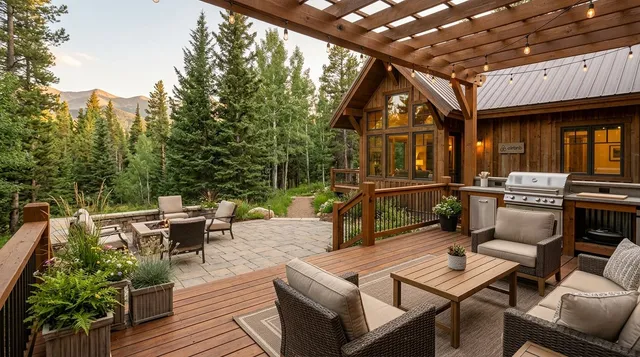
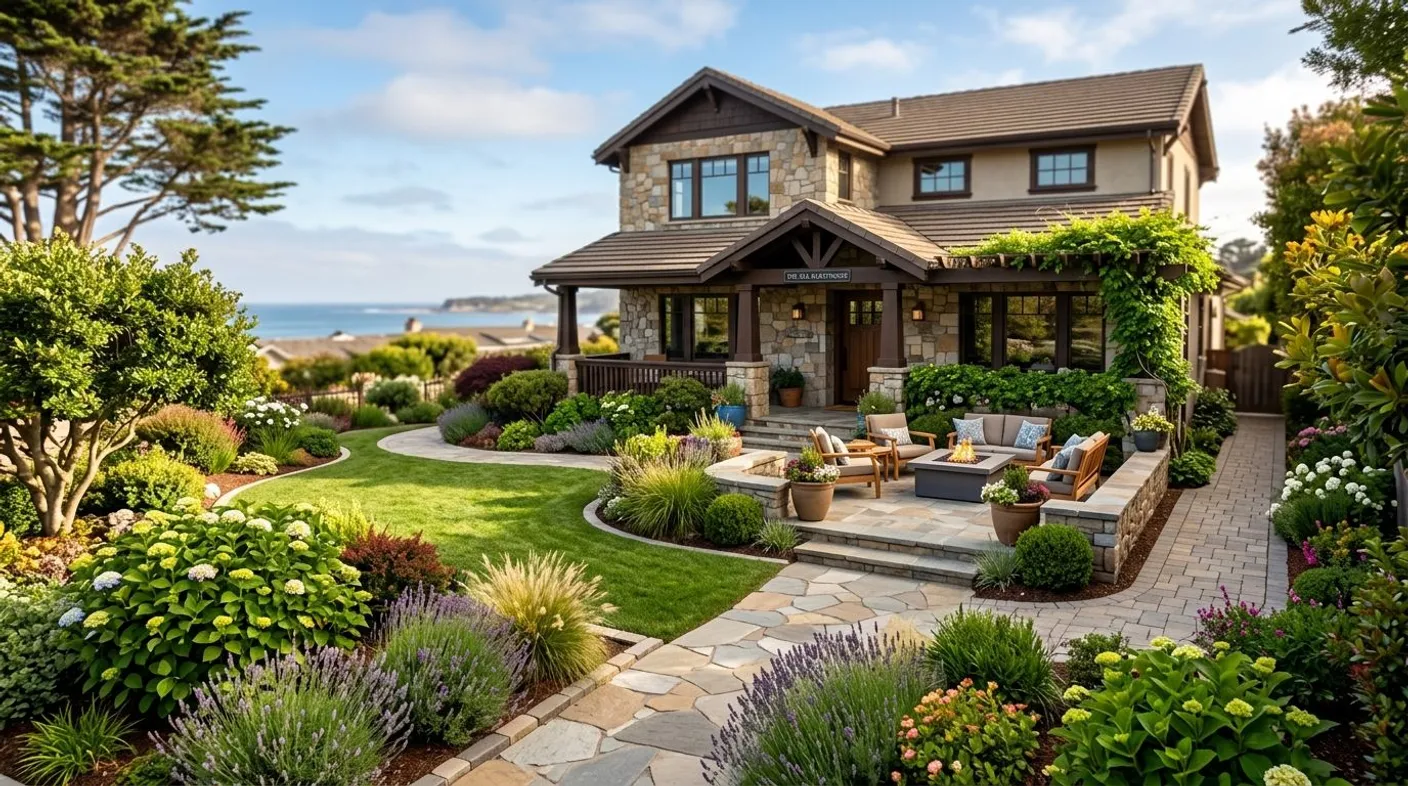
- Decorative hardscape: patios, walkways, paver driveways
- Drainage systems tied to the landscaped area
See how professional landscaping may be classified in a rental property cost segregation study for the classification logic behind each category. Classification depends on the asset's function, documentation, and placed-in-service date, and outcomes vary by property.
Separate land value from land improvement value
The land itself is never depreciable, no matter how much was spent grading or clearing it. Only the improvements built on top of the land qualify for accelerated treatment.
- General grading and clearing tied to the building pad: typically stays in land basis
- Utility trenching for irrigation lines: usually a land improvement
- Site drainage systems: usually a land improvement
- Purchased sod or turf tied to a specific installation date: often reclassifiable
- Raw acreage value at purchase: never depreciates
Document installation costs and placed-in-service dates
An engineer or CPA can't reclassify what isn't documented. Landscaping invoices get lost in general contractor bills more often than any other asset category.
- Keep landscaper invoices separate from general construction invoices
- Record the exact date sod, plantings, or hardscape were completed
- Photograph the site before and after installation
- Retain contracts that show design fees separately from installation labor
- Note whether the work was part of the original purchase or a later capital improvement
Apply the correct recovery period to each landscaping cost
Once costs are separated, each component gets its own MACRS life. Most landscaping-related land improvements fall into the 15-year class, but not everything qualifies.
- Irrigation and drainage systems: 15-year land improvements
- Fencing and retaining walls: 15-year land improvements
- Ornamental plantings integral to a hardscape feature: often 15-year
- General lawn seeding with no distinct structure: frequently capitalized to land, no depreciation
Related reading: how to depreciate land improvements after a cost segregation study covers the recovery period rules in more depth.
Time the improvement around bonus depreciation eligibility
Timing decides whether landscaping gets the full accelerated deduction in year one or spreads out over 15 years.
- Confirm the landscaping was placed in service, not just paid for, before year end
- Property acquired and placed in service after January 19, 2025 qualifies for 100% bonus depreciation under OBBBA
- A landscaping project finished in December 2026 can still be captured on the 2026 return if documentation supports the date
- Coordinate the study timing with your CPA before filing, not after
Coordinate the landscaping data with your CPA
The reclassification only helps if it makes it onto the tax return correctly.
- Hand your CPA a reclassification schedule broken out by asset class, not a lump sum
- Flag land improvements separately on Form 4562
- Ask whether a Form 3115 accounting method change applies if the landscaping was installed in a prior tax year
- Reference top tax write-offs for Airbnb hosts so landscaping doesn't get double-counted against other deductions
Order an engineering-based cost segregation study
Some owners try to informally separate landscaping costs using CPA judgment and IRS class life tables alone. That works for very small spends, but it produces a thin paper trail if the IRS ever asks for support.
An engineering-based study assigns documented cost and photographic evidence to each landscaping component, which is what audit-ready actually means. Virtual Cost Segregation builds these reports with no site visit required, using property records and imagery instead of an on-site walkthrough, and delivers a 100+ page report in 3-5 business days.
- Component-level classification for irrigation, fencing, and hardscape
- A recovery schedule your CPA can implement directly on Form 4562
- Audit support documentation included in the report
- No site visit required, so out-of-state and remote owners aren't blocked by logistics
Get your landscaping reclassified
Flat-fee, engineering-based cost segregation for Airbnb and short-term rental properties.
Comparing your options for Airbnb landscaping reclassification
| Option | Best for | Pricing model | Key limitation |
|---|---|---|---|
| DIY component list, no engineering study | Owners testing feasibility on a small landscaping spend | No cost | No engineering documentation behind the numbers, weak at audit. Wait |
| Rule-of-thumb or low-cost cost segregation firm | Owners who want a fast percentage estimate | Flat fee or percentage of savings | Often skips site-specific landscaping detail, thinner report. Hold |
| Engineering-based study, Virtual Cost Segregation | Airbnb owners with documented landscaping who want an audit-ready schedule | Flat fee | Requires organized invoices and placed-in-service dates from the owner. Buy |
| Overseas or offshore engineering contractor | Budget-only buyers | Low flat fee | Inconsistent audit defense support and higher IRS scrutiny risk. Skip |
Common mistakes Airbnb owners make with landscaping cost segregation
- Capitalizing the entire landscaping invoice to land. This overstates nondepreciable basis and leaves 15-year assets sitting inside a bucket that never depreciates.
- Losing the placed-in-service date. If you can't show when the retaining wall or irrigation system went in, the reclassification is much harder to defend.
- Mixing landscaping costs into the general contractor's bill. A single lump-sum invoice makes it nearly impossible to isolate irrigation, fencing, and hardscape line items later.
- Assuming all outdoor work qualifies for bonus depreciation. The land itself never qualifies. Only the improvements built on it do.
- Skipping the study because the landscaping spend feels small. Reclassified basis on a $30,000 landscaping project still moves real money into a faster schedule, especially at a 37% tax bracket.
FAQ
Does professional landscaping qualify for cost segregation?
Yes, professional landscaping components like irrigation systems, fencing, and hardscape typically qualify as land improvements in a cost segregation study, separate from the land itself. Classification depends on the specific asset's function and documentation.
What recovery period applies to landscaping in a cost segregation study?
Most landscaping-related land improvements fall into the 15-year MACRS class, while raw land value never depreciates. General grading with no distinct structure is often capitalized to land instead.
Can landscaping get 100% bonus depreciation in 2026?
Landscaping reclassified as a land improvement and placed in service after January 19, 2025 is eligible for 100% bonus depreciation under the One Big Beautiful Bill Act, provided the taxpayer's facts support that treatment.
Is land itself ever depreciable?
No, land is never depreciable under any recovery period. Only the improvements built on the land, such as irrigation, fencing, and hardscape, are eligible for accelerated depreciation.
How much of my landscaping cost gets reclassified?
The reclassified percentage depends on the property's specific improvements and documentation. As a general planning reference, cost segregation studies on residential rentals commonly reclassify around 20 to 45 percent of total cost basis across all asset categories, not landscaping alone.
Do I need a site visit for a landscaping cost segregation study?
No, Virtual Cost Segregation completes engineering-based studies without a site visit, using property records and imagery to document landscaping and other components.
Should I get a cost segregation study for landscaping installed after I bought the Airbnb?
Landscaping added after purchase can still be reclassified, and depending on timing, may require a Form 3115 accounting method change to catch up prior depreciation. Talk to your CPA about which year the improvement was placed in service.
What documentation does my CPA need for landscaping reclassification?
Your CPA needs separated landscaper invoices, placed-in-service dates, and the asset classification schedule from the cost segregation report to implement the deduction on Form 4562.
One last thing
Underground landscaping assets, irrigation lines, drainage systems, buried electrical for outdoor lighting, are the ones owners forget to document because they're invisible once the sod goes back down. A no-site-visit engineering-based study relies on invoices and photos taken during installation, not a walkthrough after the fact, which is exactly why keeping that paper trail from day one matters more for landscaping than almost any other asset class in a 2026 Airbnb cost segregation study.