By Virtual Cost Segregation
The best cost segregation study provider for Airbnb hosts
 Built to IRS standards
 Audit support includedFlat price for every study3 to 5 business days
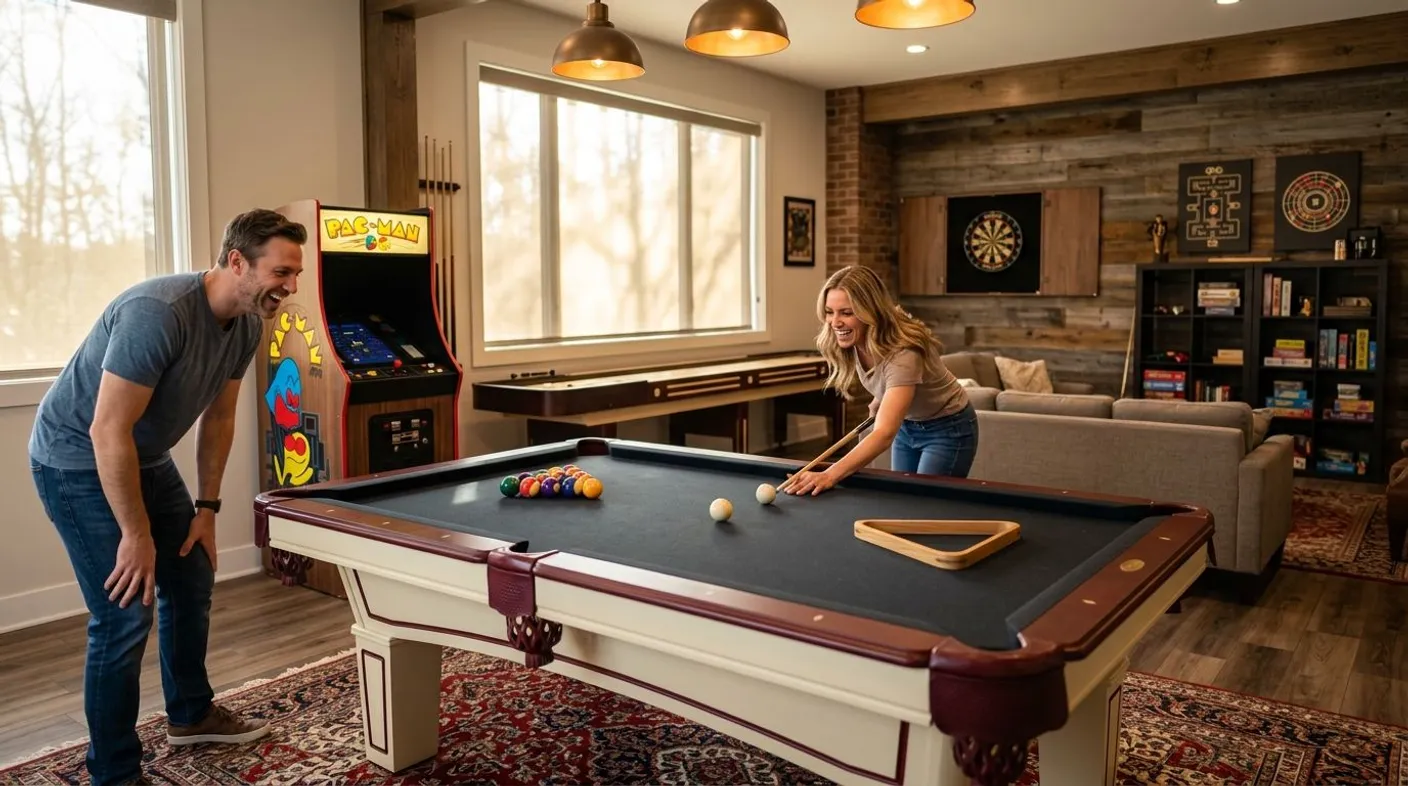
 Airbnb game rooms add pool tables, arcade cabinets, dart boards, and dedicated wiring that a standard rental never has, and the cost segregation benefits of Airbnb game rooms come from separating those items out of 27.5-year residential real property and into 5-year or 7-year personal property. That reclassification shortens the time you wait to claim depreciation on furniture and equipment you already bought. Every asset still gets evaluated on its own facts, based on function, installation, and documentation, not on a blanket rule for "game room stuff."
- Cost segregation benefits of Airbnb game rooms come from moving tables, arcade units, and specialty wiring into 5- or 7-year property instead of 27.5-year real property.
- A typical short-term rental study reclassifies roughly 20 to 45 percent of the property's cost basis into shorter-life assets.
- OBBBA restored 100 percent bonus depreciation for residential rental property acquired and placed in service after January 19, 2025, with no phase-out.
- Classification of game room assets depends on function, installation method, and documentation, not on the room's label.
- An engineering-based study, delivered as a 100+ page report in 3 to 5 business days, gives a CPA the detail a rule-of-thumb estimate skips.
Why this matters for game room owners
A short-term rental with a game room usually carries more personal property per square foot than a standard long-term rental. Pool tables, foosball tables, arcade cabinets, and poker sets sit alongside the same amenities other studies already cover, like a pickleball court build-out, and each one is a candidate for reclassification if it's documented correctly.
The difference between a game room and a bare living room isn't cosmetic to the IRS. A built-in bar cabinet, a wall-mounted arcade machine, and a freestanding poker table can land in different depreciation buckets depending on how they're attached and what they do. That's exactly the kind of line-item detail an engineering-based cost segregation study is built to catch, and it's why owners who furnish a dedicated entertainment space often see a higher reclassified percentage than a plain rental with a couch and a TV.
Building the case: a step-by-step approach
Inventory every game room asset before the study
Start with a full list of what's actually in the room. Missing an item means missing a deduction.
- Pool table, foosball table, or air hockey table
- Arcade cabinets or pinball machines
- Dart board with cabinet and surrounding trim
- Poker or card table with chip storage
- Board game shelving or dedicated storage furniture
- Bar cart, mini fridge, or wet bar cabinetry
- Wall-mounted TVs, projector, and screen
Separate personal property from structural components
Some game room items are freestanding and easy to classify. Others are built into the wall or floor, which changes the analysis.
- Freestanding furniture (tables, seating, storage) versus fixed built-ins
- Flooring installed specifically to support a pool table's weight
- Dedicated electrical circuits run for arcade machines or sound equipment
- Acoustic wall panels or soundproofing material
- Ceiling-mounted projector screens and mounting hardware
Apply the correct MACRS class life to each asset
Classification, recovery period, and bonus eligibility depend on the asset's function, how it's installed, and the taxpayer's own facts, not on the fact that it sits in a room labeled "game room." A pool table that's fully freestanding is evaluated differently than a built-in bar with plumbing.
- Portable furniture and appliances are typically evaluated as 5-year property
- Certain built-ins, specialty wiring, or exterior structures may fall into 7-year or 15-year land improvement categories
- Decorative millwork and lighting fixtures get assessed individually, not as a bundle
- The final call always depends on documentation, not on a general assumption
Document acquisition costs and installation dates
The paperwork you keep now determines what your CPA can support later.
- Vendor invoices that separate furniture cost from installation labor
- The placed-in-service date for each major asset, which drives bonus depreciation timing
- Renovation costs if the game room was added after the original purchase
- Photos of the finished space for audit documentation
Calculate bonus depreciation on reclassified assets
Under the One Big Beautiful Bill Act, bonus depreciation is restored to 100 percent for residential rental property acquired and placed in service after January 19, 2025, with no scheduled reduction. Assets with a tax life of 20 years or less generally qualify once they're properly reclassified. A game room stacked with 5-year and 7-year assets can meaningfully raise the first-year deduction compared to a rental with little personal property.
Order an engineering-based cost segregation study
A rule-of-thumb percentage estimate can tell you roughly what to expect, but it won't hold up the same way in an audit as a documented engineering-based study, the kind Virtual Cost Segregation prepares for short-term rentals and single-family rentals alike.
- Confirm the firm performs engineering-based analysis, not a flat percentage guess
- Ask whether remote documentation and photos can replace an in-person site visit
- Check turnaround time, especially if you're filing before a deadline
- Confirm audit support is included with the report, not billed separately
Hand the report to your CPA for filing
The study is a supplementary report your CPA implements, not a filing itself.
- Reclassified figures feed Form 4562 for the current tax year
- A study ordered after year one may require Form 3115 for a catch-up adjustment, covered in more depth on the page about bonus depreciation and cost segregation for short-term rentals
- If you're using the STR loophole to offset W-2 income, confirm material participation records line up with the study's placed-in-service dates
- Reconcile the reclassified percentage against your CPA's own workpapers before filing
Comparing your options
| Option | Best for | Cost structure | Key limitation |
|---|---|---|---|
| DIY calculator estimate | Screening a property before purchase | Free | Directional only, not audit-ready |
| Rule-of-thumb estimate from a general CPA | Simple homes with few personal property assets | Varies by preparer | Skips line-item detail on game room assets |
| Engineering-based study (Virtual Cost Segregation) | Game rooms, custom builds, and high asset counts | Flat fee | Requires upfront cost documentation |
| Overseas or low-cost contractor | Owners chasing the lowest quote | Flat fee, typically discounted | Higher audit exposure, less familiarity with US MACRS classes |
Verdict: an engineering-based study is the right call for any Airbnb with a game room, because a flat percentage guess can't itemize a pool table separately from a built-in bar.
Get your game room reviewed
See what an engineering-based study could reclassify in your property.
Common mistakes game room owners make
- Treating the whole build-out as one lump improvement instead of itemizing the pool table, arcade cabinets, and cabinetry separately.
- Assuming every game room feature automatically gets a short recovery period just because it's in an entertainment space. Classification still depends on function and installation.
- Skipping documentation on renovation costs when the game room was added years after the original purchase, which makes the placed-in-service date harder to support.
- Missing the placed-in-service date needed to lock in 100 percent bonus depreciation for 2026 filings.
- Confusing STR loophole material participation rules with asset classification. They're separate questions your CPA needs answered independently.
FAQ
What's the best way to depreciate an Airbnb game room?
An engineering-based cost segregation study is the most defensible way, since it itemizes each asset (pool table, arcade cabinet, built-in bar) instead of applying one flat estimate to the whole room. The report then feeds your CPA's Form 4562.
Do pool tables and arcade games qualify for bonus depreciation?
They can, if they're properly reclassified as personal property with a tax life of 20 years or less and acquired and placed in service after January 19, 2025. Eligibility depends on documentation and how each asset is installed, not on the room's name.
Is cost segregation worth it for a rental with just one game room?
It depends on the total reclassified basis, which averages 20 to 45 percent across short-term rental studies. A single game room with several thousand dollars in furniture and equipment can still move that needle noticeably.
How much of a game room's cost can be reclassified?
There's no fixed percentage for a single room, since the study looks at the entire property. Owners commonly see 20 to 45 percent of total cost basis reclassified once furniture, fixtures, and specialty items across the whole home are itemized.
Does OBBBA still allow 100 percent bonus depreciation in 2026?
Yes. The One Big Beautiful Bill Act restored 100 percent bonus depreciation for residential rental property acquired and placed in service after January 19, 2025, and it applies through 2026 filings with no scheduled step-down.
Can I claim game room deductions if I already filed my return?
Yes, through a Form 3115 accounting method change, which lets your CPA catch up missed depreciation without amending prior returns. This requires the cost segregation study to identify the reclassified assets first.
Does a game room need a site visit for cost segregation?
Not necessarily. Remote, no-site-visit studies rely on photos, floor plans, and purchase documentation to classify game room assets, which works well for owners managing rentals out of state.
How does a game room affect the STR loophole?
A game room doesn't change the material participation test for the STR loophole, but it can raise the total depreciation available once the property qualifies. The two rules operate independently and both need to be satisfied.
One last thing
Specialty electrical circuits, the ones run specifically for arcade cabinets, sound systems, or a wet bar, sometimes get evaluated separately from the general lighting circuit for the rest of the house. That distinction is easy to miss on a rule-of-thumb estimate and easy to catch on an engineering-based study, and it's often the difference between a mediocre reclassified percentage and a strong one on a game room-heavy property in 2026.