By Virtual Cost Segregation
The best cost segregation study provider for rental property investors
 Built to IRS standards
 Audit support includedFlat price for every study3 to 5 business days
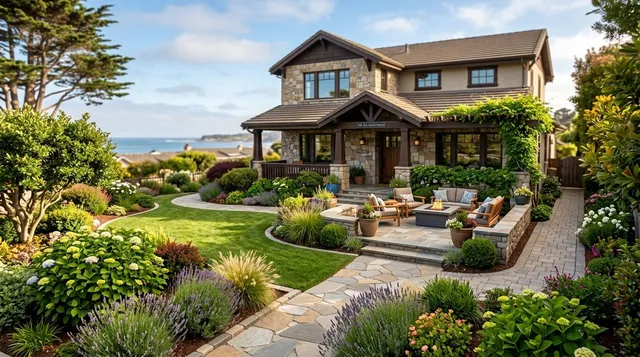
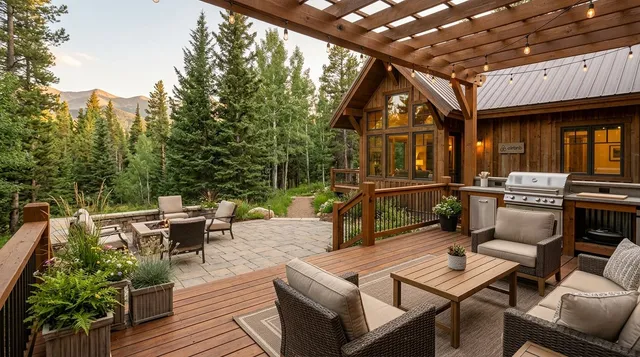
 Airbnb fire pits and outdoor kitchens are site and land improvement assets that a cost segregation study can move out of 27.5-year residential depreciation and into 15-year or 5-year recovery periods, pulling deductions forward instead of spreading them across three decades. Hosts who build these amenities to drive bookings face a narrower classification question than a full-property study does: a portable gas fire pit is treated differently than a built-in outdoor kitchen with plumbing, gas lines, and electrical runs, and that distinction changes what lands on your 2026 return.
- Cost segregation benefits of Airbnb fire pits and outdoor kitchens come from reclassifying components out of 27.5-year property into 15-year land improvements or 5-year personal property.
- An engineering-based study documents how each amenity functions so gas lines, pads, and built-in appliances get separated instead of lumped into the building shell.
- 100% bonus depreciation applies to qualifying property acquired and placed in service after January 19, 2025 under the OBBBA, and it carries into 2026.
- Classification depends on function, documentation, placed-in-service date, and your facts. No amenity automatically gets a set recovery period.
- Virtual Cost Segregation is best for residential short-term rental owners who want a flat-fee, CPA-ready report with audit support.
Why this matters for Airbnb hosts with outdoor amenities
Outdoor kitchens and fire pits are among the highest-ROI additions a short-term rental host makes to a listing, and most owners treat them as a single capital improvement bolted onto the building basis. That is the expensive default. A cost segregation study looks at each amenity separately: how it is plumbed, whether it is anchored or freestanding, and whether it functions as part of the building structure or as a site improvement around it.
The IRS Cost Segregation Audit Technique Guide draws this line in its chapters on asset classification. A wood-burning fire pit sitting on gravel reads differently than a gas-fed unit tied into the home's line with a poured concrete surround. An outdoor kitchen with built-in cabinetry and plumbed water lines gets reviewed for whether those utility connections primarily serve the amenity or the building's own systems. Classification, recovery period, and bonus eligibility depend on function, documentation, placed-in-service date, and the taxpayer's facts. There is no blanket rule that says outdoor kitchens are 5-year property.
For a host actively managing a short-term rental, this matters more than it does for a passive long-term landlord. In 2026, every dollar correctly reclassified into a 5-year or 15-year bucket is a dollar of accelerated depreciation that can offset W-2 income, provided material participation requirements are actually met.
How to capture the deduction on outdoor amenities
Document the build before anything gets covered up
Start here, before you spend a dollar on a report. Photograph and log every outdoor amenity the way an examiner would want to see it.
- Photograph the fire pit or outdoor kitchen during installation, showing gas line runs, electrical hookups, and the pad underneath
- Ask your contractor for invoices broken out by trade (gas, electrical, masonry, appliances) instead of one lump-sum bill
- Record the placed-in-service date, meaning the date the amenity was ready and available for guest use, not the purchase date
- Save the listing photos and description showing the amenity marketed to guests
- Note whether each structure is anchored to a permanent foundation or freestanding
Separate the land improvement from the personal property
A study cannot treat "the outdoor kitchen" as one line item. It has to split the concrete pad, the built-in grill, the countertop, the gas line, and the refrigerator into distinct asset classes, each with its own analysis.
- Concrete pads, patios, and masonry surrounds are typically reviewed as land improvements with a 15-year recovery period
- Freestanding appliances such as grills, refrigerators, and ice makers are often reviewed as 5-year personal property
- Gas lines and electrical runs are allocated based on whether they primarily serve the amenity or the building's systems
- Wood-burning fire pits without utility connections are evaluated on different facts than plumbed gas units
- Fixtures wired into the amenity area are reviewed alongside the outdoor lighting and fencing elsewhere on the property
Order an engineering-based study instead of a rule-of-thumb estimate
You can attempt a manual allocation using your own judgment and published cost data, and some hosts do this for very small amenity additions. It is slow, and it puts the entire burden of defending the classification on you.
- A rule-of-thumb desktop estimate applies industry averages without property-specific engineering backup
- An engineering-based report ties each component to the actual contractor invoices and photos for your property
- No site visit is required for most residential studies, since photo documentation and property records substitute for an in-person inspection
- Report format matters under review: a 100+ page engineering-based study carries different weight than a two-page spreadsheet
- Cross-check the logic against how a hot tub may be classified in the same property
Confirm the placed-in-service date
The date matters as much as the classification. Bonus depreciation is 100% for qualifying property acquired and placed in service after January 19, 2025 under the One Big Beautiful Bill Act, and that rate applies in 2026.
- Confirm the amenity was available for guest use, not merely delivered or installed
- Treat a mid-year amenity addition as its own placed-in-service analysis, separate from the main property
- Keep the contractor completion document or final invoice as your primary date evidence
- Assets placed in service before January 20, 2025 follow the rules in effect for that year
Run the math before you commit
Rough numbers help. Take a $500,000 short-term rental where a study reclassifies roughly 25% of property value into shorter-life asset classes. That is $125,000 moved off the 27.5-year schedule.
- At 100% bonus depreciation in 2026, a high earner in the 37% bracket sees a first-year benefit in the range of $46,000 on that $125,000, before state effects
- These are typical averages and estimates, never a guarantee of what your study produces
- Apply your own marginal rate, not a generic one, since the gap between the 24% and 37% brackets changes the decision
- Factor in whether you meet material participation hours, because the deduction only offsets W-2 income if that test is satisfied
- Sanity-check your assumptions with a reclassified percentage estimate before ordering
Time the report around your filing deadline
Ordering a study in December for a return due in April leaves your CPA almost no room to work.
- Order as soon as the renovation or acquisition closes, not the week before filing
- A 3-5 business day turnaround still needs buffer for your CPA to apply the numbers to Form 4562
- Coordinate the timeline with your CPA's own calendar if you plan to extend
- Studies covering prior tax years are generally handled through a Form 3115 accounting method change rather than an amended return
Hand the report to your CPA
The report is not a tax filing and is not submitted to the IRS on its own. It is supporting documentation your CPA applies when preparing the return.
- Give your CPA the full report, not the summary page
- Confirm how the reclassified assets change your depreciation schedule in future years, not just 2026
- Verify the report includes audit support documentation
- Reconcile the land improvement and personal property splits against your own contractor invoices
Get your amenities classified correctly
Flat-fee, engineering-based studies built for residential and short-term rentals.
Comparing your options
| Option | Best for | Key limitation |
|---|---|---|
| DIY manual allocation | Hosts with one small amenity addition | No engineering backup, weak documentation under review |
| Rule-of-thumb desktop estimate | Hosts wanting a fast ballpark number | Industry averages ignore your actual build-out |
| Engineering-based study (Virtual Cost Segregation) | Hosts adding meaningful outdoor living space who want audit-defensible support | Requires contractor invoices and photos to produce its best result |
| No study, standard depreciation | Owners with minimal capital improvements overall | Leaves accelerated depreciation unclaimed on larger amenity spends |
Virtual Cost Segregation is the right fit for residential short-term rental owners with a built-in fire pit or outdoor kitchen who want a flat-fee, engineering-based report their CPA can implement. Skip a study entirely if your outdoor amenity budget is a few hundred dollars of freestanding furniture.
“The deduction is not driven by what the amenity cost. It is driven by how well the build is documented.”
Common mistakes Airbnb hosts make with outdoor amenities
- Rolling the whole amenity into the building basis. That forces the entire cost onto a 27.5-year schedule and buries the components that may qualify for shorter recovery periods.
- Assuming a fire pit automatically gets a 5-year life. Permanence, utility connections, function, and documentation drive the answer, not the amenity category.
- Skipping photos during construction. Once pavers and finishes cover the gas line and foundation work, proving the split gets materially harder.
- Getting the placed-in-service date wrong. The date controls which year's bonus depreciation rules apply, including the 100% rate for property acquired and placed in service after January 19, 2025.
- Filing before the CPA reconciles the report. A study that never reaches Form 4562 correctly delivers nothing.
FAQ
What are the cost segregation benefits of Airbnb fire pits and outdoor kitchens?
The benefit comes from reclassifying components such as concrete pads, appliances, and utility connections out of 27.5-year building depreciation into 15-year land improvements or 5-year personal property. That pulls deductions into earlier tax years instead of spreading them across 27.5 years.
Does a fire pit qualify for bonus depreciation?
It depends on how the asset is classified and when it was placed in service. Qualifying property acquired and placed in service after January 19, 2025 is eligible for 100% bonus depreciation under the OBBBA, and that rate applies in 2026.
Is an outdoor kitchen a land improvement or personal property?
Often both, split across components. Hardscaping and concrete surrounds are typically reviewed as 15-year land improvements, while freestanding grills and refrigerators are commonly reviewed as 5-year personal property, subject to the facts and documentation.
How much does a cost segregation study cost for a short-term rental?
Pricing varies by provider and property type. Check current pricing on the provider's site rather than relying on a generic figure, and confirm whether audit support is included.
Do I need a site visit for outdoor amenities to be included?
No site visit is required for most residential studies. Photo documentation, contractor invoices, and property records substitute for an in-person inspection.
How long does a cost segregation study take to complete?
A flat-fee residential study typically takes 3-5 business days once documentation is submitted. Build in extra time for your CPA to apply the results before your filing deadline.
Can I claim the deduction without a formal study?
You can attempt a manual allocation, but without engineering documentation the classification is harder to support if the return is examined. A formal engineering-based report provides audit-defensible backup that a spreadsheet estimate does not.
Does the STR loophole apply to outdoor kitchen deductions?
Accelerated deductions from a study can offset W-2 income only if the owner meets material participation requirements for short-term rentals. The amenity classification and the participation test are separate questions and both must hold.
One last thing
The biggest variable on fire pit and outdoor kitchen deductions is not the amenity's price tag. It is the invoice detail. A $15,000 built-in outdoor kitchen with itemized gas, electrical, masonry, and appliance invoices supports a cleaner component breakdown in 2026 than a $40,000 build billed as one line. Ask the contractor for itemized invoices before the job wraps, not six months later when you order the study.