By Virtual Cost Segregation
The best cost segregation study provider for rental property investors
 Built to IRS standards
 Audit support includedFlat price for every study3 to 5 business days
 Cost segregation and 100% bonus depreciation work on a long-term rental the same way they work on an Airbnb: the depreciation math doesn't change, but where those deductions land on your return does. This breaks down what a buy-and-hold rental owner actually gets from a cost segregation study in 2026, and exactly where the short-term rental loophole stops applying.
- Cost segregation applies equally to long-term and short-term rentals; the tax result differs because of passive activity rules.
- 100% bonus depreciation applies to property acquired and placed in service after January 19, 2025 under the OBBBA.
- A $500,000 long-term rental reclassifying 25% of its value into short-life property front-loads roughly $125,000 in deductions.
- Without real estate professional status, those losses are usually passive and can't offset W-2 income directly.
- Virtual Cost Segregation runs flat-fee, engineering-based studies for residential rentals with no site visit required.
Why this matters
Most of what gets written about cost segregation online is aimed at short-term rental owners chasing the STR loophole, so long-term landlords assume the study doesn't apply to them. It does. A engineering-based study reclassifies the same building components whether the tenant stays two nights or two years.
What changes is IRC 469, the passive activity loss rule. Short-term rentals with material participation dodge passive treatment entirely. Long-term rentals almost never do, so the accelerated deductions a cost segregation study generates get funneled through the passive loss bucket unless you qualify as a real estate professional. That single distinction determines whether your 2026 depreciation actually offsets your paycheck this year or sits on the shelf until you have passive income to absorb it.
Does cost segregation and bonus depreciation work on long-term rentals?
Yes. A long-term rental is depreciated exactly like any other residential rental property once a cost segregation study reclassifies part of the building into 5-year, 7-year, and 15-year components instead of leaving the entire structure on a 27.5-year schedule. The reclassified portion qualifies for 100% bonus depreciation in 2026 the same as it would on a short-term rental. What's different is whether the resulting loss can touch your W-2 income right away.
| Rental type | Material participation available? | Losses offset W-2 income? | 2026 bonus depreciation rate |
|---|---|---|---|
| Short-term rental (avg. stay under 7 days) + material participation | Yes, via the STR loophole | Yes, directly | 100% |
| Long-term rental, no real estate professional status | No | Only against passive income, unless the $25,000 allowance applies | 100% |
| Long-term rental with real estate professional status (750+ hours) | Yes, via REP status | Yes, directly | 100% |
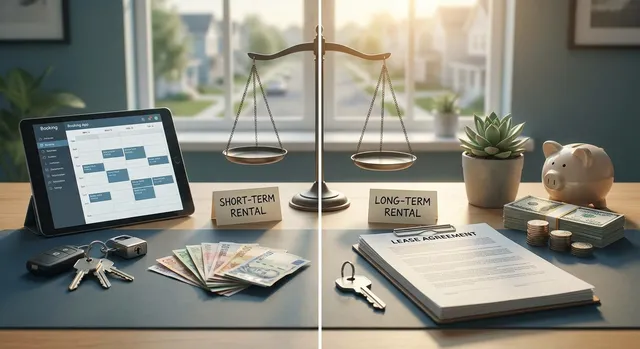
The reclassification and the bonus rate are identical across all three rows. The only variable is your activity classification under IRC 469, and that's the piece most long-term rental owners never check before ordering a study. If you're weighing which strategy fits your income and time commitment, comparing STR loophole savings against long-term rental savings side by side is the faster way to decide before you order anything.
Long-term rental cost segregation: $125,000 reclassified on a $500,000 property
Assume a $500,000 long-term rental and a study that reclassifies 25% of the property's value into shorter-life assets, a typical outcome for a residential property with standard finishes. That's $125,000 moved off the 27.5-year schedule and into categories eligible for 100% bonus depreciation in the year the property is placed in service.
If you qualify as a real estate professional and sit in the 37% bracket, that $125,000 deduction is worth roughly $46,250 in reduced tax liability, applied directly against ordinary income including W-2 wages. If you don't qualify as a real estate professional, that same $125,000 still exists as a loss, it just can't touch your paycheck until it clears the passive activity gate.
Passive loss limit: $25,000 special allowance phases out at $100,000-$150,000 MAGI
There's a narrow exception that helps some long-term rental owners before they hit real estate professional status. If you actively participate in managing the rental, up to $25,000 of passive losses can offset non-passive income, including W-2 wages. That allowance phases out on a sliding scale between $100,000 and $150,000 of modified adjusted gross income and disappears entirely above $150,000.
For a high W-2 earner already past that MAGI threshold, the $25,000 allowance is off the table, which means every dollar of accelerated depreciation from a long-term rental cost segregation study becomes a suspended passive loss unless real estate professional status is on the table for that tax year.
“Cost segregation doesn't care whether the rental is short-term or long-term. The passive activity loss rules do.”
Why the tax benefit varies for long-term rentals
- Modified adjusted gross income – above $150,000, the $25,000 active participation allowance disappears completely.
- Real estate professional hours – 750+ hours and more time in real estate than any other trade converts passive losses to non-passive.
- Placed-in-service date – property acquired and placed in service after January 19, 2025 gets 100% bonus depreciation under the OBBBA; earlier acquisitions may fall under a lower percentage.
- Portion of building versus land – land never depreciates, so a property with a larger land allocation has less basis available to reclassify.
- Missed prior-year depreciation – owners who held the property for years before ordering a study can often catch up missed deductions with a Form 3115 accounting method change instead of amending returns.
- Whether the property could convert to short-term – some long-term rental owners restructure a unit toward short-term use specifically to access the STR loophole going forward.
Can I use the STR loophole on a long-term rental?
No, the STR loophole requires an average guest stay of 7 days or less plus material participation, and a long-term lease by definition doesn't meet the average-stay test. Cost segregation still applies to the property, but the resulting depreciation follows the passive activity rules for buy-and-hold rentals instead.
What happens to suspended passive losses from a long-term rental cost segregation study?
Suspended passive losses carry forward indefinitely and stack up year after year until you have passive income to absorb them or you sell the property. On a full disposition of the rental, IRC 469(g) releases all suspended losses at once against the gain, which is often the single largest deduction event a long-term rental owner sees.
Does 100% bonus depreciation apply to long-term rentals bought before 2025?
It depends on the placed-in-service date, not the property type. The OBBBA restored 100% bonus depreciation for property acquired and placed in service after January 19, 2025, and property placed in service earlier follows the bonus percentage in effect at that time.
Order a residential cost segregation study
Flat-fee, engineering-based reports for long-term and short-term rentals, no site visit required.
FAQ
Does cost segregation work on long-term rentals?
Yes, cost segregation applies to long-term rentals the same way it applies to short-term rentals in 2026, reclassifying part of the building into 5-, 7-, and 15-year property eligible for bonus depreciation. The difference is that long-term rental losses are usually passive under IRC 469 unless the owner qualifies as a real estate professional.
Is 100% bonus depreciation still available in 2026?
Yes, 100% bonus depreciation is available in 2026 for qualifying property acquired and placed in service after January 19, 2025 under the OBBBA. Property placed in service before that date may fall under an older, lower bonus percentage.
Can passive losses from a cost segregation study offset W-2 income?
Only if you qualify as a real estate professional, or your losses fall under the $25,000 active participation allowance, which phases out between $100,000 and $150,000 MAGI. Above that range, the losses become suspended passive losses that carry forward.
What's the difference between the STR loophole and long-term rental cost segregation?
The STR loophole requires an average guest stay of 7 days or less plus material participation, letting losses offset W-2 income directly. A long-term rental doesn't meet the average-stay test, so its accelerated depreciation typically stays passive instead.
Do suspended passive losses from cost segregation expire?
No, suspended passive losses carry forward indefinitely until there's passive income to absorb them or the property is sold. A complete disposition releases all suspended losses at once against the sale gain under IRC 469(g).
Does a long-term rental need a site visit for a cost segregation study?
No, Virtual Cost Segregation prepares residential studies without a site visit, using property records, photos, and documentation instead. The engineering-based methodology still applies whether the rental is long-term or short-term.
How long does a cost segregation study take for a long-term rental?
A typical residential cost segregation study takes about 3-5 business days to complete once documentation is submitted. Turnaround doesn't change based on whether the property is rented long-term or short-term.
One last thing
The passive loss carryforward from an unused cost segregation deduction doesn't disappear if you never hit real estate professional status. It sits on your return, growing every year you add depreciation, and releases in full the moment you sell the property under IRC 469(g). That means a long-term rental owner who never qualifies for real estate professional status in any given year still gets the full benefit eventually, just on a different timeline than the STR loophole crowd. If your 2026 plan includes selling within the next few years, running the numbers on a cost segregation study now versus waiting is worth doing before you decide the strategy doesn't apply to you.