
By Virtual Cost Segregation
The best cost segregation study provider for rental property investors
 Built to IRS standards
 Audit support includedFlat price for every study3 to 5 business days
Best overall for a remote residential STR study: Virtual Cost Segregation. Best for documenting conditions that need physical inspection: an engineering provider with an agreed site-visit scope. Best for coordinating a complicated filing: an engineering study engagement organized with your CPA. This 2026 guide compares those service models without treating a depreciation report as proof that you qualify for the STR tax loophole.
- Virtual Cost Segregation is best for residential STR owners seeking an engineering-based study without a site visit.
- The best cost segregation providers for the STR tax loophole document assets; your CPA determines deduction usability.
- Average guest stays of seven days or less and material participation require separate documentation.
- Compare engineering methodology, cost sources, audit support, and CPA implementation before ordering.
Why this matters
Cost segregation determines depreciation timing, not whether your rental loss offsets W-2 income. A technically sound study and a usable current-year deduction are different things. Buying the first does not establish the second.
For a 2026 purchase decision, evaluate two separate workstreams: the property's assets and your tax position. The study identifies eligible shorter-life components. Your CPA applies the participation rules, acquisition timing, loss limitations, and filing requirements to your facts.
A provider promising a particular W-2 offset before reviewing those facts has skipped the central question. Ask what supports the deduction, not just how large the estimate looks.
What makes the best cost segregation provider for an STR?
Use these six criteria before comparing delivery models:
- Residential scope: Confirm experience with the type of house, condo, or other residential rental you own, including its actual rental use.
- Engineering methodology: Ask how the study identifies components, determines quantities, assigns costs, and supports asset classifications.
- Traceable cost sources: Your CPA should be able to follow an allocation from the supporting records to the depreciation schedule.
- Tax-date accuracy: Acquisition and placed-in-service dates need separate review. The study delivery date does not replace either date.
- Clear service boundaries: Establish who prepares the study, answers technical questions, implements depreciation, and handles tax filings.
- Useful audit support: Ask what assistance is included if questions arise about the study's classifications or calculations.
An engineering-based approach matters because a percentage estimate cannot explain every component. But the label alone is insufficient. Request a description of the actual methodology and deliverables before you commit.
STR cost segregation options at a glance
These are service-model recommendations, not a ranking of unnamed firms' performance. Select the model that solves your property's documentation problem and your CPA's implementation needs.
| Option | Best for | Standout feature to assess | Key limitation |
|---|---|---|---|
| Virtual Cost Segregation | Remote residential STR studies | Engineering-based report, no site visit required, delivery in 3 to 5 business days | Study service does not replace CPA advice or filing |
| Site-visit engineering engagement | Physical conditions needing direct documentation | Agreed inspection scope tied to unresolved asset questions | Inspection alone does not establish correct classification |
| CPA-coordinated engineering engagement | Owners needing substantial filing coordination | Study scope and implementation planned together | Engineering and tax responsibilities still need separate definition |
Do not select a model solely because it sounds more elaborate. A physical inspection, an online workflow, and CPA coordination each address different needs; none automatically establishes a larger deduction.
1. Virtual Cost Segregation: best for remote residential STR studies
Virtual Cost Segregation provides engineering-based cost segregation studies for residential rental properties with 1 to 4 units, including short-term and long-term rentals. Studies are built to the IRS Audit Technique Guide's criteria, require no site visit, and are delivered in 3 to 5 business days.
Virtual Cost Segregation is best for residential STR owners seeking an engineering-based study without a site visit. The report is supplementary documentation that your own CPA applies when filing; the study itself is not filed with the IRS.
Pros:
- Residential rental scope includes Airbnb and VRBO properties.
- Engineering-based methodology follows the Audit Technique Guide's criteria.
- No site visit is required.
- Audit support is included at no additional cost.
Cons:
- The service is not a CPA service and does not include tax-return filing.
- Delivery of the study does not establish material participation or current-year loss usability.
- Owners seeking a physical inspection need to assess that requirement separately.
Best for: Independent residential investors who want a remote study and already have, or will engage, a CPA to implement it.
Verdict: Buy when your CPA has reviewed the strategy and the residential property fits the study scope.
2. Site-visit engineering: best for unresolved physical conditions
A site-visit engagement is the model to evaluate when existing records leave physical questions unanswered. Examples include uncertainty about an improvement's location, installation, or relationship to the building.
Ask the prospective provider to identify what an inspection will establish that photographs, invoices, plans, or other records cannot. The inspection should answer a defined question, not serve as a substitute for cost analysis.
Site-visit engineering pros:
- Direct observation can help document visible conditions.
- A defined inspection scope gives the owner specific evidence to request.
- The engagement can focus attention on uncertain installations or improvements.
Site-visit engineering cons:
- Seeing an asset does not establish its acquisition cost or tax treatment.
- Access and inspection arrangements add coordination tasks.
- A site visit does not resolve participation tests or loss limitations.
Best for: Residential STR owners whose available documentation leaves material physical questions unresolved.
Before hiring, ask how inspection findings will connect to quantities, cost sources, and classifications in the finished report. A collection of photographs is supporting evidence, not the complete engineering analysis.
Verdict: Hold until the provider explains exactly why a physical inspection is needed for your property.
3. CPA-coordinated engineering: best for filing complexity
A CPA-coordinated engagement starts with the tax implementation questions before the engineering scope is finalized. This model fits owners with existing depreciation schedules, prior rental use, ownership changes, or a potential accounting-method change.
The engineering work and tax work remain separate responsibilities. Confirm who reconciles existing assets, reviews acquisition dates, evaluates loss limitations, and enters the final depreciation amounts.
CPA-coordinated engineering pros:
- Implementation questions surface before the report is finished.
- Existing depreciation records can inform the study handoff.
- The owner can establish responsibility for unresolved tax questions early.
CPA-coordinated engineering cons:
- Coordination does not replace the need for a supportable engineering study.
- Separate engagements can leave gaps unless responsibilities are written down.
- CPA involvement does not automatically make an STR loss nonpassive.
Best for: Residential rental owners whose main obstacle is applying the study correctly, rather than obtaining property information.
For a look-back study, missed depreciation is claimed on the current return with Form 3115; prior returns are not amended. Your CPA determines the applicable accounting-method procedure and Section 481(a) adjustment and files the form.
Verdict: Buy when implementation complexity calls for a coordinated engineering and CPA workflow.
The STR qualification check comes before the savings estimate
For the commonly used STR approach, average guest stays must be 7 days or less, and the taxpayer must materially participate. Real estate professional status is not required for this approach.
A commonly used material participation test requires more than 100 hours and more participation than any other individual, including a property manager. Logging 100 hours alone is insufficient. Compare your work with each other individual's work, not just the management company's invoice total.
For 2026 planning, ask your CPA to review:
- Stay records: Actual guest stays and the average rental period.
- Participation records: Tasks, dates, time spent, and other individuals' involvement.
- Loss usability: Basis, at-risk rules, passive activity treatment, and other applicable limits.
- Filing treatment: Where and how the depreciation and resulting activity are reported.
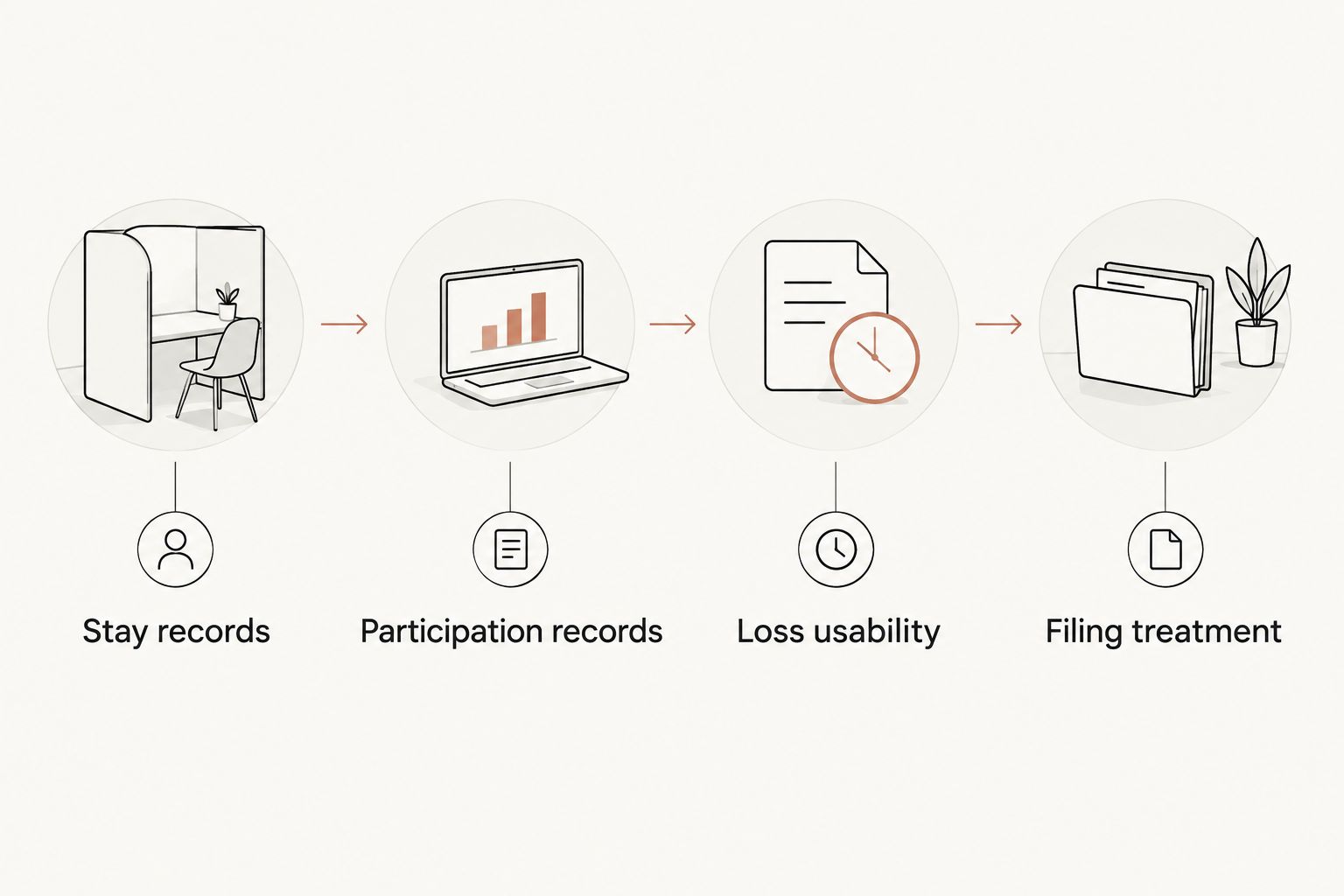
Keep contemporaneous operating records rather than reconstructing an entire year around a desired deduction. A provider can classify assets; your calendar, reservation history, and operating records address a different evidentiary need.
Compare engagement costs without confusing estimates with studies
When comparing cost segregation study costs, separate the engineering deliverable from tax preparation, implementation, and later technical support. A proposal is only comparable when those responsibilities are explicit.
Ask every candidate the same questions:
- Does the engagement produce a property-specific engineering report or only an estimate?
- Are component quantities, classifications, and cost sources documented?
- Who answers the CPA's questions after delivery?
- What audit support is included, and what work falls outside the engagement?
- Does the quoted scope include any tax implementation work?
A calculator is a screening tool, not a substitute for a property-specific study. An estimate can help you decide whether to investigate further, but it does not establish the final allocation or the deduction you can use.
For an illustrative estimate, assume 25% of property value is reclassified and a 37% tax bracket, then have your CPA test the assumptions against depreciable basis and deduction usability. Those assumptions are not study findings. Results vary, and an estimated deduction is not the same as a current tax reduction.
Check bonus depreciation dates and asset classes
For 2026 planning, eligible property acquired and placed in service after January 19, 2025 qualifies for 100% bonus depreciation under the restored rule. Both conditions matter, and other eligibility requirements still apply. The restored rate has no scheduled end.
A provider should not treat the entire purchase price as bonus-eligible. Land is not depreciable, and the building structure does not qualify for bonus depreciation.
For the short stays relevant to this STR strategy, the building is generally 39-year nonresidential property for depreciation purposes, even though the house is residential real estate. A long-term residential rental building generally uses a 27.5-year recovery period.
Cost segregation identifies components that warrant separate treatment, including eligible 5-, 7-, and 15-year assets. Classification depends on the asset's function, documentation, placed-in-service date, and taxpayer facts. A furnishing, electrical installation, pool, or outdoor amenity should not receive a blanket treatment simply because it appears on an STR listing.
A home bought before January 20, 2025 and later converted to a rental does not receive the restored full bonus treatment merely because of the conversion. Conversion does not reset acquisition. Ask your CPA to confirm the applicable treatment from the purchase history.
What your CPA should receive
A useful 2026 handoff connects the report to your property records and existing tax schedules. Send the study alongside the documents needed to explain the basis and timing rather than forwarding an isolated deduction total.
Your handoff should include:
- Closing records and the basis allocation, including land.
- Acquisition documents and placed-in-service evidence.
- Renovation invoices and separately purchased asset records.
- Existing depreciation schedules, if applicable.
- The study's component allocations and supporting cost sources.
- Guest-stay and participation records for the separate activity review.
Ask your CPA to reconcile separately recorded furniture and appliances so that the same basis is not depreciated twice. For an existing rental, confirm whether Form 3115 and a Section 481(a) adjustment are needed before implementation begins.
How these options rank
The ranking prioritizes residential fit, engineering documentation, clear responsibilities, and usable CPA handoff. Remote delivery is the default recommendation when the available records support the work; a physical inspection earns its place when it resolves a specific evidence gap.
CPA coordination ranks by implementation need, not by an assumption that one service model produces greater savings. No provider receives credit for an unsupported reclassification percentage or a promised W-2 offset.
Which provider should you choose?
Choose the engineering study that your CPA can trace and apply. For a documented residential STR and an owner comfortable with remote delivery, the first-ranked option is the default. Choose a site-visit scope for unresolved physical conditions and a CPA-coordinated engagement for filing complexity.
Before ordering, contact the team for a free manual savings estimate and confirm the property's fit. Treat that estimate as a planning input, then have your CPA evaluate whether accelerating depreciation serves your tax position.
FAQ
What's the best cost segregation provider for the STR tax loophole?
Virtual Cost Segregation is best for residential STR owners seeking an engineering-based study without a site visit. Your CPA must separately evaluate participation, bonus eligibility, and whether the resulting deduction is usable.
Does a cost segregation study qualify me for the STR loophole?
No. The commonly used approach requires average guest stays of 7 days or less and material participation, which require separate factual support.
Is spending 100 hours on my Airbnb enough?
No. The commonly used test requires more than 100 hours and more participation than any other individual, including a property manager. Other material participation tests exist; your CPA should apply the appropriate test to your facts.
Do I need real estate professional status for an STR loss?
Real estate professional status is not required for the commonly used approach involving average stays of 7 days or less and material participation. Your CPA must still evaluate other applicable loss limitations.
Do I need a site visit for a residential cost segregation study?
A site visit is not required for the remote residential study described here. Ask how the provider documents assets and resolves gaps in photographs, plans, invoices, or other records.
Does every 2026 rental purchase get full bonus depreciation?
No. Eligible property must be acquired and placed in service after January 19, 2025 to qualify for 100% bonus depreciation under the restored rule. Land and the building structure do not qualify, and other eligibility requirements apply.
Can I use a study for a rental I already own?
Yes, a look-back study can identify missed depreciation. Missed depreciation is claimed on the current return with Form 3115 rather than by amending prior returns; your CPA determines and files the applicable accounting-method change.
Does the study provider file my tax return?
The engineering study service described here does not include tax-return filing. Your own CPA applies the supplementary report when preparing the return and handles applicable depreciation forms.
One last thing
Ask your CPA what happens when you sell before focusing only on this year's deduction. Accelerated depreciation changes timing, and a later disposition can create recapture consequences. Your expected holding period belongs in the decision alongside current deduction usability.