
By Virtual Cost Segregation
The best cost segregation study provider for rental property investors
 Built to IRS standards
 Audit support includedFlat price for every study3 to 5 business days
Best overall: Virtual Cost Segregation for residential rental owners seeking a remote, engineering-based study with CPA-led tax filing. Best for unresolved physical details: an inspection-based engineering provider; best for complicated depreciation history: a CPA-coordinated engineering provider. This 2026 guide explains how condo and townhome owners should choose between those service models.
- Virtual Cost Segregation is the best remote-study fit for residential rental owners who have a CPA handling implementation.
- The best cost segregation providers for condo and townhome rental owners separate owned assets from association-maintained amenities.
- Choose inspection-based engineering when physical details need verification; use CPA-coordinated engineering when depreciation history needs reconciliation.
- Accelerated depreciation creates deductions, but your CPA determines whether those deductions reduce your current taxes.
Why this matters
A condo purchase does not give you the same asset ownership as a detached townhome. Deeds, condominium declarations, association responsibilities, and improvement records determine what belongs in your study. A shared pool visible from your balcony is not automatically an asset you can depreciate separately.
The provider decision has two parts: can the study establish the correct asset classifications, and can your CPA use those deductions? A large projected deduction is not the same as a current tax reduction. That distinction matters when evaluating proposals in 2026.
What makes the best cost segregation provider?
Use these six criteria before comparing proposals:
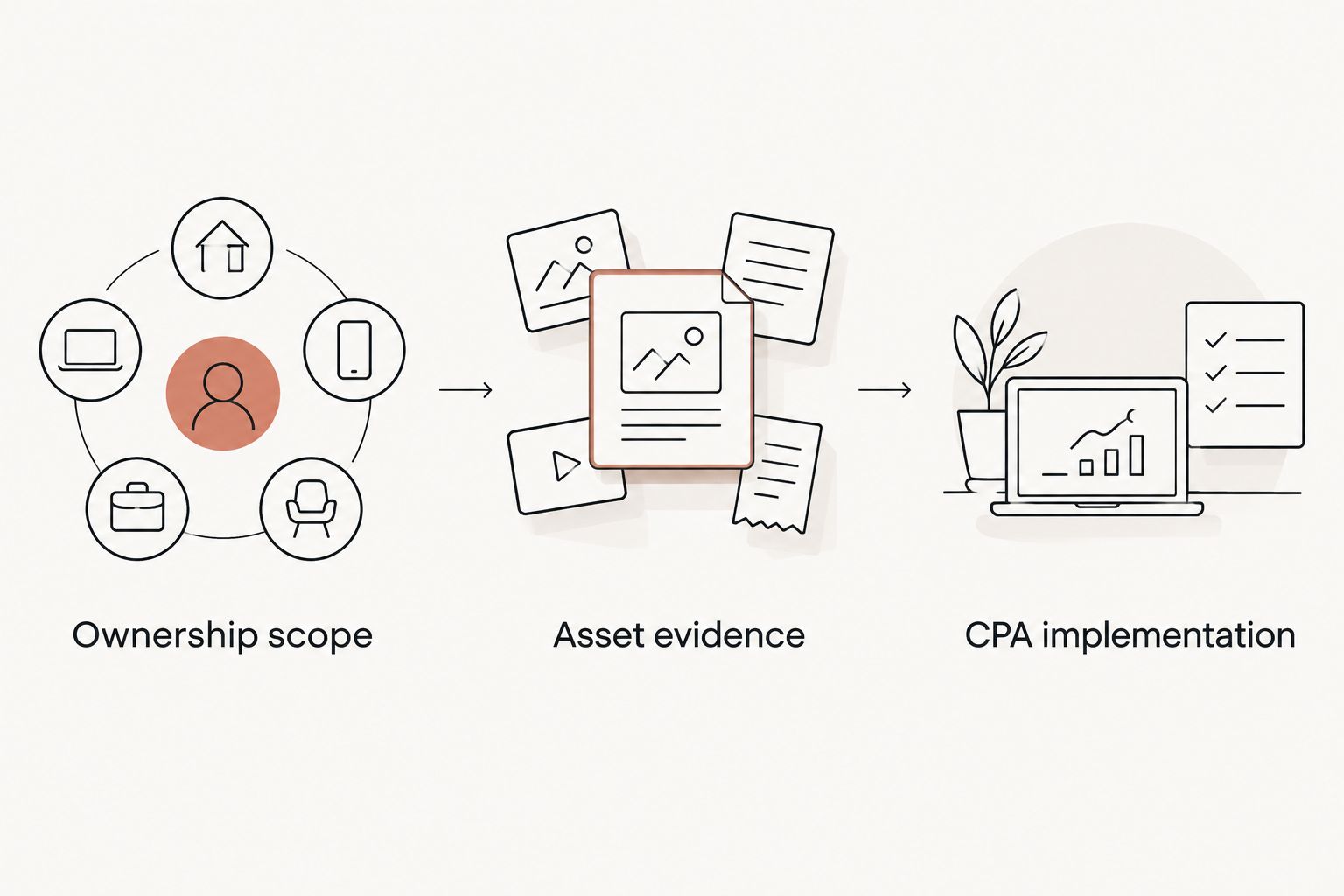
- Ownership scope: The provider distinguishes your unit, your ownership interests, and association-maintained components rather than assuming every amenity belongs in your depreciable basis.
- Asset evidence: Allocations connect to invoices, photographs, plans, construction details, or documented cost sources.
- Engineering methodology: The report explains component classifications and follows the IRS Cost Segregation Audit Technique Guide's criteria.
- CPA implementation: Your accountant receives classifications, recovery periods, basis allocations, and supporting explanations that can be reconciled to existing records.
- Delivery process: The engagement identifies required documents, whether an inspection is needed, and the delivery timeline.
- Audit support: The provider states what supporting documentation and explanations it supplies after delivery. Audit support is separate from tax-return preparation.
For a condo, prioritize ownership scope. For a renovated townhome, prioritize asset evidence. For either property with an existing depreciation schedule, involve your CPA before ordering.
Cost segregation providers at a glance
The alternatives below are service models, not named-firm rankings. Choose the model that resolves your property's main documentation or implementation issue.
| Provider or service model | Best for | Standout feature to seek | Key limitation |
|---|---|---|---|
| Virtual Cost Segregation | Remote residential studies with CPA-led filing | Engineering-based study, no site visit required, delivery in 3 to 5 business days | Study preparation is not a CPA service |
| Inspection-based engineering provider | Unresolved physical asset details | Direct verification of components that records do not establish | An inspection does not establish legal ownership or usable tax losses |
| CPA-coordinated engineering provider | Existing depreciation schedules or complex ownership history | Reconciliation between engineering allocations and tax records | The engineering study and tax implementation remain distinct responsibilities |
1. Virtual Cost Segregation: best for remote residential studies
Virtual Cost Segregation provides engineering-based cost segregation studies for residential rental properties of 1 to 4 units. Studies follow the IRS Audit Technique Guide's criteria, require no site visit, and are delivered in 3 to 5 business days. Audit support is included.
For a condo or townhome, confirm the property's scope before ordering and assemble the ownership records. A remote process does not eliminate the need to establish what you own, what you improved, and which costs are already on your depreciation schedule.
Pros:
- Engineering-based methodology tied to the IRS Audit Technique Guide's criteria.
- No site visit required.
- Defined delivery window of 3 to 5 business days.
- Audit support included with the study.
Cons:
- The study is not a CPA service; your accountant applies it when filing.
- The report does not determine whether your losses offset W-2 income.
- You still need records that establish basis, ownership, and rental use.
Best for: Independent residential investors who want a remote study and have a CPA responsible for tax implementation.
Verdict: Buy after confirming property scope and reviewing deduction usability with your CPA.
2. Inspection-based engineering provider: best for unclear physical details
An inspection-based engineering engagement adds direct observation to the document review. Choose this model when records and photographs leave material questions about installed components, renovations, or the property's physical configuration.
Ask what the inspection will resolve before selecting the provider. Seeing a courtyard, fence, or pool does not establish that its cost belongs in your unit's depreciable basis; ownership documents still control that question.
Pros to require:
- Inspection findings tied to specific asset allocations.
- Clear identification of components that photographs cannot establish.
- Written reconciliation between observed improvements and available invoices.
Cons:
- Physical inspection cannot replace deeds or association documents.
- A site visit alone does not establish a component's recovery period.
- Tax-return implementation still requires your accountant's review.
Best for: Condo or townhome owners whose unresolved physical details require direct verification.
Verdict: Buy when the provider identifies a specific documentation gap that an inspection will close.
3. CPA-coordinated engineering provider: best for depreciation history
A CPA-coordinated engagement puts the existing tax records at the center of the project. Choose this model when the property already has depreciation schedules, separately recorded renovations, ownership changes, or a change from personal to rental use.
The engineering provider identifies and allocates assets. Your CPA reconciles those allocations to tax basis, prior depreciation, elections, and the applicable filing procedure. Request that division of responsibility in writing.
Pros to require:
- Reconciliation to the existing depreciation schedule.
- Separate treatment of acquisition costs and later improvements.
- A clear handoff for accounting-method questions and return implementation.
Cons:
- Coordination cannot resolve missing records without supporting evidence.
- A study cannot change when you acquired the property.
- Tax-loss limitations still apply after assets are reclassified.
Best for: Owners with established rental histories who need engineering findings reconciled to prior tax treatment.
Verdict: Buy after your CPA defines the implementation questions the study must answer.
Condo and townhome assets: ownership comes first
A useful 2026 provider review separates three questions: what you own, what the evidence supports, and how your CPA will implement the findings. Do not let an estimate skip any of them.
Ownership scope
Provide the deed, purchase closing statement, relevant condominium declaration or association documents, and records of separately purchased improvements. Ask the provider to flag unclear ownership interests rather than allocate shared amenities by assumption.
For townhomes, association responsibility does not necessarily match the property boundary. Establish ownership and basis before deciding whether exterior components belong in the study.
Asset evidence
Separate original acquisition costs from later renovations and furnishings. Invoices help establish which costs relate to appliances, flooring, cabinetry, structural work, or other components, but an invoice description alone does not determine tax classification.
Classification, recovery period, and bonus eligibility depend on each asset's function, documentation, placed-in-service date, and taxpayer facts. Do not accept a blanket promise that an entire renovation receives one recovery period.
CPA implementation
Give your CPA the same source records used for the study, together with prior depreciation schedules. The final allocations should reconcile to the appropriate depreciable basis without duplicating separately recorded assets.
For a look-back study, missed depreciation is claimed on the current return with Form 3115 and a Section 481(a) adjustment; prior returns are not amended. Your CPA determines the applicable procedure and files the form.
Tax questions to settle before ordering in 2026
A provider's estimate is only useful when it matches your property's acquisition history, rental operation, and tax position. Review these issues before treating projected depreciation as spendable tax savings.
Building life versus shorter-lived assets
The building of a long-term residential rental generally uses a 27.5-year recovery period. A short-term rental building with average stays under 30 days uses a 39-year recovery period under the short-term lodging treatment, including the operation commonly discussed under the seven-day STR rule.
The building structure does not qualify for bonus depreciation. Cost segregation identifies eligible components with shorter recovery periods, including 5-, 7-, and 15-year property where the asset classification supports that treatment. Land is not depreciable.
Acquisition timing and bonus depreciation
Under the OBBBA rules applicable in 2026, eligible property acquired and placed in service after January 19, 2025 qualifies for 100% bonus depreciation. That rate has no scheduled end date; asset eligibility and acquisition requirements still matter.
Converting a home to a rental does not reset its acquisition date. A home bought before January 20, 2025 and converted later does not receive the restored full bonus treatment based on conversion alone. Have your CPA determine the applicable treatment from the purchase history and current law.
Whether losses can offset W-2 income
For the commonly used short-term rental exception, average guest stays must be 7 days or less, and you must materially participate. One common material-participation test requires more than 100 hours and more participation than any other individual, including a property manager. Logging 100 hours alone is insufficient.
Real estate professional status is not required for that short-term rental pathway. Other limitations, including personal-use, basis, at-risk, and excess-business-loss rules, still need review. A study does not establish eligibility.
How to compare estimates without confusing deductions and savings
Ask each provider to separate estimated accelerated depreciation from estimated tax effects. Your CPA should then identify how much of the deduction is usable currently, whether any loss is suspended, and how state treatment differs.
For an illustrative example, assume 25% of an appropriate depreciable property basis is reclassified and the taxpayer faces a 37% federal marginal rate. The calculation has separate stages: determine the reclassified basis, calculate depreciation under the applicable rules, then apply tax limitations before estimating the tax effect.
The 25% assumption is not a predicted study result. The 37% bracket does not turn every dollar of reclassified basis into an immediate deduction. Actual classifications, deduction timing, and usable losses vary.
Also ask your CPA about the planned holding period and depreciation recapture on sale. Cost segregation changes deduction timing; a sound decision considers both the current benefit and later tax consequences.
Questions your proposal should answer
Before accepting a 2026 proposal, get direct answers to these questions:
- Which ownership and association documents will establish the study's scope?
- How will the provider support component costs when renovation invoices are incomplete?
- How will acquisition costs and later improvements remain separate?
- What happens if the study identifies an item already depreciated separately?
- Which schedules and explanations will your CPA receive?
- What audit support is included after delivery?
Reject a proposal that substitutes a savings headline for these answers. A calculator can help screen a property, but an estimate is not an engineering-based report or a determination of tax eligibility.
How the ranking works
The ranking prioritizes ownership scope, asset evidence, engineering methodology, CPA implementation, delivery process, and audit support. Remote delivery is the default recommendation when the available documentation supports the work; inspection-based work addresses physical uncertainty, while CPA-coordinated work addresses tax-history uncertainty.
The deciding factor is the problem your engagement must solve, not the largest projected reclassification percentage.
Which provider should you choose?
Choose Virtual Cost Segregation for a remote residential study when your ownership records are ready and your CPA will handle filing. Choose inspection-based engineering when physical details remain unresolved, or CPA-coordinated engineering when prior depreciation requires reconciliation.
Start with a manual savings estimate and a CPA review of deduction usability. Estimates are preliminary; actual study results and tax effects vary.
FAQ
What's the best cost segregation provider for a rental condo?
Choose an engineering-based provider that establishes your ownership scope and supplies documentation your CPA can implement. For a condo, shared amenities and association responsibilities need review before costs are allocated.
Can I get a cost segregation study for a townhome rental?
A townhome rental can be evaluated for cost segregation. The study must establish depreciable basis, ownership, rental use, and supportable component classifications.
Do I need a site visit for a condo cost segregation study?
A site visit is not required for every study. Choose an inspection-based engagement when direct observation is needed to resolve physical details that documents and photographs do not establish.
Can I depreciate my condo association's pool?
Do not assume an association pool belongs in your unit's depreciation allocation. Your provider and CPA must establish the ownership interest, basis, and applicable tax treatment from supporting documents.
Can cost segregation on my Airbnb offset my W-2 income?
Accelerated depreciation can offset W-2 income when the applicable nonpassive treatment and other tax requirements are satisfied. The commonly used STR pathway requires average guest stays of 7 days or less and material participation; your CPA evaluates your facts.
Does buying a study mean the provider files my tax return?
No, an engineering-based cost segregation study is a supporting report, not a tax-return filing service. Your CPA applies the classifications and deductions when preparing your return.
Can I use cost segregation on a rental I have owned for years?
A look-back study can identify missed depreciation on an existing rental. Missed depreciation is claimed on the current return with Form 3115 and a Section 481(a) adjustment; prior returns are not amended, and your CPA handles filing.
One last thing
Send the ownership documents before the amenity photographs. A photograph proves an asset exists, not that its cost belongs in your depreciable basis. For condo and townhome owners, resolving that distinction makes the estimate and the final study more useful.