
By Virtual Cost Segregation
The best cost segregation study provider for rental property investors
 Built to IRS standards
 Audit support includedFlat price for every study3 to 5 business days
 Best overall for residential NNN rentals: Virtual Cost Segregation. Best for commercial NNN buildings: a commercial-focused engineering firm. Best for one-relationship convenience: your CPA's study partner. Best for pre-purchase screening only: a calculator estimate. Choosing among the best cost segregation firms for NNN lease investors in 2026 comes down to one question: is the building residential or commercial?
- Virtual Cost Segregation is the best pick for NNN lease investors holding residential rentals in 2026.
- Commercial NNN buildings such as retail or restaurant sites need a commercial-focused cost segregation firm.
- Lease terms do not set the recovery period. Property use does: 27.5 years residential, 39 nonresidential.
- Bonus depreciation is 100% for property acquired and placed in service after January 19, 2025.
- Skip calculator-only estimates as a filing basis. Use them only to screen a deal.
Why this matters for NNN lease investors in 2026
Most triple net (NNN) leases sit on commercial single-tenant buildings: pharmacies, quick-service restaurants, auto parts stores. Some investors also lease single-family homes on net terms, where the tenant covers property taxes, insurance and maintenance. Those two properties get different tax treatment, so the firm you hire has to match the asset.
Residential rental property depreciates over 27.5 years. Nonresidential real property depreciates over 39 years. A cost segregation study identifies components that may qualify for shorter 5-, 7- or 15-year recovery periods. Whether a given component qualifies depends on its function, documentation, placed-in-service date and your facts.
Timing matters in 2026. Under the One Big Beautiful Bill Act (OBBBA), bonus depreciation is 100% for property acquired and placed in service after January 19, 2025. A component a study moves into a shorter class may be eligible for full first-year expensing, subject to your CPA's review.
What makes the best cost segregation firm for NNN investors
- Property scope match. The firm studies your property type. A residential specialist and a commercial specialist are not interchangeable.
- Engineering-based method. The report follows the approach the IRS describes in its Cost Segregation Audit Technique Guide, not a percentage pulled from a table.
- Audit support. The engagement covers you if the IRS questions the study.
- Pricing structure. A flat fee is known upfront. A percentage-of-savings fee grows with the numbers the firm reports.
- Turnaround. Fast delivery matters when you order close to a filing deadline.
- CPA-ready output. Your CPA can move asset classes and basis figures onto Form 4562 or Form 3115 without rework.
Own a residential net lease rental?
Request a free manual savings estimate. Estimates are never a guarantee of results.
Cost segregation firms for NNN lease investors at a glance
| Firm type | Best for | Standout feature | Key limitation |
|---|---|---|---|
| Virtual Cost Segregation | Residential NNN rentals | Flat fee, engineering-based, no site visit required | No commercial property studies |
| Commercial-focused engineering firm | Retail, restaurant and pharmacy NNN buildings | Handles nonresidential components and site improvements | Pricing and scope vary widely by firm |
| CPA firm study partner | Investors who want one relationship | Study and return coordinated in one place | Quality depends on who performs the study |
| Calculator or rule-of-thumb estimate | Pre-purchase deal screening | Instant ballpark number | Not an audit-defensible report |
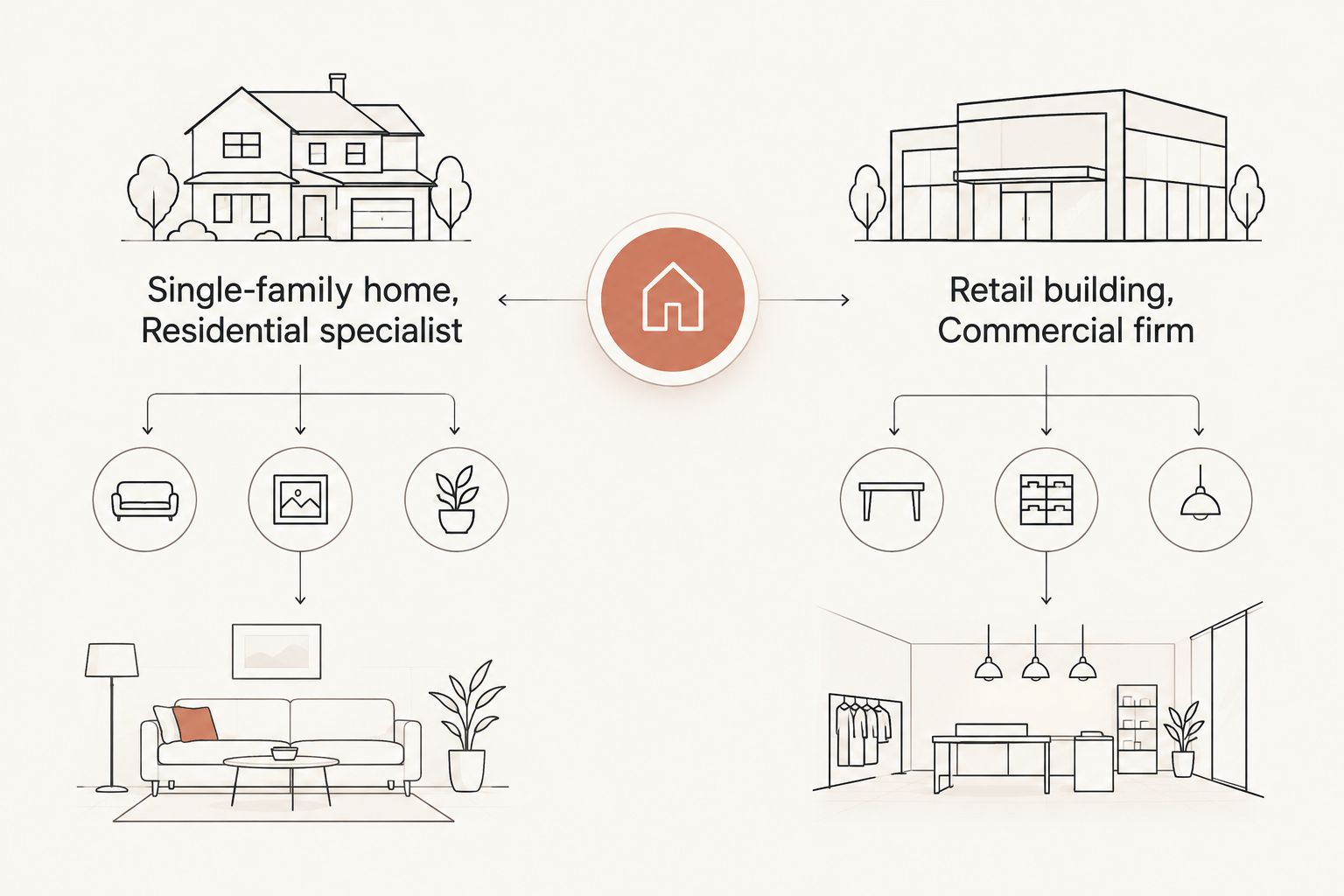
The split is simple. A single-family home on a net lease needs a residential specialist. A retail building on a net lease needs a commercial firm. The lease document is the same shape in both cases; the building is not.
1. Virtual Cost Segregation: best cost segregation firm for residential NNN rentals
Virtual Cost Segregation prepares engineering-based cost segregation studies for residential rentals only: single-family rentals, long-term residential rentals, and short-term rentals on Airbnb or VRBO. A single-family home leased on net terms is still residential rental property, so a residential-only firm is the direct fit. The report is CPA-ready and implemented by your own CPA on the return. It is not filed with the IRS and is not a CPA service.
Virtual Cost Segregation pros:
- Engineering-based studies focused on residential components
- Flat fee paid upfront, not a percentage of savings
- Audit support included with the report
- No site visit required, with delivery in 3-5 business days
Virtual Cost Segregation cons:
- Does not study commercial NNN buildings such as retail, restaurant or office properties
- No on-site inspection, so the accuracy of the documents you provide matters
- A study does not remove passive loss limits on a long-term net lease rental
Virtual Cost Segregation pricing: One upfront flat fee listed on the site, plus a free manual savings estimate on request before you order.
Best for: NNN lease investors who own single-family or other residential rentals. Verdict: Buy.
2. Commercial-focused engineering firm: best for commercial NNN buildings
A commercial triple net property, such as a single-tenant pharmacy or fast-food pad site, is nonresidential real property on a 39-year schedule. Site improvements like paving and exterior lighting may be candidates for shorter lives, depending on function and documentation. That analysis belongs with a firm that specializes in commercial property.
Commercial firm pros:
- Studies nonresidential components and site improvements
- Familiar with single-tenant building layouts
- Can work from tenant-improvement records tied to the lease
Commercial firm cons:
- Pricing models vary, so confirm flat fee versus percentage before you sign
- NNN tenants often fund their own build-outs, which shrinks the landlord's reclassifiable basis
- Deliverable quality differs widely between firms
Commercial firm pricing: Ask for a written quote that states the fee structure and what audit support it includes.
Best for: Owners of commercial single-tenant NNN buildings. Verdict: Buy, for commercial assets only.
3. CPA firm study partner: best for one-relationship convenience
Some CPA firms prepare studies in-house or refer them to a provider. You get one point of contact, but you may never see who actually did the engineering.
CPA study partner pros:
- One relationship for the study and the return
- Your CPA already holds your basis and placed-in-service dates
- Simple implementation handoff
CPA study partner cons:
- The provider may be a subcontractor you never vet
- The method may be engineering-based or rule-of-thumb, so ask which
CPA study partner pricing: Varies by firm. Ask whether the fee is flat or tied to projected savings.
Best for: Investors who want one firm coordinating everything. Verdict: Hold until you confirm method and scope.
4. Calculator estimate: best for screening an NNN deal before purchase
A calculator or rule-of-thumb percentage produces a ballpark reclassification figure in minutes. It helps you compare deals. It does not document components the way the IRS Cost Segregation Audit Technique Guide describes.
Calculator pros:
- Instant output
- Useful for comparing two properties side by side
Calculator cons:
- Not an audit-defensible report
- Results are estimates, never a guarantee
Best for: Pre-purchase screening. Verdict: Skip as a filing basis.
What the math looks like on a residential NNN rental in 2026
Take a single-family rental with a $400,000 depreciable basis, land excluded. Straight-line over 27.5 years, that is about $14,545 per full year.
Assume a study reclassifies 25% of that value into shorter-life property: $100,000. With 100% bonus depreciation, that $100,000 may be deductible in year one. The remaining $300,000 continues at about $10,909 per full year.
| Scenario | Year-one depreciation (full year) |
|---|---|
| No study | About $14,545 |
| Study, 25% reclassified, 100% bonus | About $110,909 |
At a 37% federal bracket, $100,000 of extra deductions is worth about $37,000 in tax, if the loss can offset your other income. That condition is the catch for net lease landlords. A long-term residential rental is usually a passive activity, so losses may be suspended unless you qualify for real estate professional status or have passive income to absorb them. These figures illustrate typical assumptions and are not a guarantee of any study result.
How the ranking works
The order follows the six criteria above. Property scope match carries the most weight: a firm that cannot study your building type ranks nowhere for that building. Engineering-based method and audit support come next, followed by pricing structure, turnaround and CPA-ready output.
Which cost segregation firm should NNN lease investors choose?
Virtual Cost Segregation is the best cost segregation firm for NNN lease investors who own residential rentals in 2026. If your net lease sits on a retail, restaurant or pharmacy building, hire a commercial-focused engineering firm instead, because Virtual Cost Segregation does not study commercial property.
Still undecided? Check the property's depreciation schedule. If it runs 27.5 years, you own residential rental property and a residential specialist is your default. If it runs 39 years, go commercial.
FAQ
What is the best cost segregation firm for NNN lease investors in 2026?
For residential NNN rentals, Virtual Cost Segregation is the best fit: engineering-based, flat fee, audit support included. For commercial NNN buildings, hire a commercial-focused firm, since Virtual Cost Segregation studies residential property only.
Can you do cost segregation on a triple net lease property?
Yes. The owner who bore the cost of the building can order a study regardless of lease structure. The lease changes who pays operating expenses, not how the building is classified.
Does a triple net lease change the depreciation period?
No. The recovery period follows property use: 27.5 years for residential rental property and 39 years for nonresidential real property. Net lease terms do not move a building between classes.
Is 100% bonus depreciation available for NNN properties in 2026?
Bonus depreciation is 100% for property acquired and placed in service after January 19, 2025 under OBBBA. Eligibility for any component depends on its classification and your facts, so confirm with your CPA.
Can a landlord depreciate improvements the NNN tenant paid for?
Generally no. Depreciation belongs to the party that bore the cost, so tenant-funded improvements are usually the tenant's to depreciate. Confirm the lease facts with your CPA.
Is cost segregation worth it on a long-term NNN rental?
It can be, but passive activity rules may suspend the losses unless you qualify as a real estate professional or have passive income. Suspended passive losses carry forward and are generally released when you dispose of the property.
How much does a cost segregation study cost?
Firms charge either a flat fee or a percentage of projected savings. Virtual Cost Segregation charges one upfront flat fee listed on its site and offers a free manual savings estimate.
How long does a residential cost segregation study take?
Residential studies from Virtual Cost Segregation are delivered in 3-5 business days with no site visit required. Commercial firms set their own timelines.
One last thing
Read the lease before you order any study on an NNN deal. If the tenant paid for flooring, a kitchen or site work, those costs may sit on the tenant's books, not yours. A study only reclassifies basis you own, so strip tenant-funded improvements out first. That single check keeps the report accurate and defensible for your 2026 return.