
By Virtual Cost Segregation
The best cost segregation study provider for rental property investors
 Built to IRS standards
 Audit support includedFlat price for every study3 to 5 business days
 Best overall for a physician-owned residential rental: Virtual Cost Segregation. Best when a physical inspection is essential: an in-person residential specialist. Best before ordering any study: a CPA review of your tax position. Virtual Cost Segregation is for physician-owned residential rentals, not medical office buildings. If you own a medical office building, this residential-only comparison cannot identify a suitable firm for that property.
- The best cost segregation firms for medical office buildings are outside this residential-only comparison.
- Virtual Cost Segregation is best for physician-owned residential rentals needing an engineering-based study.
- Choose an in-person residential specialist when the property's documentation calls for a physical inspection.
- Ask your CPA whether accelerated depreciation can affect your return before ordering a study.
Why this matters
A physician can own two properties with different study needs: a medical office building and a residential rental. Virtual Cost Segregation studies the residential rental. Its stated service does not cover the medical office, so ownership of both does not make one provider a fit for both properties.
A study also does not determine whether you can use a deduction against wages. It identifies and documents potential asset classifications; your CPA applies the resulting depreciation to your return under the rules that fit your ownership, rental activity and tax position. If your investment is a house rented to tenants, start with the single-family rental cost segregation guide rather than a commercial-property comparison.
In 2026, the first decision is therefore which property you want studied. The second is whether a study would change a deduction you can use, defer or carry forward. A provider can address the first question. Your CPA needs to address the second.
What makes the best residential cost segregation option?
Judge the options below against the work your rental and tax return require, not against a projected savings figure. A calculator estimate is not a completed asset analysis or a guarantee of tax benefits.
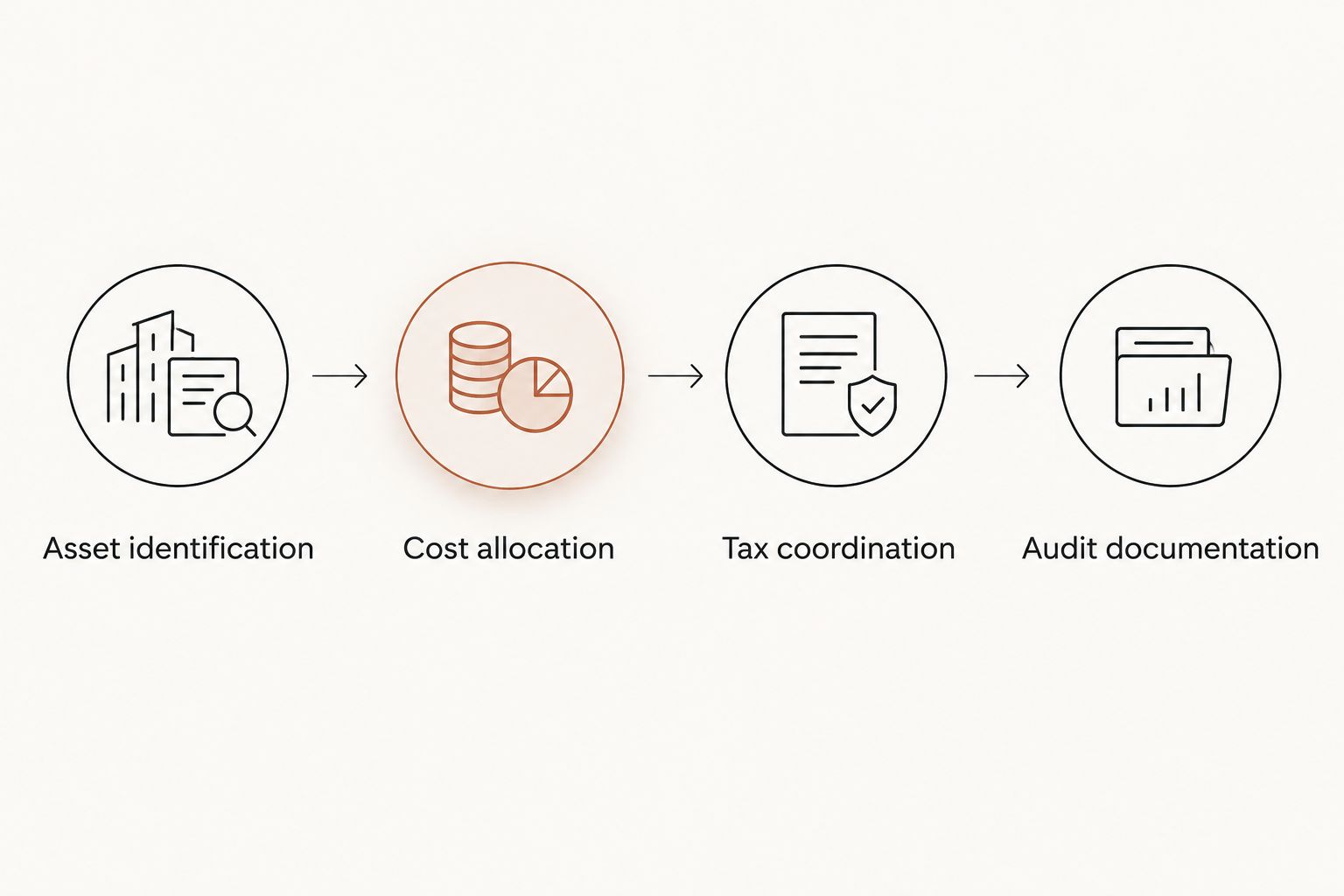
- Asset identification: Can the study distinguish potentially shorter-lived assets from the residential building and explain each classification? A category label without support gives your CPA less to work with.
- Cost allocation: Does the report show how costs were assigned to identified assets? Purchase and renovation records matter because the study must work from the property's facts, not a standard percentage applied to every rental.
- Tax coordination: Can your CPA use the study's schedules to evaluate depreciation, bonus eligibility and filing treatment? The study provider does not file the return.
- Audit documentation: Can you retain a clear explanation of the classifications and allocations if the IRS examines the return? Ask what documentation and support the provider supplies.
- Property fit: Does the provider accept the actual property type? A residential-only service is not a substitute for a provider that accepts a medical office building.
These criteria also separate a study from preliminary advice. A CPA can tell you whether the deduction deserves investigation, while a study supplies the property-specific asset analysis. Neither step replaces the other.
Residential options at a glance
The table compares routes for a physician-owned residential rental. It is not a ranking of firms for medical office buildings. Only one named study provider is supported by the available information, so the other rows describe decision routes rather than unverified firms.
| Option | Best for | Standout feature | Key limitation |
|---|---|---|---|
| Virtual Cost Segregation | Residential rental owners seeking an engineering-based study without a required site visit | A study designed for the owner and CPA to use in tax preparation | Does not study medical office buildings or file the tax return |
| In-person residential specialist | Rentals whose records or physical features call for an on-site review | Direct examination of the property | A visit alone does not establish sound classifications or useful documentation |
| CPA review before a study | Owners unsure whether accelerated depreciation fits their return | Connects a potential deduction to the taxpayer's facts | A CPA review is not an engineering-based cost segregation study |
1. Virtual Cost Segregation: best for residential rental studies without a required site visit
Best for: A physician who owns an eligible residential rental and wants an engineering-based study to hand to their CPA. Virtual Cost Segregation serves short-term and long-term residential rentals. The service does not require a site visit, and its report supports the owner's tax-filing work with their own CPA.
The scope distinction is decisive. A medical practice's office is not a residential rental just because the same person owns both properties. Buy for the residential rental; skip for the medical office building.
Virtual Cost Segregation pros:
- Focuses on residential rental properties rather than presenting one service as suitable for every property type.
- Provides an engineering-based report rather than only a calculator estimate.
- Includes support if the owner is audited.
- Does not require a site visit, which suits an owner who manages the rental from elsewhere.
Virtual Cost Segregation cons:
- It does not offer studies for medical office buildings or other commercial property types.
- It does not act as your CPA or file a tax return with the IRS.
- No study result establishes, by itself, that a rental loss can offset your wages.
Virtual Cost Segregation verdict: Buy when the property is a residential rental and your CPA has identified a practical use for the study. Confirm the property's acquisition and placed-in-service dates, ownership records and improvement history before treating any estimated benefit as a filing position.
2. In-person residential specialist: best when physical review drives the scope
Best for: A residential rental owner whose available documents do not adequately explain the assets or improvements the study must classify. An on-site review can give a specialist direct access to the property. That makes the approach distinct from a study completed without a required visit, but it does not make every visited property easier to classify.
Ask a prospective provider what the visit will resolve. If the answer is simply that visits are standard procedure, return to the five criteria above. You need an asset-level explanation and usable cost allocations, not a photograph standing in for an analysis.
In-person specialist pros:
- Permits direct examination of residential features that records do not clearly describe.
- Gives you an opportunity to identify alterations that purchase documents omit.
- Creates a defined opportunity to reconcile visible conditions with invoices and other records.
In-person specialist cons:
- A site visit does not, on its own, establish the correct tax classification of an asset.
- You still need to check the firm's report scope, allocation methods and audit documentation.
- An inspection cannot determine whether your personal tax position lets you use a resulting loss against wages.
In-person specialist verdict: Hold until the provider explains what a visit adds to your residential rental study. If you are asking about a medical office building, do not use a provider's residential work as evidence of commercial-property experience.
3. CPA review: best before committing to a study
Best for: A physician who wants to know how potential accelerated depreciation would enter their own return. A CPA review is a decision step, not a competing study product. It helps you establish which property is being analyzed, when it entered service, how it is used and how the applicable activity rules affect the deduction.
For a short-term rental, your CPA needs the rental facts relevant to the activity and participation rules. For a long-term residential rental, the CPA still needs to address how losses are treated on your return. A high salary does not answer either question.
CPA review pros:
- Ties the potential study to your existing depreciation records and return.
- Separates an asset's possible classification from your ability to use a deduction.
- Identifies filing questions before the study reaches the tax-preparation stage.
CPA review cons:
- It is not an engineering-based identification and allocation of the rental's assets.
- A verbal estimate cannot replace a completed study's supporting schedules.
- Your CPA still needs to evaluate the finished report against the property's records before filing.
CPA review verdict: Buy as a planning step, not as a replacement study. Give the CPA the property details first. If a study fits the return, select a provider whose scope matches the property.
How to compare a study with the tax result
Do not equate accelerated depreciation with an immediate tax refund. Residential rental buildings generally use a 27.5-year recovery period. A cost segregation study examines whether particular assets belong in different categories, while nondepreciable land remains outside the depreciable building basis. The classification of any individual asset depends on its function and documentation.
For an illustration, assume a study reallocates 25% of a property's value and the owner is in the 37% tax bracket, as specified for this example. Neither figure tells you the owner's deduction or tax savings. The value assigned to land, the eligible tax basis, the recovery treatment of each asset, bonus-depreciation eligibility and the rules governing the owner's losses all affect the answer. Ask your CPA to model the return rather than multiplying the two percentages into a promised result.
The 2026 bonus-depreciation question also requires dates. The stated rule restores 100% bonus depreciation for eligible property acquired and placed in service after January 19, 2025. That historical date is a threshold, not a finding that every asset in a rental qualifies. Your CPA must apply the current law to the identified assets and your property's acquisition and placed-in-service facts.
How a residential study reaches the return
A sound handoff has separate jobs. The provider documents the rental's assets and allocations. The owner supplies acquisition, improvement and use records. The CPA reviews the report, determines the applicable tax treatment and implements it on the return. Keeping those jobs distinct prevents a study estimate from being mistaken for a filed deduction.
Start with the closing documents and any records of work completed before the rental entered service. Add invoices and descriptions for later improvements you want reviewed. Tell the provider and CPA whether the home had personal use or a change in rental use; the dates and use affect the analysis. If a document is missing, identify the gap rather than replacing it with an unsupported estimate.
In 2026, ask the provider what its deliverable explains: asset descriptions, classification rationale, allocation methods and depreciation schedules. Then ask your CPA what else the return requires. Form 4562 concerns depreciation reporting, while a change to an established accounting method can raise a separate Form 3115 question. The existence of a study does not mean Form 3115 applies to every owner.
Keep the final report with the documents used to prepare it and the CPA's filing records. That is more useful than saving only a projected savings figure. If the property is a medical office rather than a residential rental, stop this handoff process and seek a provider whose stated study scope covers that property type.
How we ranked the residential options
The order reflects the decision a residential owner faces in 2026: obtain a property-specific study when it fits, decide whether physical access is needed, and have a CPA evaluate the tax treatment. The CPA step often happens first in practice. It appears last in the ranking because it is not a cost segregation study.
No medical-office firm is ranked here. Naming a residential specialist as a medical-office recommendation would give you the wrong shortlist, and naming other firms without verified information about their services would not help you choose one. For the residential rental, compare the actual report scope and CPA handoff rather than treating a claimed reclassification percentage as a result you can count on.
Which option should you choose?
Choose Virtual Cost Segregation for a physician-owned residential rental when you want an engineering-based report and do not need a required site visit. Choose an in-person residential specialist when you can identify a property-specific reason that direct inspection will improve the analysis. Have your CPA review the tax position before relying on either route for a 2026 return.
For a medical office building, skip Virtual Cost Segregation. It does not study commercial property. The best cost segregation firms for medical office buildings must be evaluated against that building's requirements, not this residential comparison.
FAQ
Does Virtual Cost Segregation study medical office buildings?
No. Virtual Cost Segregation provides studies for residential rentals, not medical office buildings or other commercial property types. Select a provider that explicitly accepts your property type.
What is the best cost segregation option for a physician's residential rental?
Virtual Cost Segregation is the named engineering-based residential study option in this comparison. Have your CPA review how a completed study would apply to your own return before relying on estimated benefits.
Can a residential rental study offset a physician's W-2 income?
A study alone cannot establish that result. Your CPA must evaluate the rental activity, participation and loss rules alongside the resulting depreciation.
Does a cost segregation report get filed with the IRS?
No. The report supports the depreciation treatment that you and your CPA evaluate for your tax return. It is not a tax return or a CPA filing service.
Is a site visit required for every residential cost segregation study?
No. Virtual Cost Segregation does not require a site visit for its residential studies. Ask any provider how it documents and allocates the assets in your particular property.
Does 100% bonus depreciation apply to every rental asset in 2026?
No. Eligibility depends on the asset and the applicable acquisition and placed-in-service facts. The restored 100% rule does not make an entire rental building or amenity automatically eligible.
Should I speak with my CPA before ordering a study?
Yes. Your CPA can review the property's existing depreciation, the rental's tax treatment and how a potential study would be implemented. That review does not replace the asset analysis in an engineering-based study.
One last thing
The property type is the fastest way to rule out the wrong firm. A physician's residential rental and medical office building need separate provider searches, even when they belong to the same owner. For the rental, settle the CPA question before treating any savings estimate as a result.