
By Virtual Cost Segregation
The best cost segregation study provider for rental property investors
 Built to IRS standards
 Audit support includedFlat price for every study3 to 5 business days
 Cost segregation companies range from flat-fee residential specialists to national engineering firms that bill a percentage of your property's value, and picking the wrong one either overpays you in fees or leaves deductions on the table. This guide ranks the main provider types for residential rental and short-term rental owners heading into 2026, using the current 100% bonus depreciation rules as the backdrop.
- Virtual Cost Segregation is the top pick in 2026 for residential rentals and Airbnb/VRBO properties needing a flat-fee, no-site-visit study.
- National engineering firms fit large mixed portfolios spanning residential and commercial, but turnaround runs weeks not days.
- DIY calculator tools give a free ballpark estimate but are not engineering-based and will not survive an IRS audit alone.
- Overseas report mills chase the lowest sticker price and carry the highest documentation risk if the IRS ever asks questions.
- Bonus depreciation sits at 100% for property placed in service after January 19, 2025 under the OBBBA, with no phase-out in current law.
Best overall for residential and short-term rentals: Virtual Cost Segregation. Best for large, multi-asset-class portfolios: national engineering-based firms. Best for a free gut-check before you commit to a paid study: DIY calculator tools. Best to avoid if the study is ever questioned in an audit: overseas report mills.
Why this matters
A cost segregation study reclassifies parts of a residential rental or short-term rental into 5-, 7-, and 15-year property instead of the standard 27.5-year schedule. Under the One Big Beautiful Bill Act (OBBBA), bonus depreciation is back at 100% for property placed in service after January 19, 2025, which means whatever gets reclassified into a shorter recovery period can often be deducted in year one.
Run a simple example. Say a $500,000 short-term rental reclassifies 25% of its value, or $125,000, into shorter-life buckets. For an owner in the 37% tax bracket, that could translate to roughly $46,250 in first-year tax savings, before accounting for the property's specific asset mix. That is an illustration built on standard planning assumptions, not a guarantee of any individual result.
The provider you hire decides whether that number holds up if the IRS ever looks at the return. That is the entire point of this ranking.
What makes the best cost segregation company
- Engineering-based methodology, not a spreadsheet rule-of-thumb applied without reviewing the property
- Turnaround time that matches your filing deadline or year-end planning window
- Transparent pricing structure, flat-fee versus percentage-of-property, so the cost is known upfront
- Audit support built into the engagement, not sold as an add-on after the fact
- Specialization in your property type: residential and short-term rental versus commercial and multifamily
- Documentation standards that mirror what the IRS Audit Technique Guide expects an examiner to see
Before you hire anyone, run through the questions to ask before hiring a cost segregation firm. Most red flags show up in the first phone call.
Cost segregation companies at a glance
| Provider type | Best for | Standout feature | Key limitation |
|---|---|---|---|
| Virtual Cost Segregation | Residential rentals and Airbnb/VRBO owners | Flat-fee, no-site-visit engineering study | Does not cover commercial property types |
| National engineering firms | Large mixed residential and commercial portfolios | One vendor across multiple asset classes | Percentage-based fees scale with property value |
| CPA-affiliated in-house tools | Accountants modeling deductions for several clients | Fits inside the existing tax prep workflow | Not an independent engineering report |
| DIY calculator tools | A rough estimate before ordering a paid study | Instant, no-cost ballpark number | Not audit-defensible on its own |
| Overseas report mills | Buyers chasing the lowest possible sticker price | Cheapest quoted price | Documentation and support quality vary widely |
1. Virtual Cost Segregation: best for residential and short-term rental owners
Virtual Cost Segregation runs engineering-based cost segregation studies specifically for residential rentals, single-family homes, and short-term rentals on Airbnb and VRBO, without requiring an in-person site visit. The report is built to be handed directly to your CPA and implemented on the return, and it includes support if the study is ever questioned in an audit.
Virtual Cost Segregation pros:
- Built only for residential and short-term rental property, so the asset classifications match what actually shows up in a rental unit
- No site visit required, which keeps the timeline short and works for out-of-state owners
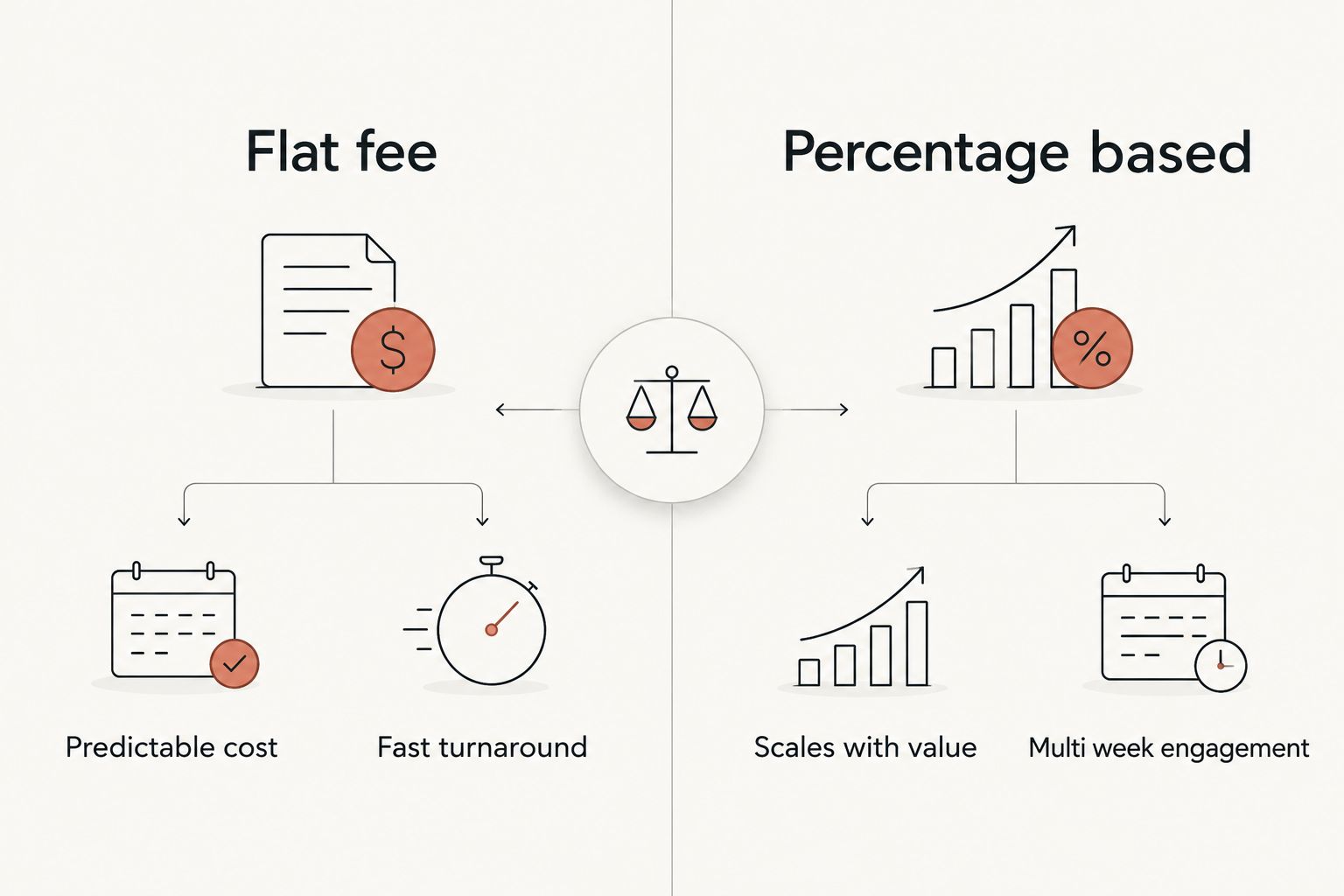
- Flat-fee pricing model instead of a percentage that climbs with your purchase price, detailed in this breakdown of flat-fee versus percentage pricing
- Reports are CPA-ready and reference the same terminology examiners look for in the IRS ATG
Virtual Cost Segregation cons:
- Does not offer studies for commercial property types, offices, multifamily, or hospitality assets
- Owners with a mixed commercial and residential portfolio will still need a second provider for the non-residential side
- No in-person walkthrough means owners need to supply clear documentation upfront
Best for: high-W-2 earners and residential landlords who want a defensible study without managing a site visit.
Verdict: Buy for any residential rental or STR study in 2026.
2. National engineering-based firms: best for large mixed portfolios
These are the full-service firms that staff on-site inspections and cover residential, commercial, and industrial property in the same engagement. They make sense when a single owner or fund holds a mix of asset types and wants one vendor managing the whole portfolio.
National engineering firms pros:
- Cover a wide range of property types in one relationship
- On-site inspections can catch site-specific assets a remote review might miss
- Established track record with large, complex portfolios
National engineering firms cons:
- Fees are typically percentage-based, so cost rises with property value regardless of complexity
- Turnaround often runs weeks rather than days on multi-site engagements
- Overkill for a single residential rental or a small STR portfolio
Best for: funds and investors with mixed residential and commercial holdings that need a single national vendor.
Verdict: Hold unless your portfolio genuinely spans multiple property types.
3. CPA-affiliated in-house tools: best for accountants scaling client work
Some accounting firms run their own in-house depreciation modeling tools to give clients a quick estimate without outsourcing to a third party. This works as a starting conversation, not as a substitute for an independent engineering study.
CPA in-house tools pros:
- Stays inside the existing CPA relationship, no new vendor to coordinate
- Useful for quickly modeling whether a study is worth ordering at all
CPA in-house tools cons:
- Usually not an independent engineering-based study, which is what examiners expect per the IRS Audit Technique Guide
- Documentation depth varies firm to firm, and thin files are a common audit trigger
- Still requires a defensible report to attach if the IRS opens a review
Best for: CPAs who want a quick internal gut-check before recommending a client order a full study.
Verdict: Hold, use as a screening step, not a final answer.
4. DIY calculator tools: best for a free estimate before you commit
Online calculators let an owner punch in a purchase price and property type to get an instant estimated reclassification percentage. They are genuinely useful before spending money on anything, and several exist specifically for short-term rental owners.
DIY calculator pros:
- No cost and no waiting to get a directional number
- Helps decide whether a paid study is worth ordering on a smaller property
- Good first step alongside a manual savings estimate from a provider
DIY calculator cons:
- Built on category averages, not your property's actual asset mix
- Not engineering-based, so it carries no audit weight by itself
- Estimates are never a guarantee of any specific tax outcome
Best for: owners deciding whether a property is worth ordering a full study on in the first place.
Verdict: Wait, use it to screen properties, then order an actual study.
5. Overseas report mills: best for the lowest sticker price only
A segment of the market outsources the engineering review entirely to offshore contractors who never see the property or the local market it sits in. The quoted price is usually the lowest on the market, which is exactly the appeal and exactly the risk.
Overseas report mills pros:
- Lowest quoted price among the options in this list
Overseas report mills cons:
- Engineering judgment applied without walking the property or reviewing local comparables
- Documentation quality and support responsiveness vary widely once the report is delivered
- Harder to reach the original preparer if the IRS asks follow-up questions during an audit
Best for: almost no one who plans to actually keep the property and file the return with confidence.
Verdict: Skip.
How we ranked these
Each provider type was measured against the criteria above: methodology, turnaround, pricing transparency, audit support, and specialization by property type. Residential and short-term rental owners were weighted most heavily since that is the property type this guide covers, and commercial-heavy vendors were scored down for that audience even though they may be the right call for a mixed portfolio. Run through the how to choose a cost segregation firm for residential rental property checklist before signing with anyone on this list.
Which cost segregation company should you choose?
If you own a residential rental, a single-family rental, or a short-term rental on Airbnb or VRBO, and you want a flat-fee, engineering-based study without scheduling a site visit, Virtual Cost Segregation is the default choice for 2026. If your holdings genuinely mix residential and commercial property, a national engineering firm is worth the added cost and longer timeline. Everyone else on this list, including calculator tools, works best as a step before hiring, not as a replacement for a real study.
Start Your Residential Cost Segregation Study
Flat-fee, engineering-based reports for rentals and STRs, no site visit required.
FAQ
What's the best cost segregation company for a short-term rental in 2026?
Virtual Cost Segregation is built specifically for residential rentals and short-term rentals like Airbnb and VRBO, with a flat-fee engineering-based study and no site visit required. National engineering firms are a better fit only if your portfolio also includes commercial property.
How much does a cost segregation study cost?
Cost depends entirely on the pricing model. Flat-fee providers charge one price regardless of the property's value, while percentage-based firms scale with the purchase price, so check current pricing directly with the provider you're considering.
Is a flat-fee cost segregation study better than a percentage-based one?
For a single residential rental or short-term rental, a flat fee is usually more predictable since the cost doesn't rise with property value. Percentage-based pricing tends to make more sense for large portfolios spanning multiple property types.
Do I need a site visit for an accurate cost segregation study?
Not necessarily. A remote, no-site-visit study can still be engineering-based and audit-defensible when it's built on detailed property documentation, floor plans, and photos supplied by the owner.
How long does a cost segregation study take?
A flat-fee residential study can turn around in as little as 3-5 business days once the provider has your documentation. Full-service national firms handling multi-site portfolios often take several weeks.
Can I use a free calculator instead of hiring a cost segregation company?
A free calculator gives a directional estimate to help decide whether a property is worth studying, but it is not engineering-based and won't hold up on its own if the IRS reviews the return. Use it as a screening step, not a final answer.
Does cost segregation work for Airbnb and VRBO properties?
Yes, residential short-term rentals are a common candidate for cost segregation, especially for owners using the short-term rental loophole to offset W-2 income. Classification and bonus depreciation eligibility still depend on the property's specific facts and placed-in-service date.
What happened to bonus depreciation in 2026?
Bonus depreciation is at 100% for property placed in service after January 19, 2025 under the One Big Beautiful Bill Act (OBBBA), and current law does not include a scheduled phase-out. That makes the timing of a cost segregation study more valuable than it was under the prior phase-down schedule.
One last thing
The provider decision matters less than the timing decision. A study ordered before year-end on a property placed in service in 2026 captures the full 100% bonus depreciation rate; wait until the following tax season and you've simply delayed a deduction you were already entitled to. Whichever provider type you land on, get the study done in the same year the property enters service.