
By Virtual Cost Segregation
The best cost segregation study provider for rental property investors
 Built to IRS standards
 Audit support includedFlat price for every study3 to 5 business days
Best overall for a remote residential study: Virtual Cost Segregation. Best for properties with unresolved physical details: an engineering provider offering an on-site inspection. Best for preliminary screening: a calculator, not a substitute for a completed study. This 2026 guide compares those routes for snowbird owners who rent a home during part of the year.
- Virtual Cost Segregation is the best fit for snowbird rental owners seeking an engineering-based study without a site visit.
- Compare the best cost segregation companies for snowbird rental owners by documentation, seasonal rental use, and CPA handoff.
- Personal use can limit deductions; a larger depreciation figure does not establish a usable tax benefit.
- Choose a completed engineering study for implementation, an inspection for unresolved property details, and a calculator only for screening.
Why this matters for snowbird owners
A snowbird rental is not automatically a full-time investment property. You might occupy the home each winter, rent it during summer, and leave it vacant between bookings. Those uses require different records.
The best provider identifies depreciable components; your CPA determines how the resulting deductions apply to your rental activity. A study does not override personal-use limits, establish material participation, or make a passive loss deductible against wages.
For 2026, start with your occupancy calendar and tax position rather than a projected deduction. That separates a useful study from a report whose deductions you cannot currently use.
What makes the best cost segregation company for snowbirds?
Use these six criteria before comparing proposals:
- Engineering methodology: Require component-level classifications, cost sources, and reasoning consistent with the IRS Cost Segregation Audit Technique Guide's criteria.
- Seasonal-use documentation: Ask what rental, personal-use, and conversion information the provider needs and what your CPA must determine separately.
- Basis reconciliation: Require the study's totals to reconcile to the depreciable basis your CPA approves, with land excluded.
- Property evidence: Confirm how photographs, invoices, plans, and property records support the analysis, whether remote or on-site.
- CPA handoff: Look for asset schedules and explanations your tax preparer can apply, not just a headline savings estimate.
- Support boundaries: Ask what audit support includes and who answers technical questions after delivery. Keep tax filing responsibilities with your CPA.
Do not rank providers by the largest estimated reclassification. Results vary with the property's assets, documentation, and tax facts.
Snowbird cost segregation options at a glance
These are different service routes, not interchangeable products. Choose according to the work you need completed.
| Option | Best for | Standout feature or selection requirement | Key limitation |
|---|---|---|---|
| Virtual Cost Segregation | Remote residential rental owners ready for a study | Engineering-based report, no site visit required, audit support included | Your own CPA applies the report and determines deduction treatment |
| Engineering provider with an on-site inspection | Owners with unresolved physical property details | Require an inspection scope tied to specific documentation gaps | An inspection does not resolve personal-use or loss limitations |
| Preliminary calculator | Owners deciding whether to investigate further | A scenario estimate before commissioning a study | An estimate is not a property-specific engineering report |
1. Virtual Cost Segregation: best for remote snowbird owners
Virtual Cost Segregation provides engineering-based studies for residential rental properties of 1 to 4 units, including short-term and long-term rentals. Its studies follow the IRS Audit Technique Guide's criteria, require no site visit, and are delivered in 3 to 5 business days.
That format fits owners who live elsewhere during the rental season. You can commission the study without arranging access around your own travel, but you still need reliable property and tax records.
Best for: Owners seeking a residential cost segregation study while retaining their existing CPA.
Virtual Cost Segregation pros:
- No site visit required.
- Engineering-based analysis for residential rentals.
- Audit support included at no additional cost.
- A manual savings estimate is available before you order.
Service limitations:
- The study is not a CPA service or a tax return.
- Your CPA must evaluate personal use, passive losses, and implementation.
- An estimate does not establish your actual tax benefit.
For a snowbird property, give your CPA the occupancy calendar before commissioning the report. The provider's engineering analysis and your CPA's rental-use determination must work from consistent facts.
Verdict: Buy after your CPA confirms the rental basis and a useful implementation path.
2. On-site engineering provider: best for unresolved property details
An on-site route makes sense when a physical inspection addresses an identified evidence gap. Examples include undocumented renovations or conflicting records about installed assets.
Do not assume an inspection makes every report better. Ask what the provider will verify in person, how those findings enter the cost analysis, and which records remain necessary afterward.
Best for: Owners whose property evidence needs physical verification before classification.
On-site engineering route pros:
- Direct observation can help clarify installed components.
- An inspection can address discrepancies in photographs or plans.
- You can define the unresolved questions before selecting the inspection scope.
On-site engineering route cons:
- You must coordinate access to the rental.
- An inspection cannot establish historical purchase costs by itself.
- Physical observation does not determine whether your tax losses are deductible.
Request a sample methodology and an explanation of cost sourcing. A walkthrough without documented asset classifications is not the standard you need.
Verdict: Hold until the provider explains which evidence gaps the inspection will resolve.
3. Preliminary calculator: best for early screening
A calculator helps you explore whether accelerated depreciation merits a discussion with your CPA. It does not perform a property-specific engineering study or establish the tax treatment of individual components.
Use the result to frame questions, not to enter deductions on a return. A snowbird property's personal use and seasonal rental pattern require analysis beyond a generic estimate.
Best for: Owners gathering information before deciding whether to commission a study.
Calculator pros:
- Helps organize an initial discussion about depreciation.
- Lets you compare assumptions before ordering a report.
- Highlights the difference between a deduction and a tax-saving estimate.
Calculator cons:
- Assumptions do not document actual component costs.
- A headline result does not establish deduction usability.
- It does not replace a completed study and CPA implementation.
Keep every assumption alongside the output. If an estimate excludes personal use or assumes immediate loss deductibility, your CPA needs to know that before evaluating it.
Verdict: Skip as a filing substitute; use only for preliminary screening.
The snowbird tax checks that come before a study
The provider decision follows the tax facts, not the other way around. Review these issues for your 2026 return before treating an estimated deduction as spendable cash.
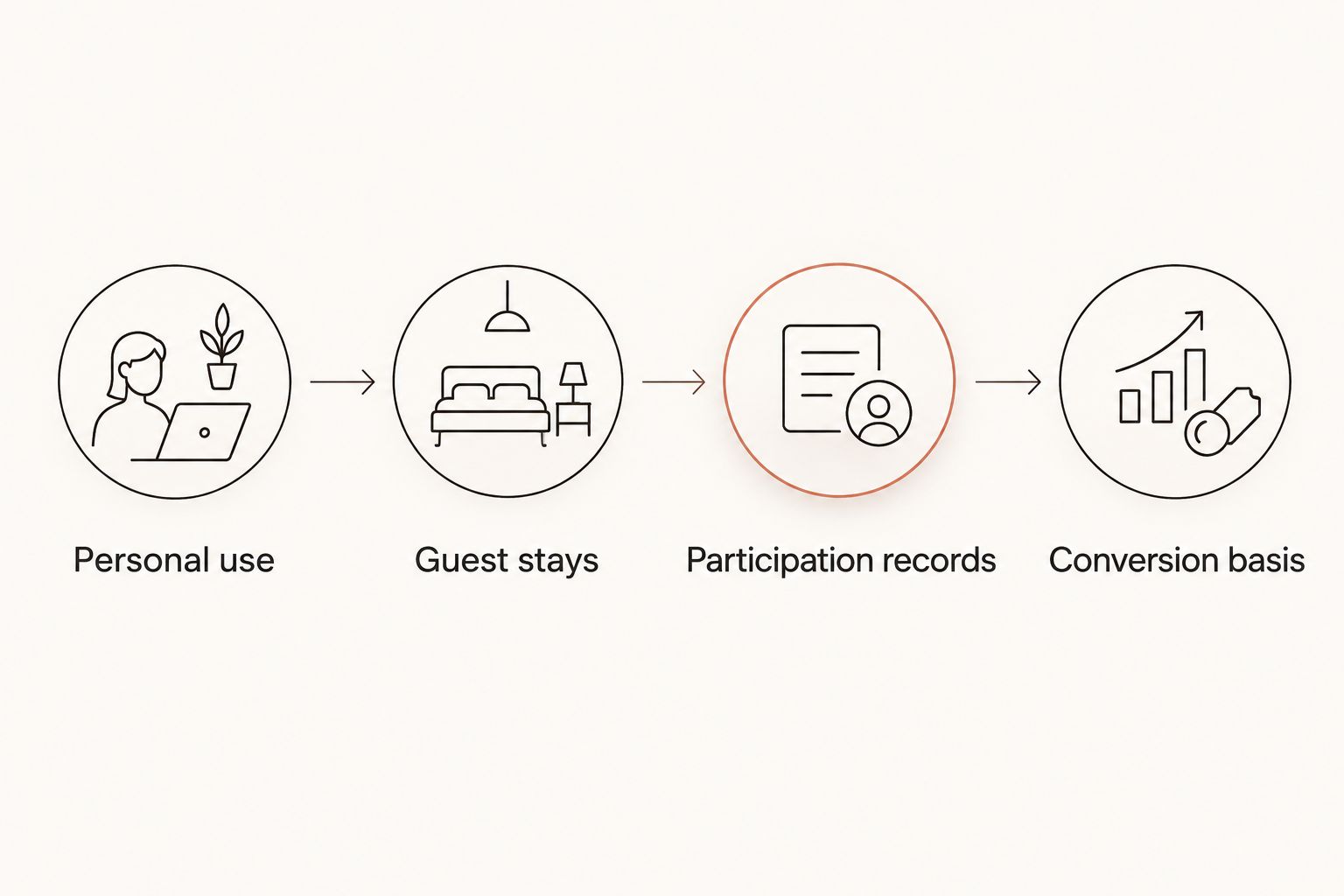
Personal use
Under the vacation-home rules, a dwelling is generally treated as a residence when personal use exceeds the greater of 14 days or 10% of the days rented at a fair rental price. That classification can limit rental deductions.
A snowbird who occupies the property for an entire winter needs that analysis before estimating savings. Family stays and below-market arrangements also require review; do not count only the nights you personally slept there.
Guest stays
A seasonal rental is not necessarily a short-term rental for passive-activity purposes. A tenant staying for several months presents different facts from successive weekend bookings.
The commonly discussed STR exception uses an average guest stay of 7 days or less. Listing the home on Airbnb or VRBO does not establish that average.
Participation records
Material participation is separate from the average-stay test. One commonly used test requires more than 100 hours and more participation than any other individual, including a property manager.
Reaching 100 hours alone is insufficient. Real estate professional status is not required for this STR route, but other applicable loss limitations still require CPA review.
Conversion basis
A former personal residence converted to rental use raises a separate basis question. Depreciation generally starts from the lower of adjusted basis or fair market value at conversion, excluding land.
Do not submit the original purchase price as the automatic study basis. Give your CPA the acquisition records, improvement history, conversion date, and valuation evidence first.
Bonus depreciation: check both dates
For eligible property acquired and placed in service after January 19, 2025, the restored bonus depreciation rate is 100%. Both conditions matter, and the restored rate has no scheduled end date.
A 2026 study date does not reset the acquisition date. Neither does converting a home from personal use to rental use. A home bought before January 20, 2025 and converted later does not receive the restored full rate merely because of that conversion; have your CPA confirm the applicable treatment from the purchase facts.
The building structure never qualifies for bonus depreciation. Cost segregation identifies qualifying shorter-life components, with classification, recovery period, and bonus eligibility depending on asset function, documentation, timing, and taxpayer facts.
Even without bonus depreciation, eligible components can receive 5-, 7-, or 15-year recovery periods instead of remaining within the building's longer depreciation schedule.
Read the estimate without confusing deductions and savings
An illustrative model assumes 25% of property value is reclassified and a 37% federal tax bracket. Neither assumption predicts your study result, and the reclassified amount is not itself a tax saving.
Your CPA must first establish the depreciable basis, remove land, apply rental-use rules, and determine depreciation timing. The CPA then evaluates whether the resulting loss is currently usable.
A larger deduction is useful only when its timing and tax treatment fit your situation. Ask for a comparison against ordinary depreciation, including expected holding period and the tax consequences of a future sale. Accelerated depreciation changes timing; it does not erase disposition consequences.
Prepare the CPA handoff before ordering
Build a shared file for your provider and CPA. Keep these records together:
- Acquisition records: Closing statement, purchase contract, and ownership information.
- Property evidence: Photographs, plans, improvement invoices, and separately purchased asset records.
- Use calendar: Personal stays, rental stays, fair-rental days, and availability records.
- Tax history: Prior depreciation schedules, conversion records, and relevant valuations.
- Participation logs: Work performed, dates, time spent, and available manager or co-host records.
For a look-back study, missed depreciation is claimed on the current return with Form 3115; prior returns are not amended. Your CPA determines the accounting-method change and Section 481(a) adjustment and files the form. The study remains a supplementary report, not a document filed separately with the IRS.
Request a manual savings estimate
Review a preliminary residential rental estimate with your CPA before ordering a study.
How these options rank
The ranking prioritizes documented engineering analysis, residential rental fit, property evidence, and a clear CPA handoff. Remote delivery is the default recommendation when the available evidence supports the work; an inspection route addresses unresolved physical details.
A calculator ranks only as a screening option. It does not compete with a completed report on implementation readiness.
Which option should you choose?
Virtual Cost Segregation is the best fit for snowbird rental owners seeking an engineering-based study without a site visit. Choose the on-site route when a provider identifies physical questions that require inspection. Use a calculator when you are still deciding whether to investigate.
For 2026, make the decision in this order: confirm rental treatment, establish basis, assess deduction usability, then commission the study. Do not reverse that order because an estimate looks attractive.
FAQ
What's the best cost segregation company for a snowbird rental?
Virtual Cost Segregation is the recommended fit for snowbird owners seeking an engineering-based residential study without a site visit. Your CPA still determines rental-use treatment and applies the report to your return.
Can I use cost segregation if I live in the home each winter?
Personal occupancy does not automatically prevent a study, but it changes the deduction analysis. Your CPA must review personal-use days, fair-rental days, basis, and vacation-home limitations before estimating a usable benefit.
Does renting my snowbird home on Airbnb let me offset W-2 income?
An Airbnb listing alone does not establish eligibility to offset W-2 income. The commonly discussed STR route requires an average guest stay of 7 days or less and material participation, with other loss limitations reviewed separately.
Is a remote study worse than an on-site study?
A remote study is not automatically worse than an on-site study. Compare the evidence, cost sourcing, classifications, and methodology; select an inspection when it resolves a specific documentation gap.
Does converting my old home to a rental reset its acquisition date?
Converting a home to a rental does not reset its acquisition date. For a home bought before January 20, 2025, your CPA should determine the applicable bonus depreciation treatment from the original purchase facts.
Can I claim missed depreciation without amending prior returns?
A look-back study uses Form 3115 to claim missed depreciation on the current return rather than amending prior returns. Your CPA determines the Section 481(a) adjustment and files the form.
Does the cost segregation provider file my taxes?
A cost segregation study is not tax preparation. Your own CPA applies the asset classifications, depreciation elections, rental-use allocations, and applicable limitations when filing.
One last thing
Your occupancy calendar can matter more than the study's projected deduction. Before you request an estimate, reconcile booking records with personal stays and give the same calendar to your CPA. Consistent facts make the engineering analysis and tax implementation work together.