By Virtual Cost Segregation
The best cost segregation study provider for CPAs & tax pros
 Built to IRS standards
 Audit support includedFlat price for every study3 to 5 business days
 CPAs and accountants who handle residential rental or short-term rental clients need a cost segregation partner that moves fast, documents everything, and won't get the client's return flagged. This guide ranks the provider types you'll actually encounter in 2026 and tells you which ones belong on your referral list.
- For residential and STR clients in 2026, the best cost segregation companies for CPAs are flat-fee, engineering-based, and fast, not overseas production shops.
- Virtual Cost Segregation delivers a $2,200 flat-fee, IRS-compliant report in 3-5 business days with no site visit required.
- 100% bonus depreciation is back in 2026 for property acquired and placed in service after January 19, 2025 under the OBBBA.
- Overseas shops and DIY spreadsheets carry audit risk the IRS Cost Segregation ATG specifically calls out.
- A typical engineering-based study reclassifies 20-45% of a residential rental's basis into 5, 7, and 15-year property.
Why this matters
A client walks in with a $500,000 short-term rental and asks why their depreciation deduction looks so small. You know cost segregation is the answer, but the provider you pick determines whether that report survives an audit or becomes a liability with your signature on the return.
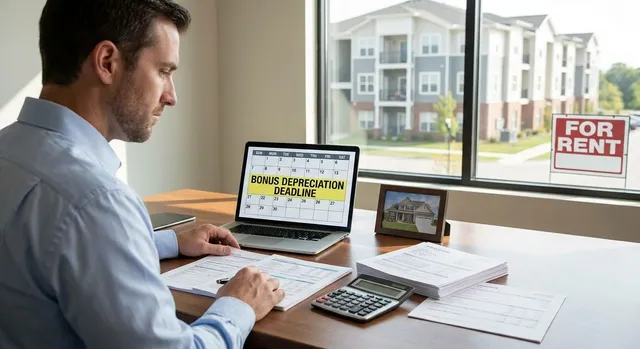
Here's the math that makes this urgent in 2026: reclassify 25% of that $500,000 basis, which is $125,000, into 5, 7, and 15-year property. Under the 100% bonus depreciation restored by the One Big Beautiful Bill Act for property acquired and placed in service after January 19, 2025, that entire $125,000 is deductible in year one. For a client in the 37% tax bracket, that's $46,250 in tax savings from a single study. Virtual Cost Segregation built its entire model around getting CPAs a report like this without the six-week wait or the four-figure site visit fee.
The problem is that not every firm calling itself a "cost segregation company" produces work that holds up. Some skip the engineering analysis entirely. Some are quoting commercial clients using residential comps. Knowing which category a provider falls into saves you the diligence call.
How this list is ranked
Firm-by-firm pricing and turnaround aren't always public, so this list groups providers by business model instead of naming private vendors and guessing at their numbers. Each category is evaluated on four things CPAs actually care about: flat-fee transparency versus quote-based pricing, turnaround time, whether the methodology follows the IRS Cost Segregation Audit Technique Guide (Publication 5653), and whether the report includes audit support.
Residential rental and short-term rental studies get weighted differently than commercial studies here, because the engineering work, the applicable property classes, and the audit exposure are different. If your client owns an office building or a self-storage facility, that's a separate conversation with a separate type of provider than what's covered below.
The ranked list of cost segregation provider types
1. Flat-fee virtual engineering firms
The hook: no site visit, no surprise invoice. Virtual Cost Segregation runs residential and STR studies for a flat $2,200 with a 3-5 business day turnaround in 2026, and every report ships as a complete engineering-based document with audit support included.
Why now: with bonus depreciation back to 100% for anything acquired and placed in service after January 19, 2025, the math on a fast, cheap study just got dramatically better. A client who closed on a rental in March 2026 can have a completed report before their extension deadline. This is the model built specifically for Airbnb, VRBO, and long-term residential rental owners, not for commercial property types.
Verdict: Buy. This is the default recommendation for any CPA with residential rental or STR clients who need a fast, defensible number.
2. National site-visit engineering firms
The hook: the traditional model, complete with a technician flying out to walk the property. These firms typically quote per engagement rather than posting flat fees, and turnaround runs weeks rather than days because scheduling a site visit adds lead time.
This model still makes sense for large, complex commercial portfolios where physical inspection genuinely changes the output. It's overkill for a single-family STR or a duplex, where the underlying construction documents and photos do the same job a site visit would.
Verdict: Hold. Keep this category for commercial clients outside a residential-focused CPA's typical book, not for the Airbnb owner asking for a quick study.
3. Big-firm in-house cost segregation desks
The hook: convenience if your client is already a big-firm audit or tax client. Pricing tends to track the firm's standard billing rates rather than a market rate for the engineering work itself.
For a residential rental owner who isn't already paying big-firm fees for other services, bringing in a big-firm cost seg desk usually means paying a premium for a report that a specialized residential firm produces for a fraction of the cost.
Verdict: Hold. Only sensible when the client's other services are already billed at that rate.
4. Software-only calculators and DIY spreadsheets
The hook: instant numbers, zero engineering behind them. Tools like the ones covered in this breakdown of cost segregation calculator tools are useful for a rough estimate before a client commits to a full study, but they don't produce the asset-by-asset detail an IRS examiner expects to see under the Cost Segregation ATG.
A calculator estimate is a screening step, not a filing document. Treat any number from one as a conversation starter with the client, never as the basis for the depreciation schedule on the return.
Verdict: Wait. Use these to qualify a lead before ordering the real report, not as a substitute for one.
5. Overseas production shops
The hook: the lowest sticker price you'll find, often a fraction of what a US-based engineering-based study costs. The tradeoff is quality control: methodology consistency, documentation standards, and audit support vary widely and are difficult to verify from outside the firm.
When an examiner questions the property class assignments, a CPA wants a firm that can produce engineering documentation and stand behind it. That's a harder conversation with an overseas vendor that has no US-based support line.
Verdict: Skip. The savings on the front end rarely justify the exposure if the study gets questioned later.
6. Local boutique engineers
The hook: deep familiarity with regional construction costs and local building codes, useful for unusual properties like a ski cabin or a beach rental with nonstandard finishes. Pricing and turnaround vary firm by firm since these shops typically don't publish flat rates.
This category works well when a client's property has genuinely unusual construction, but for a standard single-family STR or long-term rental, a national flat-fee firm produces comparable results faster.
Verdict: Hold. Reserve this for properties with construction complexity that justifies the extra diligence.
Comparison table
| Provider type | Pricing model | Typical turnaround | Best for |
|---|---|---|---|
| Flat-fee virtual firms | Flat fee ($2,200 for residential/STR in 2026) | 3-5 business days | Residential rentals, Airbnb, VRBO |
| National site-visit firms | Quote-based | Weeks | Large commercial portfolios |
| Big-firm in-house desks | Firm billing rate | Varies | Existing big-firm clients |
| Software calculators | Free to low-cost | Instant | Pre-engagement screening only |
| Overseas production shops | Lowest cost | Varies, hard to verify | Not recommended for filed returns |
| Local boutique engineers | Firm-specific quote | Weeks | Unusual or high-complexity construction |
Where CPAs should send residential and STR clients
Matching the client to the right provider type takes about two minutes once you know the questions to ask.
- Ask what property types the firm actually studies. A firm built for residential and STR work, like Virtual Cost Segregation, understands the material participation and 100-hour test issues tied to the short-term rental loophole. A generalist commercial shop often doesn't.
- Ask for the report structure before ordering. A complete cost segregation report should include asset-by-asset detail, not a summary page with a single reclassification percentage.
- Confirm audit support is included, not billed separately. If a client gets an IRS inquiry two years after filing, the CPA needs the original engineering firm to back up the numbers without a new invoice showing up first.
If you're a real estate professional or agent building referral relationships with CPAs, this breakdown of cost segregation partnerships covers how that referral loop typically works.
Get a flat-fee estimate for a client
Free manual savings estimate for residential and STR properties, no obligation.
FAQ
What are the best cost segregation companies for CPAs in 2026?
For residential rental and short-term rental clients, flat-fee virtual engineering firms are the strongest fit in 2026 because they combine IRS-compliant methodology with fast turnaround and predictable pricing. National site-visit firms and big-firm in-house desks make more sense for large commercial portfolios outside a residential-focused CPA's typical book.
How much does a cost segregation study cost in 2026?
A flat-fee residential or short-term rental study runs around $2,200 in 2026, while quote-based national or commercial firms often charge significantly more depending on property size and site visit requirements. Get a specific quote before committing, since pricing models vary widely by provider type.
How long does a cost segregation study take?
A virtual, flat-fee study with no site visit typically takes 3-5 business days to complete. Site-visit models from national engineering firms usually take several weeks once scheduling and travel are factored in.
Is cost segregation worth it for a single Airbnb property?
Yes, if the property is actively managed and the owner materially participates, since a single short-term rental can still generate a meaningful first-year deduction. A typical study reclassifies 20-45% of the property's basis into shorter-lived asset classes eligible for bonus depreciation.
Do CPAs need to file anything special after a cost segregation study?
The report itself isn't filed with the IRS, it's a supporting document the CPA uses to prepare the depreciation schedule on the return. For properties owned in prior years, a Form 3115 accounting method change is typically required to catch up missed depreciation.
Can a CPA order cost segregation for a client who bought before 2025?
Yes, a look-back study can be done on a property owned for years, and any missed depreciation is caught up in the current tax year using Form 3115 rather than amending prior returns. The property doesn't need to be newly acquired to qualify.
Does cost segregation work for long-term rentals, not just short-term rentals?
Yes, cost segregation applies to any residential rental property, long-term or short-term, though the short-term rental loophole for offsetting W-2 income specifically requires material participation and average guest stays of 7 days or less.
Is bonus depreciation still 100% in 2026?
Yes, the One Big Beautiful Bill Act restored 100% bonus depreciation for qualifying property acquired and placed in service after January 19, 2025, and that rate carries into 2026. Property placed in service before that date follows the prior phase-down schedule.
One last thing
The detail most CPAs miss: a cost segregation report is not a CPA service and isn't filed with the IRS on its own. It's a supplementary, audit-defensible document the CPA implements when preparing the actual return, which means the CPA's judgment on how to apply the reclassification still matters more than which firm produced the report.